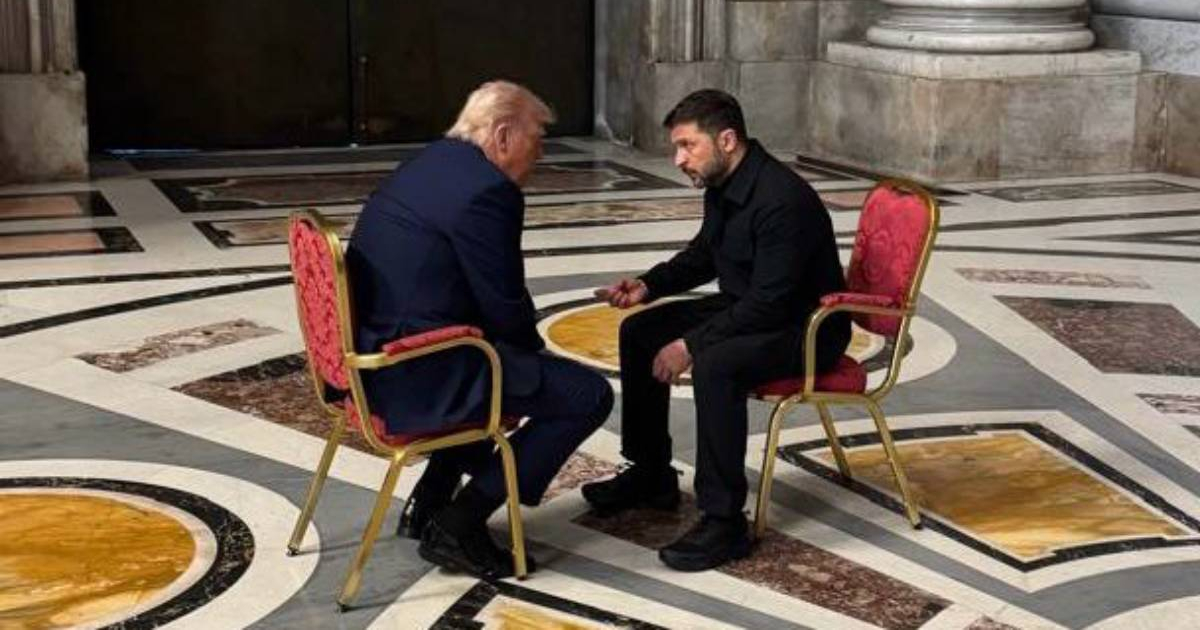
On Sunday, former U.S. President Donald Trump expressed disappointment with Ukraine, claiming the nation shows "zero gratitude" for American efforts to end the Russian invasion.
"I inherited a conflict that should never have happened, a war that everyone is losing," Trump stated on his Truth Social platform, where he also criticized President Biden and the European Union.
Trump accused the EU of continuing to purchase oil from Russia and reiterated that Ukrainian leaders have not shown appreciation for U.S. efforts. "Despite our efforts, Europe keeps buying oil from Russia," he added.
He further stated, "The U.S. continues to sell massive amounts of weapons to NATO for distribution to Ukraine (corrupt Joe gave it all away, free, free, free, including large sums of money!)."
U.S. Diplomatic Efforts in Geneva
On the same day, U.S. Secretary of State Marco Rubio is scheduled to meet with a Ukrainian delegation in Geneva to discuss the American peace plan for Ukraine.
Last Friday, Trump gave Ukraine less than a week to accept his peace proposal, which many view as favoring Moscow, as both Zelensky and Putin responded with opposing views.
In an interview with Fox News, Trump announced a deadline of November 27 for Ukraine to accept his plan, which demands territorial concessions, military limitations, and a commitment not to join the North Atlantic Treaty Organization (NATO).
Ukraine's Response and European Concerns
Trump indicated a willingness to extend the deadline "if things go well," but emphasized that Thursday remains the cutoff. The White House did not comment, according to the network.
In a nationwide address via videoconference, Ukrainian President Volodymyr Zelensky declared the situation as "one of the most challenging periods" in Ukraine's history, stressing that the U.S. plan could mean losing dignity or a strategic ally.
Zelensky assured that his administration would work swiftly and calmly with the U.S. and its allies but refused to accept conditions that would betray national interests. "I did not betray Ukraine in February 2022, and I will not do so now," he posted on the social network X.
Trump's 28-Point Plan
The 28-point plan proposed by the Trump administration requires Kyiv to relinquish territories occupied by Russia, including Crimea, Luhansk, and Donetsk, reduce its military to 600,000 troops, hold elections within 100 days, and establish a demilitarized buffer zone recognized as part of the Russian Federation.
The plan also suggests reintegrating Moscow into the global economy and restoring its position in the former G8, the group of the world's most industrialized nations.
European leaders have voiced opposition to any agreement that sidelines Ukraine in decisions about its future.
In a call with Zelensky, leaders from Germany, France, and the United Kingdom committed to safeguarding European and Ukrainian interests, insisting that the contact line should be the starting point for any negotiations.
Moscow's Stance on the Peace Proposal
From Moscow, President Vladimir Putin confirmed receiving the plan through existing channels with Washington and stated that it could serve as a foundation for a "definitive" settlement, according to an EFE report.
Putin mentioned that he had discussed an earlier version of the plan with Trump during their meeting in Alaska in August and that Russia is ready to demonstrate "flexibility."
However, the Kremlin leader accused Ukraine of effectively rejecting the proposal and warned that if this stance continues, Russia would replicate its recent advances, such as the capture of Kupiansk, on other fronts.
Frequently Asked Questions about Trump's Peace Plan for Ukraine
What are the main points of Trump's peace plan for Ukraine?
The plan requires Ukraine to cede territories such as Crimea, Luhansk, and Donetsk, reduce its military to 600,000 troops, and hold elections within 100 days. It also involves establishing a demilitarized buffer zone recognized as part of Russia.
How has Ukraine responded to Trump's peace proposal?
Ukrainian President Volodymyr Zelensky has rejected the plan, stating that it compromises the nation's dignity and strategic interests. He emphasized that his government will not accept conditions that betray national interests.
What is the European Union's stance on the peace plan?
Several European leaders have opposed any agreement that excludes Ukraine from decisions about its future, emphasizing that the contact line should be the starting point for negotiations.