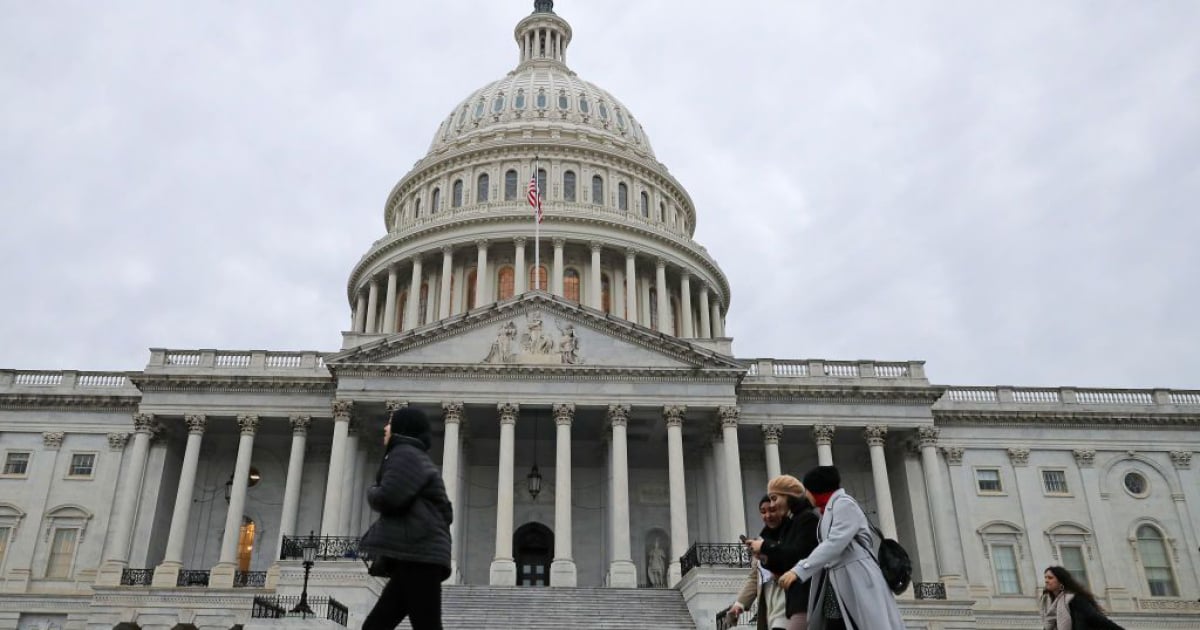
The U.S. House of Representatives overwhelmingly passed a resolution condemning socialism, marking a rare moment of unity between typically opposing factions of both major political parties.
The resolution, spearheaded by Cuban-American Congresswoman María Elvira Salazar, saw 86 Democrats joining their Republican counterparts to formally denounce "socialist policies" in the nation. This legislative move comes on the heels of the electoral success of openly socialist New York City Mayor, Zohran Mamdani.
As reported by FOX News, the resolution garnered 285 votes in favor and 98 against.
Two Democratic congressmen from Pennsylvania and Oregon chose to vote "present," a stance that neither supports nor opposes the resolution.
One of the most notable votes came from Democratic Minority Leader Hakeem Jeffries of New York, who had previously endorsed Mamdani ahead of the city elections.
The resolution underscores the historical consequences of socialism in various nations, questioning its economic and human impact. It explicitly references famines and mass killings under regimes like those of Fidel Castro in Cuba, Mao Zedong in China, and Nicolás Maduro in Venezuela.
The document concludes by stating, "The House of Representatives resolves that Congress denounces socialism in all its forms and opposes the implementation of socialist policies in the United States."
While non-binding, this measure emerges amid a heated political debate invigorated by the electoral rise of figures associated with progressive ideals.
The backdrop of this vote is the emergence of a faction within the Democratic Party advocating for state intervention in sectors like public health, education, transportation, and housing.
Figures such as Bernie Sanders and Alexandria Ocasio-Cortez have become national icons for these agendas, now joined by Mamdani in New York, who champions social justice.
The resolution also arrives ahead of Mamdani's meeting with Donald Trump. During the campaign, the former president repeatedly labeled him a "communist," accusing him of aspiring to transform New York into "another Caracas or Havana."
Supporters of the resolution argue that socialism contradicts the nation's principles of economic and political freedom.
Florida Republican Representative Byron Donalds praised the vote, asserting that socialism "always leads to the destruction of people's freedoms."
Donalds believes Congress must defend "capitalism, free markets, and liberty" against oppressive systems.
Internal tensions persist within the Democratic Party. Despite a progressive faction gaining traction in recent months, other lawmakers advocate for a more centrist approach.
New York Democrat Tom Suozzi, who voted in favor of the condemnation, opposes what he considers "overtly socialist" agendas and calls for a return to traditional policies.
Friday's vote thus highlights an unusual convergence between Democrats and Republicans, fueled by a shared fear of the growing influence of positions advocating for an increased state role.
As the American political landscape continues to debate its direction, Mamdani's victory and the congressional response demonstrate that socialism, in its American iteration, has evolved from a fringe concept to a central point of national contention.
Key Insights on the U.S. House Resolution Against Socialism
Why did the U.S. House pass a resolution condemning socialism?
The resolution was passed to formally denounce socialist policies and highlight historical consequences of socialism, marking a rare bipartisan agreement in response to the growing influence of progressive figures.
Who were the key figures involved in this resolution?
Cuban-American Congresswoman María Elvira Salazar spearheaded the resolution, with significant attention on Democratic Minority Leader Hakeem Jeffries and newly elected New York City Mayor Zohran Mamdani.
What are the implications of the resolution?
Although non-binding, the resolution reflects growing political tensions and debates over the role of socialism in the United States, affecting upcoming political strategies and alliances.