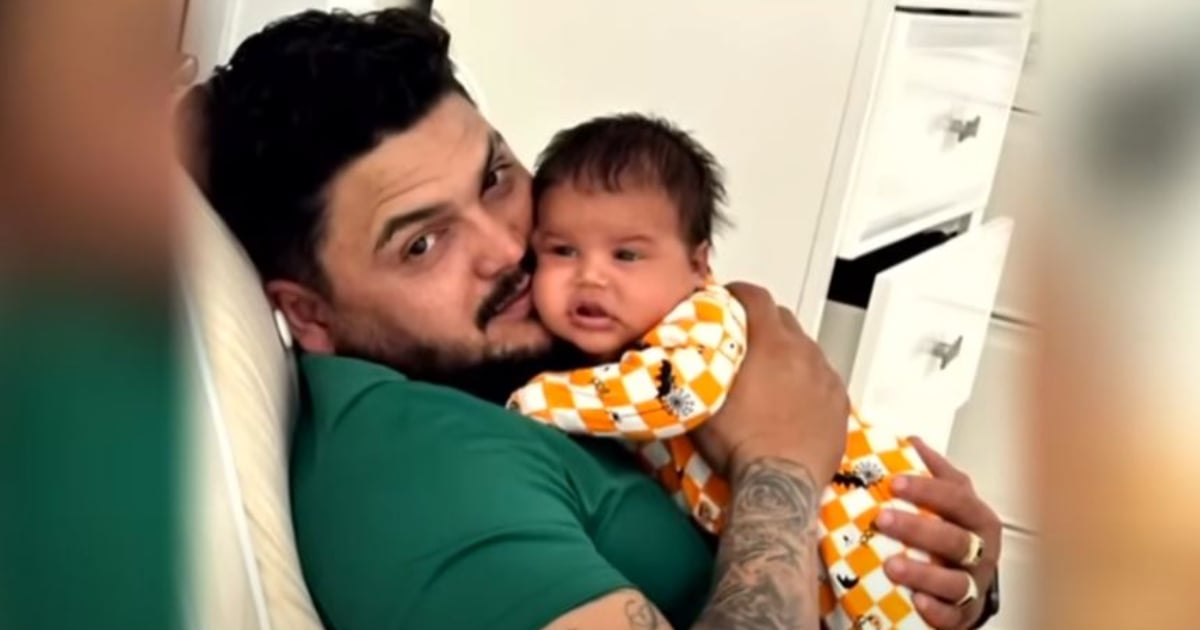
Ariel Lara González, a Cuban national who held parole status and was in the process of applying for residency, was deported to Mexico seven months after being taken into custody by U.S. Immigration and Customs Enforcement (ICE).
His wife, grandmother, and son, who turned one in October, remain in Miami. Ariel managed to wish his son a happy birthday via video call while still detained in the United States.
"There's no mercy. There's no empathy," lamented Elena Lara, Ariel's wife, in an interview with Local 10, describing her son's birthday as the most painful moment she's endured.
Elena expressed disappointment in the U.S. government's promise to protect persecuted Cubans. "He had a lot of faith in Marco Rubio," she noted, but now feels both she and Ariel have been betrayed and abandoned by the system.
Ariel, who participated in the July 11, 2021 protests, has no criminal record in the United States. He entered the country in 2022 through the Mexican border, receiving parole from authorities, and hoped to adjust his status under the Cuban Adjustment Act this year.
Nevertheless, during a routine appointment intended to regularize his status, Ariel was unexpectedly detained. The administration justified the arrest by citing that five years had not passed since his previous deportation, a technicality his defense argues should not negate his current legal status.
"He is not a criminal, nor is he undocumented," Elena emphasized in a statement to Univision last June.
Ariel had previously faced deportation in 2018 after a six-month detention. Upon returning to Cuba, he was identified as a political dissident and, fearing repercussions, fled the country again four years later, re-entering the U.S. illegally.
A Broken Family and the Power of Social Media
The plight of Ariel's family gained attention after a video of his American grandmother crying for his release went viral. In the video, she described how Ariel would wake up at 1 a.m. to distribute goods in the Keys, never missing a day of work.
Despite her own health struggles, she recounted how Ariel cared for her from afar, calling every morning and night to remind her to take her medication. "He is not a criminal. Where are the human rights?" she questioned tearfully.
She agreed that criminals should be deported, but not hardworking young men without records. She recalled helping him apply for asylum upon his arrival to ensure he followed the law, only to feel deceived when he was detained instead of advancing towards residency.
Meanwhile, Elena records every video call, preserving the only memories her son will have of his father's voice. The child frequently says "Papa," a word he cannot utter face-to-face.
Allegations of Mistreatment and a Troubling Precedent
During a call from detention, Ariel reported being isolated for three days without explanation or questioning. After months of uncertainty, he was moved to Texas as the government processed his deportation to Cuba, despite his well-founded fear of persecution.
Attorney Willie Allen asserted that Ariel was entitled to residency due to his legal entry with parole. However, after months without a clear resolution, Ariel's fate was sealed with deportation to Mexico, a country his wife describes as "very violent," where she fears he may fall victim to crime.
From Mexico, Ariel continues to call his family, aware that his son is growing up knowing him only as a face on a screen. The family remains steadfast in their fight for justice.
In the words of his grandmother, whose heartfelt plea resonated with thousands: "All I ask is that they don't send him back to a country where he's in danger."
Though not returned to Cuba, Ariel finds himself in another place where his safety is uncertain.
Key Questions on Cuban Deportation Case
Why was Ariel Lara González deported despite having parole?
Ariel was deported due to a technicality involving a previous deportation within five years, which the administration used to justify his arrest despite his parole status and ongoing residency process.
What legal avenues did Ariel pursue to remain in the U.S.?
Ariel attempted to adjust his status under the Cuban Adjustment Act, relying on his legal entry with parole, but was detained during a routine appointment intended for legal status regularization.
What impact did Ariel's deportation have on his family?
Ariel's deportation left his family in distress, with his wife and grandmother feeling betrayed by the system, and his young son growing up without physical presence, knowing his father only through video calls.