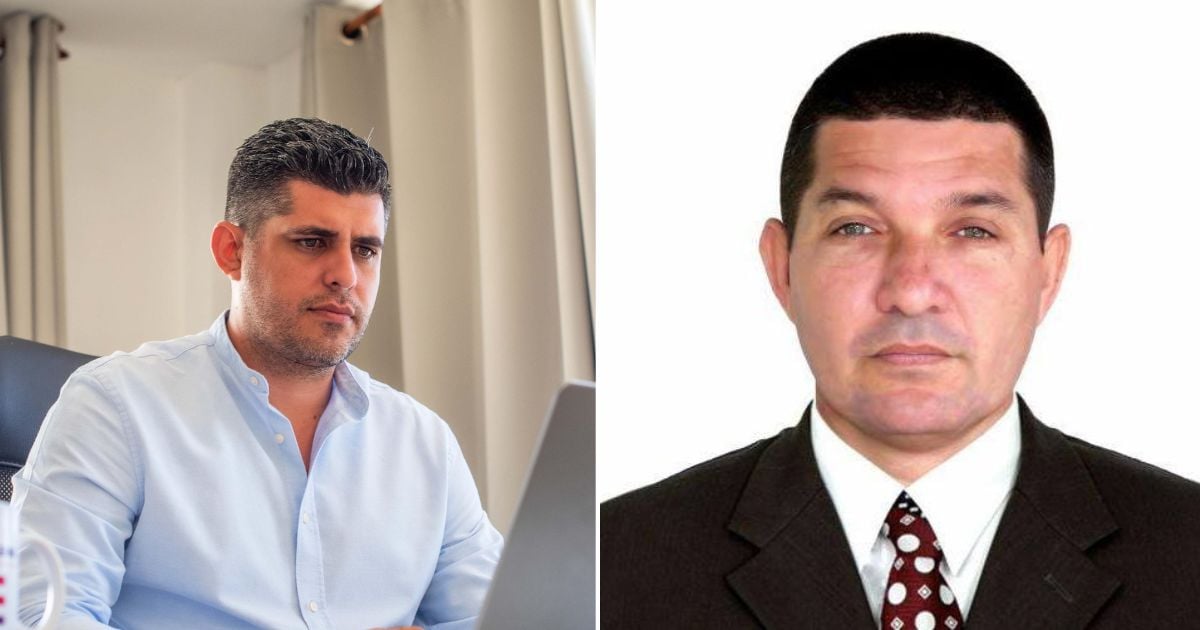
In a move that has sparked significant controversy, Cuban legislator Carlos Miguel Pérez Reyes, founder and president of the tech company Dofleini, shared a lengthy Facebook post this Thursday justifying restrictions on free speech in Cuba. This comes in the wake of the arrest of William Sosa from Las Tunas, who was detained for his critical posts on social media.
In his social media post, Pérez explained that he had reviewed both the Cuban Constitution and the Penal Code to outline "where the right to criticize ends and where the crime begins."
He argued that while criticism is indeed a "right," it is bound by legal constraints. Pérez cited Article 4 of the Constitution, which declares the socialist system "irrevocable," requiring citizens to defend it against detractors.
The legislator also referenced Articles 120 and 143 of the Penal Code, as well as Decree-Law 370, which are frequently employed to silence dissenting opinions or social media posts.
According to Pérez's interpretation, criticism is permissible as long as it does not "incite violence, spread false information, or receive foreign funding."
Nonetheless, Pérez's attempt to "clarify" the boundaries of free speech was perceived as a defense of Cuba's repressive system, where vague laws are used to silence uncomfortable viewpoints.
Addressing William Sosa's specific situation in the comments, Pérez refrained from labeling it an injustice. "I lack the elements to give a well-founded opinion... I am authorized to request information and inquire about the basis of the warning," he stated.
William Sosa was detained by State Security on November 12 after posting thoughts on the economic crisis and corruption. His son confirmed via social media that Sosa was moved to prison, noting that his "only crime was thinking and writing."
The regime charged him with "disobedience," a frequently used Penal Code charge against those who voice opinions online.
The deputy's post ignited a heated debate online, with reactions ranging from support to outrage. Some, like Carlos Camilo, saw Pérez Reyes's gesture as rare but necessary: "William just wanted to make us reflect with respect and honesty. He is a supporter of Fidel and Martí. Thank you for addressing the issue; hope has returned today."
Others demanded action and consistency. Dariel Rodríguez García reminded: "The man is imprisoned, legislator. Not in a station, but in a prison. Every day that passes is a defeat and a machine of disappointment."
Taking a more critical stance, Mauricio de Miranda Parrondo questioned the very foundation of the system Pérez defends: "Our constitution has a fundamental contradiction: it acknowledges the people's sovereignty but establishes the Communist Party as the superior force. Where do we stand? We are citizens, not subjects."
User Odalys Pérez appreciated that a legislator addressed the issue but warned: "Suppressing honest criticism will not lead to progress, quite the opposite. It's a dark tunnel from which we can only emerge by listening and changing."
Meanwhile, Flavia Cusidor reflected on the country's political culture: "For years, sincere disagreement has been labeled as disrespect or counterrevolutionary. We still can't differentiate between legitimate critique and crime."
Not everyone opposed the stance. Yanelis González Duvergel defended the need for limits on public discourse: "In Cuba, that boundary is well-defined, and I prefer it that way. Everyone can have an opinion, but without offending."
Finally, Pedro Orlando Guevara Yero posed the central question that remains unanswered: "Which of the reasons stated applies to William Sosa's case? This man should not remain detained for another minute. Just look at his profile to see it."
Understanding Free Speech Constraints in Cuba
What legal tools are used in Cuba to limit free speech?
In Cuba, the government utilizes Articles 120 and 143 of the Penal Code and Decree-Law 370 to regulate and often suppress dissenting opinions, particularly on social media.
Why was William Sosa arrested in Cuba?
William Sosa was arrested for posting critical thoughts about the economic crisis and corruption in Cuba. He was charged with "disobedience," a charge frequently used against those expressing dissenting views online.
How does the Cuban Constitution address criticism of the government?
The Cuban Constitution declares the socialist system as "irrevocable," and mandates citizens to defend it, effectively limiting criticism that challenges the regime.