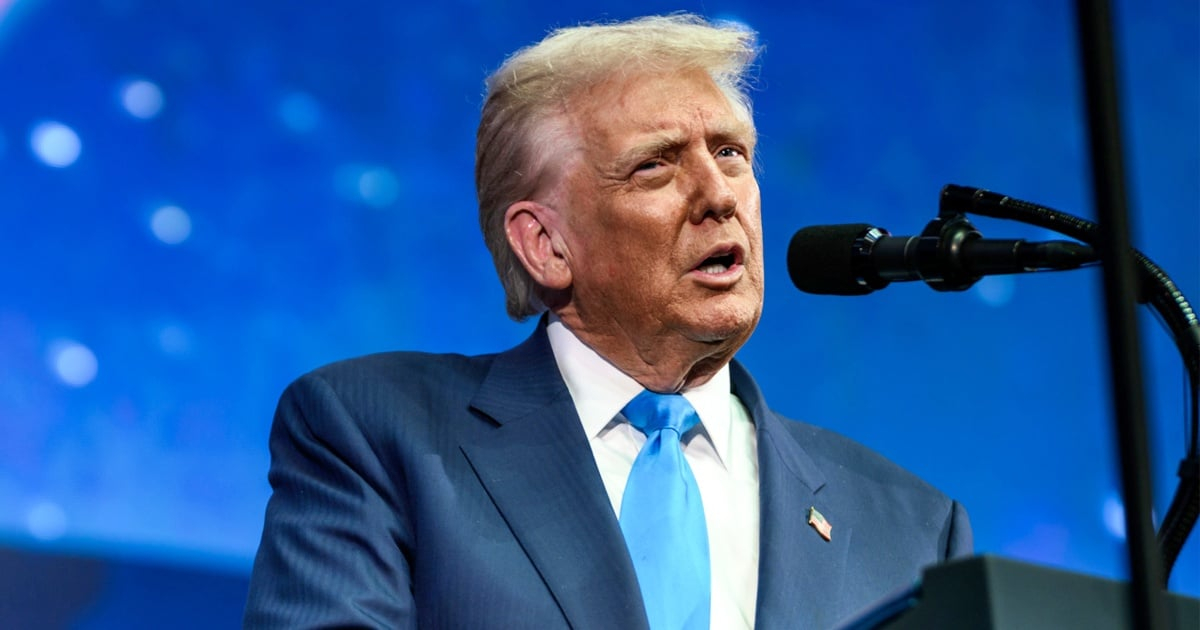
Former U.S. President Donald Trump has expressed the need for highly skilled immigrants to assist in training local workers in high-tech industries, sparking a debate within his own political movement.
At the U.S.–Saudi Arabia Investment Forum in Washington, attended by Saudi Crown Prince Mohammed bin Salman, Trump stated that bringing in skilled immigrants "does not contradict the principles of Make America Great Again (MAGA)," but rather strengthens them, as reported by the Associated Press.
"I love my conservative friends, I love MAGA. But this is also MAGA," the former president remarked.
He elaborated, "These individuals will teach our workers how to manufacture microchips, and soon enough, our workforce will be producing them. Afterward, they can return to their home countries."
Trump acknowledged facing criticism for this stance, even from supporters like Fox News journalist Laura Ingraham, who questioned him for opening the door to labor immigration.
In response, he emphasized, "We need to bring talent as well."
According to the AP, Trump insisted that the U.S. cannot solely rely on domestic unemployment to fill positions in advanced technology plants.
"You can't just think you can hire anyone to run a chip or missile factory," he asserted.
He recalled an immigration raid at a Hyundai plant in Georgia, where hundreds of South Korean workers were expelled, only to have some later permitted to return.
"I said, 'Stop it, don't be stupid.' We need them here to teach our people," Trump recounted.
This stance indicates a pragmatic shift in his immigration policy, traditionally focused on border control and visa restrictions.
Now, it appears the White House is advocating for the entry of foreign talent as part of its plan for reindustrialization and technological self-sufficiency.
Despite being one of the toughest leaders on immigration, Trump has occasionally shown nuance in his rhetoric, especially concerning the economic benefits of certain immigrant groups.
In April, the former president surprised many by suggesting that certain deportations should be halted, particularly those affecting workers with valuable skills or community ties.
Two months later, his administration considered a proposal to create a temporary pass allowing skilled immigrants to work without a permanent visa in sectors facing labor shortages, such as technology, advanced manufacturing, or critical infrastructure.
He has even publicly acknowledged that American agriculture heavily relies on immigrant labor, hinting that the country's fields might go untended if mass deportations were enacted without an effective replacement policy.
Key Questions on Immigration and Workforce Training
Why does Trump believe skilled immigrants are necessary for the U.S. workforce?
Trump believes skilled immigrants are essential for training U.S. workers in high-tech industries, which he sees as crucial for the country's economic growth and technological self-sufficiency.
How does Trump's stance on skilled immigration differ from his usual immigration policies?
Trump's stance on skilled immigration marks a shift from his usual focus on border control and visa restrictions, highlighting a more pragmatic approach that acknowledges the economic benefits of foreign talent.
What sectors are identified as needing skilled immigrant workers?
Sectors such as technology, advanced manufacturing, and critical infrastructure have been identified as areas where skilled immigrant workers are needed due to labor shortages.