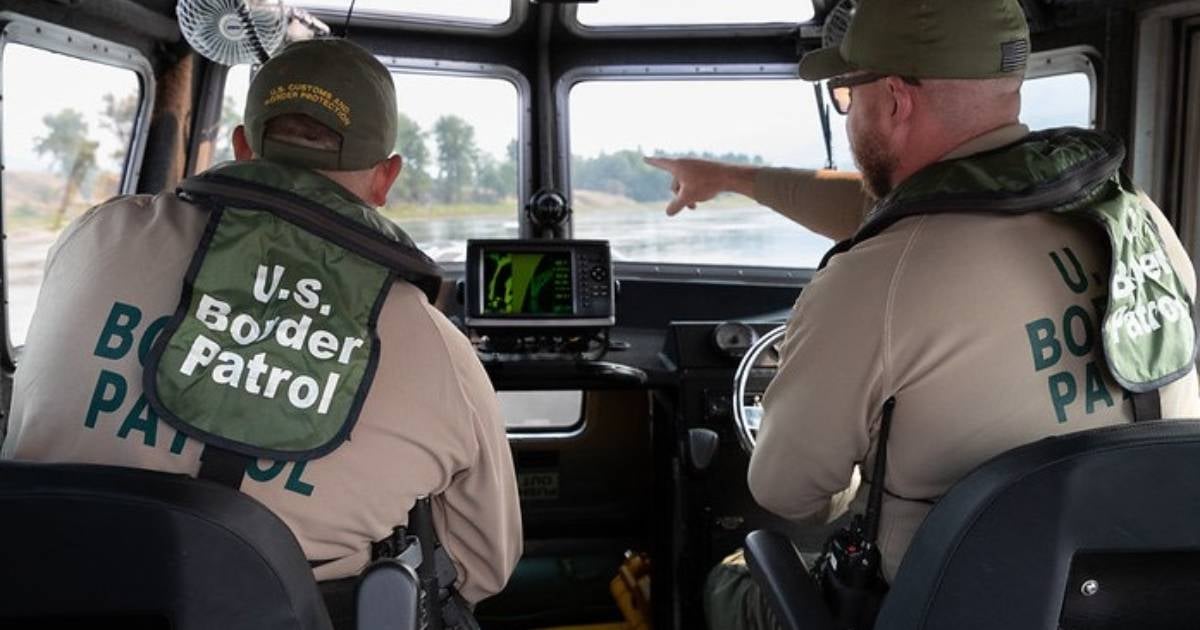
An investigative report has brought to light a clandestine surveillance initiative by the U.S. Border Patrol. This covert program utilizes hidden cameras, license plate readers, and artificial intelligence algorithms to monitor the movements of millions of drivers across the nation, ostensibly to aid in immigration control.
Initially intended to combat illegal trafficking at the border, this system has now extended its reach into major cities, tracking the everyday movements of ordinary citizens.
The Associated Press (AP) uncovered that the agency amasses data through a network of license plate readers positioned on roads, utility poles, and traffic safety equipment.
These devices capture vehicle data and process it using an algorithm to identify "suspicious" vehicles based on their routes, destinations, or trip durations.
Federal agents can then request local police to stop these flagged vehicles, often without the drivers' knowledge that they are being surveilled.
Internally known as the Conveyance Monitoring and Predictive Recognition System (CMPRS), this program began over a decade ago to bolster border security.
However, it has since evolved into a predictive surveillance model, where movement patterns are recorded and trajectories analyzed to foresee potential criminal activities.
Cameras, cleverly disguised in traffic cones or safety barrels, enable agents to track vehicles more than 90 miles away from the border.
Former officials interviewed by AP revealed the program's high level of secrecy.
In certain instances, the government opted to drop legal charges rather than disclose the locations of its surveillance equipment.
Additionally, the Border Patrol has access to national databases managed by the Drug Enforcement Agency (DEA) and private companies, enhancing its capacity to track vehicles across the country.
Although the agency asserts that its program is lawful and focuses on "disrupting criminal networks," legal experts and civil organizations caution that this practice could infringe on constitutional rights, notably privacy and protection against unreasonable searches, AP reported.
"Massive amounts of data on innocent people's movements and relationships are being collected," stated Nicole Ozer from the University of California's Center for Constitutional Democracy to the press agency.
The report also highlights that, under Donald Trump's administration, the agency received over $2.7 billion to expand its technological infrastructure, including drones, thermal cameras, and AI systems.
This support has enabled the Border Patrol to broaden its surveillance scope beyond border areas, evolving into a national monitoring network capable of tracking citizens within U.S. territory.
The disclosure has reignited the debate over federal power limits and the use of mass surveillance technologies under the guise of national security.
Meanwhile, millions of drivers in the U.S. might be unknowingly scrutinized every time they hit the road.
Federal agencies in the United States have escalated their use of technology to unprecedented levels.
Recently, it was unveiled that Immigration and Customs Enforcement (ICE) invested $1.4 billion in digital surveillance and facial recognition technology, resources that expand its ability to locate and apprehend immigrants nationwide.
Simultaneously, new policies have allowed ICE to monitor social media 24/7, raising alarms about mass surveillance in digital environments.
Companies like Apple and Google have also come under scrutiny for their role in these processes after it emerged that they succumbed to ICE's pressure to share user information, sparking concerns among privacy advocates.
The reach of control surpasses the digital realm. The government has implemented biometric checkpoints at U.S. airports, enabling passenger identification through facial scanning without physical documents.
These actions are part of a broader political framework driven by the Trump administration, which, through its "big, beautiful" bill, allocated billions to bolster border control via technological infrastructure.
Surveillance even extends into civil airspace. Legislation in Florida proposes allowing citizens to use reasonable force against intrusive drones, in response to the growing number of unmanned devices used for monitoring by both public and private sectors.
Questions About U.S. Border Patrol's Surveillance Program
How does the U.S. Border Patrol track vehicles?
The U.S. Border Patrol tracks vehicles using a network of hidden cameras, license plate readers, and AI algorithms to monitor and analyze movement patterns across the country.
Is the Border Patrol's surveillance program legal?
While the Border Patrol claims its program complies with the law and targets criminal networks, legal experts and civil rights groups argue it may violate constitutional rights, particularly privacy and protection against unreasonable searches.
What technologies are used in the surveillance program?
The program utilizes hidden cameras, license plate readers, drones, thermal cameras, and artificial intelligence systems to monitor and predict vehicle movements and potential criminal activities.