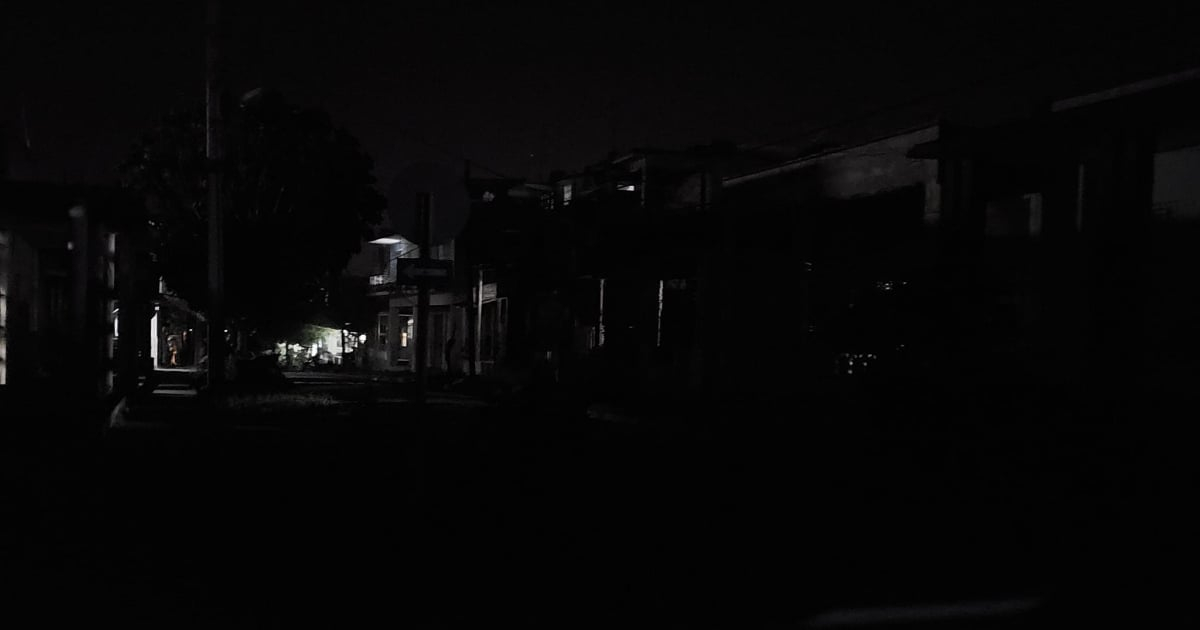
The National Electric System (SEN) remains in a dire state. As of November 20, 2025, the Electric Union (UNE) reported a generation shortfall of nearly 1,800 megawatts (MW), highlighting the regime's inability to provide a fundamental and essential service to its citizens.
The previous day saw electricity disruptions throughout the entire 24 hours, reaching a peak shortfall of 1,964 MW at 6:10 PM. By Thursday morning at six, the SEN's available capacity was only 1,340 MW against a demand of 2,460 MW, leaving a significant portion of the population without power.
Despite the regime's attempts to showcase progress with the installation of 32 solar photovoltaic parks—producing 2,669 MWh at a maximum output of 458 MW—the scale of technical failures and fuel shortages continues to cripple the electric system.
Power Plants Out of Commission
Some of the major thermoelectric plants currently offline include:
- Unit 2 of the CTE Felton (under repair)
- Units 3, 5, and 6 of the CTE Renté (under repair)
- Unit 2 of the CTE Santa Cruz, Unit 4 in Cienfuegos, and the Puerto Escondido gas treatment plant (under maintenance)
Additionally, there are thermal generation constraints totaling 458 MW, and 91 distributed generation plants are shut down due to fuel shortages, accounting for another 767 MW out of service. The Mariel Fuel Oil Plant is inactive with 85 MW offline, alongside a 75 MW shortage due to a lack of lubricants, totaling 927 MW out of commission due to energy deficiencies.
Minimal Relief Ahead
The UNE anticipates that some equipment will be partially reactivated during peak hours—such as five motors at the Mariel site (85 MW), the Regla Barge (24 MW), and Unit 3 of the CTE Renté (45 MW). However, these additions will not sufficiently meet demand.
“With these incorporations, peak availability would reach only 1,494 MW against an estimated demand of 3,200 MW, resulting in a deficit of 1,706 MW and an impact of 1,776 MW,” the official report states.
A Nation in Perpetual Blackout
The ongoing electricity crisis in Cuba has become a major source of public discontent. Daily blackouts, which in many areas exceed 20 consecutive hours, paralyze economic activities and severely degrade the quality of life for millions of Cubans.
Despite the regime's continuous promises, investments in renewable energy have not compensated for the lack of maintenance and the outdated state of thermoelectric plants. The fuel deficit—compounded by state inefficiency—prevents sustaining distributed generation.
Understanding Cuba's Energy Shortfall
What is causing the power shortage in Cuba?
The power shortage in Cuba is primarily due to technical failures at major power plants, fuel shortages, and the inability to maintain and update aging infrastructure.
What efforts are being made to resolve the crisis?
The regime is attempting to install solar photovoltaic parks and reactivate some power plant units, but these efforts have not been sufficient to address the widespread shortfalls.
How does the energy crisis affect daily life in Cuba?
The crisis leads to daily blackouts, often exceeding 20 hours, disrupting economic activities and significantly lowering the quality of life for the population.