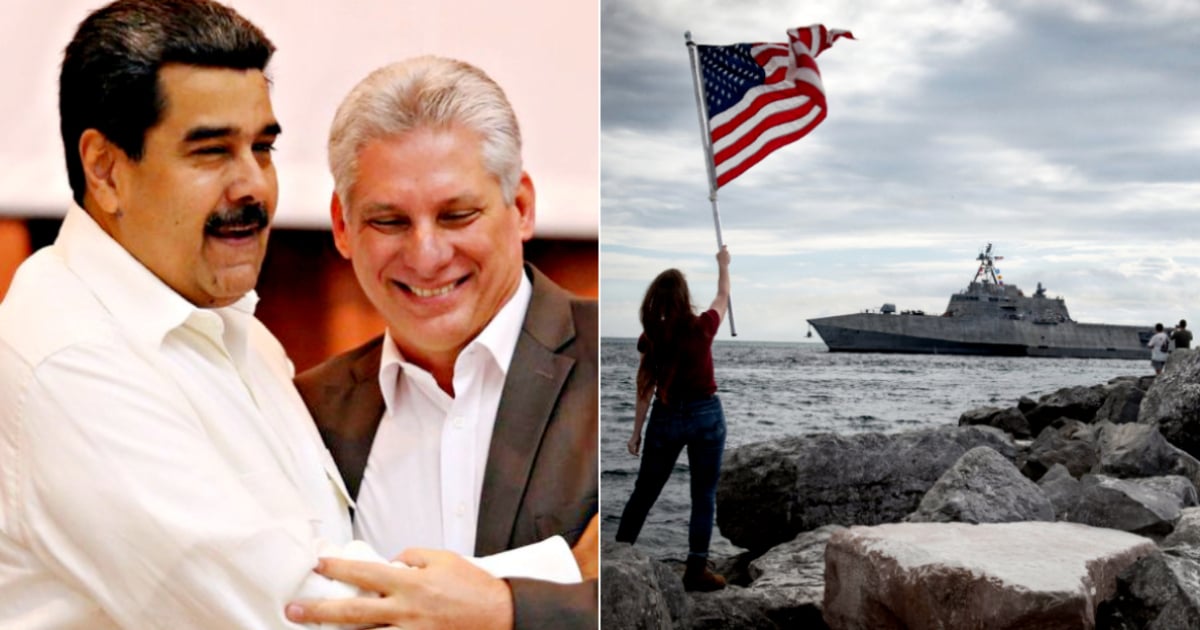
The online platform CiberCuba recently shared an article from The Telegraph claiming that President Donald Trump's real target might not be Venezuela but rather the Cuban regime. This sparked an overwhelming response from readers.
Within just 24 hours, more than 1,200 comments flooded the outlet's Facebook page, marking one of the most heated debates in recent months regarding the island's political future.
Expressions of Hope and Desperation
The public's reactions were varied and often contradictory, revealing more than just a response to news; they painted an emotional portrait of the exiled community and the internal despair of a nation torn between hope for imminent change and the weariness of decades of broken promises.
For many, the headline seemed like a divine sign. Messages such as “Let it be so,” “God willing,” and “We can't take it anymore” echoed through numerous posts. The news was seen as a potential redemption, a new "day zero" that could end over six decades of repression and scarcity.
Skepticism Amidst Enthusiasm
On the flip side, skeptics voiced their doubts amidst the excitement. Comments like “This is all talk,” “They’ve been saying the same thing for sixty years,” and “All bark and no bite” reflected a belief that the supposed plan was merely another empty promise.
For some, Trump’s alleged plan was just another “headline to build false hopes,” perceived as an electoral maneuver. One of the most shared comments summarized this sentiment: “Neither Venezuela nor Cuba: this is about U.S. domestic politics.”
Humor as a Defense
As is often the case among Cubans, humor found its way into the tense atmosphere. Quips like “What would Trump want in Cuba, dengue and mosquitoes?” and “If he comes, he should bring bleach and catfish” provided a comedic outlet for the stress and fear.
Between Fear and the Desire for Change
The announcement also reopened historical wounds. Warnings that “an invasion will bring death, not freedom” and reminders that “bombs are indiscriminate” were met with harsh responses: “Isn’t this already a war?” and “People are dying without medicine or food.”
The moral dilemma surfaced repeatedly: Is foreign intervention worth the potential destruction? “Freedom comes at a cost,” some wrote. “But if nothing happens, we’ll die anyway,” concluded another user, resigned to fate.
Trust Issues and Emotional Divide
There was a surge of distrust towards the media and politics. Some called it “fake news” and a “clickbait invention,” while others defended the publication: “At least here we speak without censorship.”
The discussion highlighted an emotional divide between those living inside Cuba and those outside it. “You ask for things from Miami, but bombs fall here,” and “We suffer too, even from afar,” were common sentiments, demonstrating a love for Cuba from different shores.
The Reality of Poverty
Beyond political passions, many agreed on the grim reality: the daily struggle with poverty. “There’s no food, no medicine, the hospitals are collapsing,” and “Cuba is disappearing without bombs, due to neglect,” were echoed by many.
Amid insults and prayers, sarcasm and pleas, a common feeling emerged: exhaustion. “This isn’t news, it’s a mirror,” wrote one person. The online discussion was a thermometer for the real Cuba—a place where, for a few hours, Cubans spoke without fear.
Frequently Asked Questions About Trump's Alleged Plan for Cuba
What sparked the discussion on Facebook regarding Trump's plan for Cuba?
An article from The Telegraph, shared by CiberCuba, suggesting that Trump's real target might be the Cuban regime, not Venezuela, led to an influx of reactions on social media.
How did Cubans react to the news about Trump’s alleged plan for Cuba?
Reactions were mixed, ranging from hope and calls for intervention to skepticism and humor. The responses highlighted a deep emotional divide and a shared exhaustion over the ongoing situation.
Why do some Cubans view Trump's alleged plan as another empty promise?
Many view it as another in a series of unfulfilled promises over the years, seeing it as a potential political maneuver rather than a genuine plan for change.