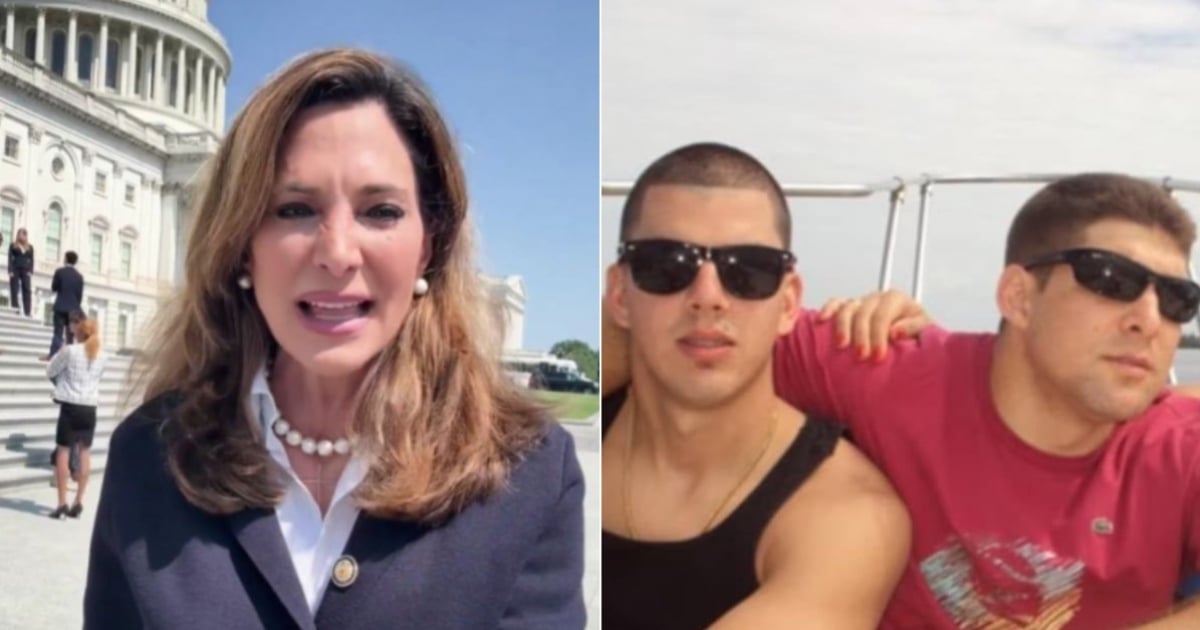
Cuban-American congresswoman María Elvira Salazar has called for an immediate investigation into the release of Cuban businessman Jorge Javier Rodríguez Cabrera, who is closely linked to Raúl Guillermo Rodríguez Castro, known as El Cangrejo, the influential grandson of General Raúl Castro.
Salazar made her demand via her personal account on X, rather than using her official congressional account.
In her message, she formally requested the Department of Homeland Security (DHS) to review the case "as soon as possible," questioning why individuals connected to Cuba's oppressive leadership are gaining access to immigration benefits meant exclusively for victims of the regime.
"U.S. immigration benefits are intended for victims of Castro's regime, NOT for the privileged with ties to the oppressive elite who live in luxury and power while the Cuban people suffer," she emphasized.
She also expressed gratitude to Martí Noticias and journalist Mario Pentón for "exposing these abuses," highlighting that freedom is also defended through fearless journalism.
The congresswoman's statement followed news that a Nevada federal judge ordered the release of the businessman, who had been detained since June by the Immigration and Customs Enforcement (ICE) agency.
Although the ruling came after a habeas corpus petition, the DHS opposed granting him residency under the Cuban Adjustment Act, a controversial decision due to his connections with high-ranking Cuban officials.
Business and Diplomatic Connections Under Scrutiny
Rodríguez Cabrera, now a businessman in the U.S. and partner of the logistics company Gran Azul LLC, was described by ICE as having strong ties to the Cuban government.
The agency justified his detention by citing his past as a diplomatic courier for the Ministry of Foreign Affairs (MINREX), a status that allowed him to travel with a diplomatic passport.
However, his defense argued that this role ended nearly eight years ago and that the passport expired in 2017, undermining the rationale for his continued detention.
Concerns Over Legal Representation and Allegations of Economic Infiltration
The case has also drawn attention because Rodríguez Cabrera is represented by one of the country's most prominent immigration law firms, Kurzban Kurzban Tetzeli & Pratt, led by Ira Kurzban, husband of Magda Montiel Davis, a Cuban-American lawyer remembered in Miami for kissing Fidel Castro and calling him "maestro" in 1994.
For many in the exile community, the involvement of this firm reinforces the perception that a powerful network is protecting an individual with influential connections.
Rodríguez Cabrera applied for political asylum after entering the U.S. through the southern border in 2022 and was detained in June 2025. He claimed persecution by the same regime he was once linked to, but investigations by Pentón and Martí Noticias documented his ties to Cuba's ruling elite, casting doubt on his claims.
In addition to exposing his alleged connections with the Castro family, reports link the businessman to the rapid establishment and growth of Gran Azul LLC, which was registered in Nevada in November 2024 and now has offices in Miami, Orlando, Houston, Phoenix, and Fort Myers.
Its swift expansion has raised suspicions among industry professionals, particularly due to the lack of transparency about the source of the capital used. "No one knows where that money came from," a logistics sector source was quoted as saying.
Social Ties and Implications of Economic Penetration
Concerns also grew after videos aired by América TeVé in 2023 showed Rodríguez Cabrera aboard a yacht with El Cangrejo, enjoying seafood and drinks—luxuries typically reserved for those close to power in Cuba.
Sources claim the two met through Sheyla Puentes, the mother of Raúl Castro's granddaughters. Although their romantic relationship ended, the friendship with the dictator's grandson continued, reportedly including shopping trips to the U.S. and Mexico.
Since his name surfaced publicly, Rodríguez Cabrera has avoided any contact with the press.
These circumstances have set off alarms in the Cuban exile community, where many fear it is a covert operation of economic penetration by the Castro regime in the United States.
In light of these concerns, Salazar has called for the administration of President Donald Trump, as it resumes federal control, to intervene and reassess the case to prevent individuals with ties to the dictatorship from exploiting legal benefits intended for those fleeing it.
For the congresswoman, this is not a typical immigration process but an issue that threatens the security and credibility of the U.S. asylum system for Cubans.
This is why she demands an urgent investigation: to ensure that the country that welcomes the persecuted does not end up protecting the privileged of the very structure that oppresses them.
Key Questions About Immigration and Political Asylum in the U.S.
Why is María Elvira Salazar concerned about Jorge Javier Rodríguez Cabrera's release?
Salazar is concerned because Rodríguez Cabrera is closely linked to influential figures in Cuba's oppressive regime, and she questions the appropriateness of granting him immigration benefits meant for victims of that regime.
What role did the Department of Homeland Security (DHS) play in this case?
The DHS opposed granting Rodríguez Cabrera residency under the Cuban Adjustment Act, arguing against his release due to his alleged connections with high-ranking Cuban officials.
What are the implications of Rodríguez Cabrera's case for the Cuban exile community?
The case has raised concerns about potential economic infiltration by the Castro regime in the U.S. and the possibility of individuals with powerful connections exploiting the asylum system.