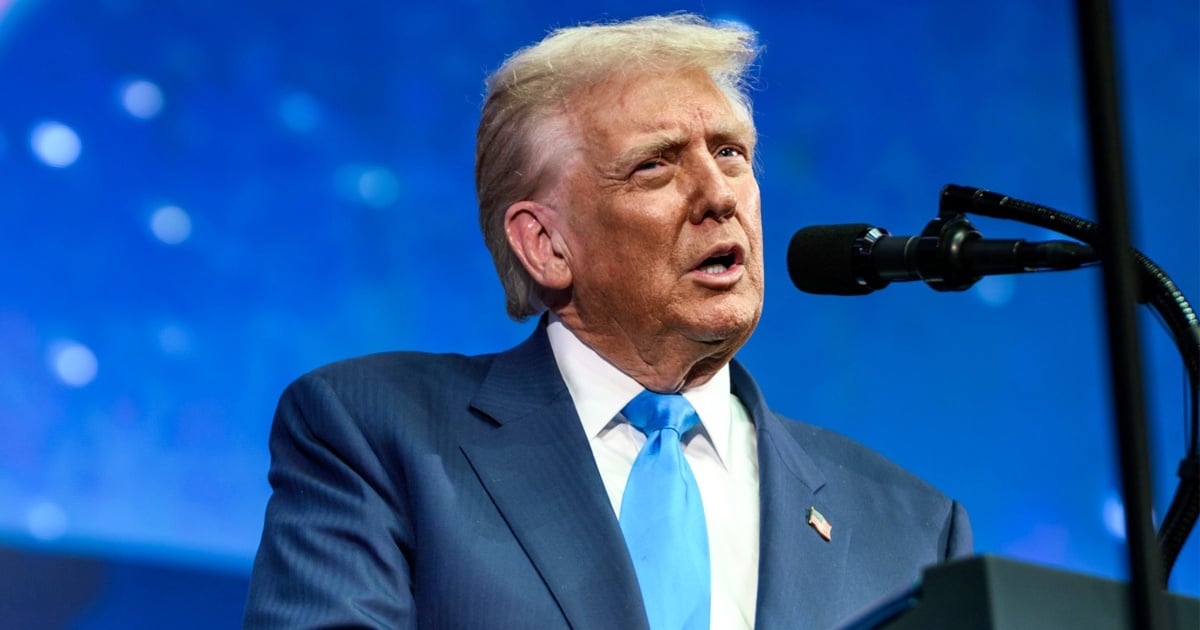
In a surprising twist in the ongoing healthcare reform debate in the United States, Donald Trump has taken aim at major insurance companies, accusing them of profiteering "for far too long" at the expense of the American people.
Using his platform, Truth Social, Trump issued a strong statement on Tuesday: he will only support a healthcare system that returns money directly to citizens, completely cutting insurance companies out of the picture.
“Power to the people!” Trump declared in capital letters, emphasizing that the best way to achieve an excellent healthcare system in the United States is to send funds directly to the people. His message blends economic populism with a promise of radical structural change.
He further criticized, “Nothing should go to the big, fat, and rich insurance companies that have made billions of dollars and scammed America for a long time.”
Under his proposal, citizens could negotiate and purchase their own insurance independently, supposedly under better terms than the current system allows.
“Power to the people!” Trump reiterated, urging Congress to dismiss any legislative initiatives that do not consider this approach. “Do it now!” he demanded.
Trump's Message Crosses Party Lines
While Trump's stance might seem disruptive within the traditional framework of the Republican Party—which has long championed free enterprise and minimal intervention in private markets—he claims that even some Democrats have shown interest in his proposal.
Over the weekend, Trump mentioned having "personal conversations with Democrats" who "love" the idea of removing corporate intermediaries from the healthcare system.
The tone and content of his statements might be seen as a strategic move to attract independent voters and those dissatisfied with the current healthcare system, as dissatisfaction grows alongside rising premium costs.
Backdrop of Rising Costs and Threatened Subsidies
Trump's rhetorical offensive comes at a time of uncertainty for millions of Americans. Federal subsidies for health insurance premiums under the Affordable Care Act (ACA) are set to expire at the end of this year.
If a legislative solution is not approved by 2026, healthcare costs could skyrocket, particularly impacting middle-class and working families. This has reignited the debate on how to redesign a healthcare system that many consider one of the most expensive and unequal in the developed world.
Conservative Lawmakers Find Common Ground
Trump's proposal is not alone on the stage. Republican Senator Bill Cassidy, chairman of the Senate Health, Education, Labor, and Pensions Committee, recently introduced a plan that shares similarities with Trump’s vision.
Cassidy suggests redirecting funds currently allocated to insurers toward consumers, giving them greater control over their healthcare.
“Who wouldn’t want to spend 100% of the money on the patient choosing the healthcare they want, instead of 100% going to insurance companies and only 80% spent on healthcare… and that healthcare being what the insurance company decides you need?” Cassidy questioned.
Though his plan is still in development, Cassidy expressed confidence that it could gain support among both conservatives and moderate Democrats.
An Unexpected Shift in Republican Narrative
Historically, the Republican Party has focused on dismantling the ACA system implemented under Barack Obama's administration, but without proposing a clear, widely accepted alternative.
Now, with Trump back at the center of the political scene, the narrative appears to be shifting towards a model that combines individual control, cuts to corporations, and populist rhetoric.
This new approach could pose a direct threat to the powerful health insurance industry, whose profits have surged in recent years. As Trump pointed out, “Insurance companies’ stocks have risen over a thousand percent in a short period. They are bringing in hundreds of billions of dollars, and they’re not reinvesting as they should.”
Trump's declarations raise more questions than concrete answers. How would a system without insurers truly function? What guarantees would citizens have to access affordable healthcare without a clear regulatory framework? Who would manage payments and oversee the funds?
Donald Trump's direct attack on the health insurance business marks a turning point in the political debate over healthcare in the United States. Although his proposals still lack a solid technical structure, the message resonates with a citizenry fed up with high premiums, endless bureaucracy, and exorbitant corporate profits.
FAQs on Trump's Healthcare Proposal
What is Donald Trump's proposal for the healthcare system?
Donald Trump proposes a system where funds are sent directly to citizens, eliminating insurance companies from the equation. This approach aims to allow individuals to purchase insurance independently, potentially under better conditions than the current system.
How does Trump's proposal differ from the current system?
Trump's proposal differs in that it seeks to remove insurance companies from the healthcare process, focusing on direct financial support to citizens for purchasing insurance. This contrasts with the current system where insurance companies play a significant role in healthcare coverage.
What impact could Trump's proposal have on insurance companies?
If implemented, Trump's proposal could significantly reduce the role of insurance companies in the U.S. healthcare system, potentially affecting their profits and market dynamics as citizens gain more control over their healthcare spending.