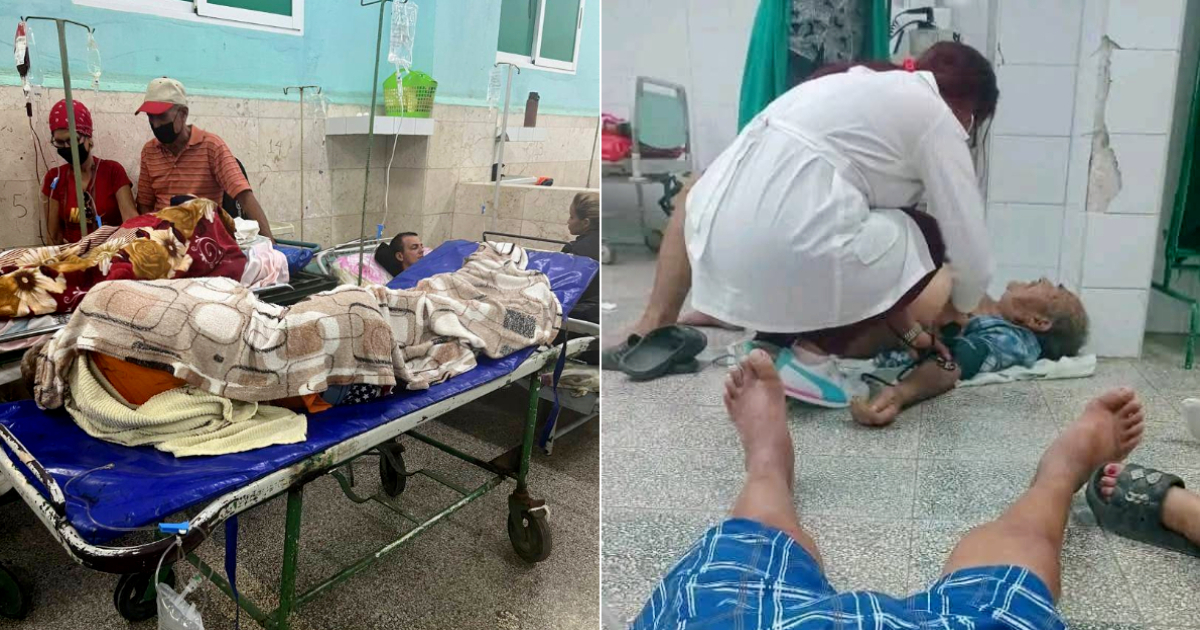
Amidst a severe epidemiological crisis gripping the island, new visual evidence and compelling testimonies have shed light on the dire state of the Cuban healthcare system. These revelations underscore the ongoing collapse as Cuba grapples with an uncontrolled arbovirus epidemic.
The Hospital Provincial Carlos Manuel de Céspedes in Bayamo has become a focal point, with images surfacing, alongside complaints from doctors and activists, illustrating the rapidly deteriorating hospital conditions. Government officials, however, continue to deny or downplay the situation, creating a stark contrast between reality and their narrative.
Visual Evidence of NeglectRecent photographs from Bayamo depict patients lying on the floor, makeshift gurneys, a lack of proper beds, unreliable oxygen equipment, and desperate families.
Dr. Alexander Figueredo, a physician and activist, shared a poignant message: “Patients lying on the ground, elderly people in agony on cement floors, women fainting without gurneys. The country has turned into a mobile morgue.” He emphasized, “This is not poor management. This is not a mistake. This is state policy. A state that maintains hospitals without reagents, IV fluids, oxygen, water, tests, medications, or humanity.”
The Official Version and Its DownplayingIn response, the provincial health authority issued a Facebook statement acknowledging "scarce resources" but insisted that "no patient is left unattended." They claimed, “Our doctors are at their post ... with patients.” However, the official images from the hospital reveal scenes reminiscent of “war zones.”
Yes, the "doctors are at their post," but Cuba is not at war. Images of overcrowded wards, patients undergoing blood transfusions, and rusted, destroyed furniture should not be paraded as achievements by the regime’s propaganda. Instead, they highlight the collapse of public healthcare services in the country.
The Provincial Health Sector of Granma declared, “We have few resources”; “they always attack with lies”; “our people deserve respect.” However, the scarcity, opacity, and manipulation of data, along with the lack of respect for the Cuban people, have clear culprits: Miguel Díaz-Canel’s government and a regime that clings to power while resisting much-needed democratic change.
Epidemiological and Hospital Crisis: A Deadly CombinationThe denunciations arise amidst Cuba's struggle with a “combined arbovirus crisis”: dengue, chikungunya, and Oropouche are spreading simultaneously, with tens of thousands of new infections weekly.
Furthermore, the island's healthcare institution has admitted structural decay: in July 2025, the health minister acknowledged a system with “only 30% medication coverage” and hospitals suffering severe deficiencies.
Against this backdrop, the images from Bayamo take on greater gravity: hospitals that should maintain minimal standards of hygiene, infrastructure, and supplies are stretched to their limits as the nation needs to mobilize medical resources to combat multiple disease outbreaks.
Reports indicate many centers can no longer guarantee beds, gurneys, oxygen, or basic medications, while hospitals face an influx of patients with arboviruses, tuberculosis, and other diseases stemming from the healthcare collapse.
The Population at Risk and the Impunity of Those ResponsibleWhen the healthcare system is not only resource-deprived but also overwhelmed, the risks to the population multiply: patients go undiagnosed or receive inadequate treatment, surgeries are postponed or canceled, hospitals lack electricity, water, or maintenance, and exhausted healthcare professionals work under "inhumane" conditions.
This scenario presents more than a technical problem; it is a political and human rights issue.
The Cuban regime faces a dual challenge: an uncontrolled epidemic and evidence of a hospital collapse that contradicts their "medical power" narrative. Instead of transparently acknowledging the impact, authorities persist in minimizing or concealing it, fueling social unrest. Activists and patients demand transparency: "When will Cuba shut down?" is a common refrain on social media amid official silence.
Images from Bayamo should not be seen as isolated incidents. They align with numerous reports exposing the vulnerability of Cuba’s hospital system and the surge of diseases the population faces without guaranteed care.
Government denial or minimization does not mitigate the severity of the issue; it adds another layer: a lack of transparency.
The Cuban people are entitled to dignified healthcare, safe facilities, and timely medical attention. Today, more than ever, that promise remains out of reach, and silence should no longer be part of the diagnosis.
Addressing the Cuban Healthcare Crisis: Key Questions
What visual evidence has emerged from Bayamo?
Photographs from Bayamo show patients lying on floors, makeshift gurneys, a lack of beds, unreliable oxygen equipment, and desperate families.
How have the authorities responded to the healthcare crisis?
Authorities have acknowledged "scarce resources" but insist that no patient is left unattended. However, the official narrative downplays the grave conditions revealed by visual reports.
What diseases are contributing to the crisis in Cuba?
Cuba is facing a crisis with combined arboviruses, including dengue, chikungunya, and Oropouche, contributing to the healthcare system's collapse.