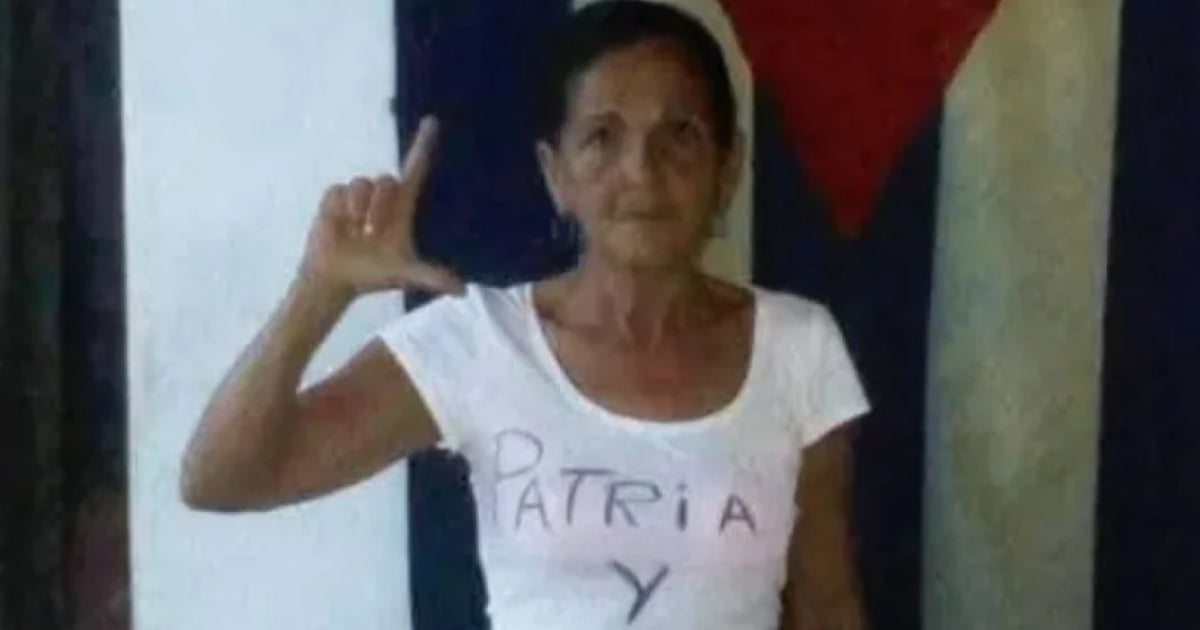
The grandson of Olaida del Castillo, a member of the opposition group Ladies in White, has died in Havana due to a mosquito-borne virus that has affected a significant portion of Cuba's population.
The young boy succumbed to the illness on Saturday evening after spending several days in critical condition at the hospital, valiantly fighting for his life.
The heartbreaking news was shared on Facebook by Laura María Labrada Pollán, daughter of the late leader of the organization, Laura Pollán. "Our deepest condolences to her and her family from her CID brothers," expressed Laura María, though she did not specify which virus claimed the child's life.
Countless individuals have expressed their sorrow and outrage over this tragic event, which is not an isolated loss but rather a recurring tragedy amid the nation's healthcare collapse.
The child's death highlights the crumbling healthcare system in Cuba and the plight of thousands of families forced to endure an epidemic that the government reluctantly acknowledged after months of downplaying its severity.
A Personal Tragedy Reflects Widespread Neglect
This tragic death occurs against a backdrop of significant public health challenges in Cuba's major cities: overflowing garbage, stagnant water in the streets, and local governments unable to maintain basic hygiene standards.
These conditions are ideal for mosquito breeding, leading to a surge in cases of dengue, chikungunya, and other arboviruses. Health authorities, instead of taking direct responsibility, often blame the public for not keeping their yards and common areas clean.
Meanwhile, neighborhoods remain buried in waste, sewage systems are failing, and fumigation is sporadic or non-existent due to a lack of fuel, equipment, and personnel.
Families bear the brunt of this crisis: hospitals are overwhelmed, with a shortage of beds, diagnostic reagents, basic medications, and essential services that are only partly functional, often without enough staff.
Government Acknowledges Crisis But Offers No Real Solutions
Last week, representatives from the Ministry of Public Health appeared on Mesa Redonda to discuss the "deteriorating epidemiological landscape." Dr. Francisco Durán, the national director of Epidemiology, admitted the situation remains "acute," with at least 14 provinces experiencing active dengue and chikungunya transmission.
He also revealed that more than 30% of Cubans have contracted chikungunya. Despite the severity of the problem, Dr. Durán attempted to convey a sense of control and improvement, even though official data shows active transmission in dozens of municipalities, tens of thousands of infections, and widespread febrile outbreaks across the country.
His statements, filled with technical jargon and calls for "community participation," starkly contrast with the visible reality: hospitals in disrepair, lacking supplies, specialists, and the ability to handle a sustained increase in patients.
An Epidemic Fueled by Official Negligence
The crisis has worsened because the vector control program has virtually disappeared. Fumigation, when it occurs, covers only isolated areas and has minimal impact in the face of massive trash accumulation, homes without drainage, and widespread urban neglect.
Dr. Durán himself acknowledged structural failures in waste collection, yet the government continues to place the blame on the public, avoiding the admission that the collapse of municipal services is a direct result of state disorganization, lack of investment, and years of misguided decisions.
Adding to the problem is the scarcity of medications: antihistamines, pain relievers, intravenous fluids, antibiotics, diagnostic kits, and even multivitamins are nearly impossible to find in pharmacies or hospitals.
Families resort to homemade remedies while healthcare professionals strive to do their jobs without tools, sufficient staff, and sometimes without stable electricity in medical facilities.
A Death That Symbolizes a Sick Nation
The passing of Olaida del Castillo's grandson is a devastating blow to his family but also a reflection of a nation where daily life has become a constant risk.
In Cuba, a child can lose their life not because of the virus's aggressiveness but because their parents and grandparents cannot find a healthcare system capable of providing a real chance of survival.
While the government continues to showcase optimistic graphs and slogans on television, reality tells a different story: more people falling ill, more families facing irreparable loss, more neighborhoods trapped between garbage, mosquitoes, and neglect.
This child's death is not an inevitable accident. It is the direct result of a country ensnared in a prolonged healthcare crisis, worsened by the state's inaction, ineffective institutions, and a system that abandoned its people years ago.
Today, another Cuban family mourns, and the nation once again questions how many more children, seniors, and patients must die before the government takes responsibility and acts with the urgency that the epidemic—and human life—demands.
Understanding Cuba's Health Crisis
What virus caused the death of Olaida del Castillo's grandson?
The specific virus that led to the child's death was not disclosed, but it is one of the mosquito-borne viruses affecting Cuba, such as dengue or chikungunya.
Why is the healthcare system in Cuba struggling?
Cuba's healthcare system is overwhelmed due to collapsing infrastructure, lack of resources, insufficient staffing, and inadequate government response to the growing epidemic.
How is the Cuban government responding to the epidemic?
The government has acknowledged the crisis but has not provided effective solutions, often attributing responsibility to the public rather than addressing systemic failures.