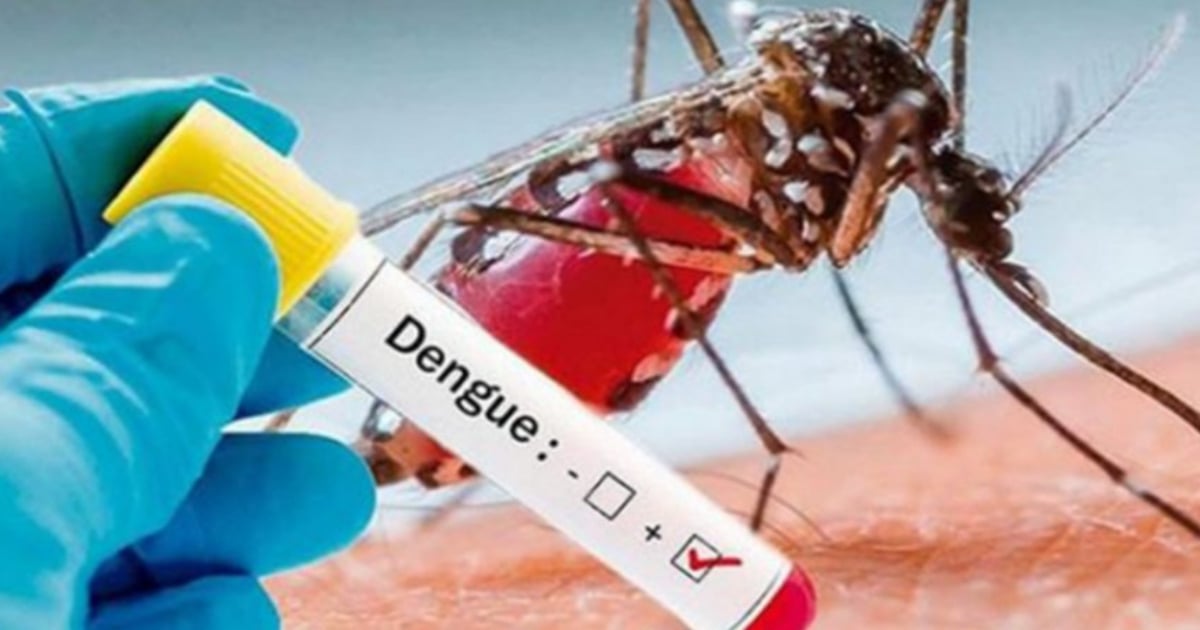
For many decades, the Cuban population has been plagued by dengue fever. Despite the concurrent presence of chikungunya and Oropouche this year, the Aedes aegypti mosquito remains a significant threat, showing no signs of declining.
Ricardo R. González, a journalist supporting the government, spoke with Wilfredo Castañeda López, who offered insights into why this disease continues to spread across Cuba.
The head of the Department of Entomological Surveillance at Villa Clara’s Provincial Center of Hygiene, Epidemiology, and Microbiology emphasized that dengue persists as an endemic disease in Cuba due to the mosquito’s adaptability and insufficient efforts to control breeding grounds.
One alarming revelation from the expert was the mosquito's ability to be born already carrying the virus, a phenomenon known as vertical transmission. “Infected female mosquitoes can pass the virus to their offspring, meaning that adults may spread the virus without having bitten an infected human,” Castañeda explained.
He also noted that Aedes aegypti eggs are laid not directly in water but on the waterline of containers, where they can survive dry conditions for over a year. When water refills these containers, the larvae hatch, perpetuating the transmission cycle.
Impact on Villa Clara
According to Castañeda, Villa Clara ranks among the most affected provinces in Cuba, recently identifying over 1,300 mosquito breeding sites. Nearly 43% of these are concentrated in the provincial capital, followed by areas such as Manicaragua, Placetas, Encrucijada, and Sagua la Grande.
Various factors contribute to this rise. Castañeda pointed out the under-resourced vector control teams, operating at only 49% capacity, fuel shortages hindering fumigation efforts, a low public risk perception, and the proliferation of uncovered water containers and garbage, all of which create breeding grounds for mosquitoes.
Challenges in Control Efforts
Despite being crucial, fumigation cannot be conducted intensively due to resource constraints. Additionally, the mosquitoes have developed genetic resistance to commonly used pesticides, further diminishing their effectiveness.
In spite of state campaigns and propaganda, Castañeda acknowledged that only between 40% and 50% of urban areas are inspected, making comprehensive vector control unattainable. “Dengue kills, facilitated by human negligence,” he stated bluntly.
Health Crisis and Government Response
Official statistics from the Ministry of Public Health illustrate the severity of the issue, with Cuba reporting a rate of 20.66 suspected dengue cases per 100,000 inhabitants, while chikungunya and Oropouche also circulate in various provinces.
In Latin America, the Pan American Health Organization recorded nearly four million dengue cases and over seven thousand deaths in 2025, with Brazil, Peru, and Bolivia being the hardest hit countries.
Castañeda stressed the importance of proactive household inspections and avoiding self-medication for fever symptoms. Basic measures like paracetamol, rest, and hydration remain crucial to preventing severe complications.
Amid the resurgence of mosquito-borne diseases, the Cuban regime recently acknowledged the loss of control over arboviruses in the country, with dengue, chikungunya, and Oropouche affecting thousands. Health authorities admitted that Aedes aegypti infestation levels are out of control and that fumigation campaigns have been ineffective in curbing virus spread.
Health professionals have voiced concerns about the dire situation and the lack of fundamental resources in hospitals. Some doctors have even called for international intervention to address a worsening health crisis exacerbated by medication shortages, lack of diagnostic equipment, and the limited responsiveness of public institutions.
Facing growing pressure and criticism, the government announced the production of natural repellents as part of an emergency plan to reduce infections. However, experts consider this measure a delayed and insufficient response to a structural problem that requires sustainable solutions, investment in sanitation, and a more efficient surveillance system.
Cuban Dengue Crisis: Key Questions Answered
Why does dengue remain a major issue in Cuba?
Dengue continues to be a significant problem in Cuba due to the Aedes aegypti mosquito’s adaptability and ineffective control of breeding sites, as well as insufficient resources for fumigation and public awareness.
What is vertical transmission in mosquitoes?
Vertical transmission refers to the ability of infected female mosquitoes to pass the dengue virus to their offspring, resulting in new mosquitoes that can spread the virus without direct human contact.
How does the Cuban government plan to address the dengue crisis?
The Cuban government has announced the production of natural repellents as an emergency measure, though experts argue that comprehensive solutions, including improved sanitation and surveillance, are needed to tackle the issue effectively.