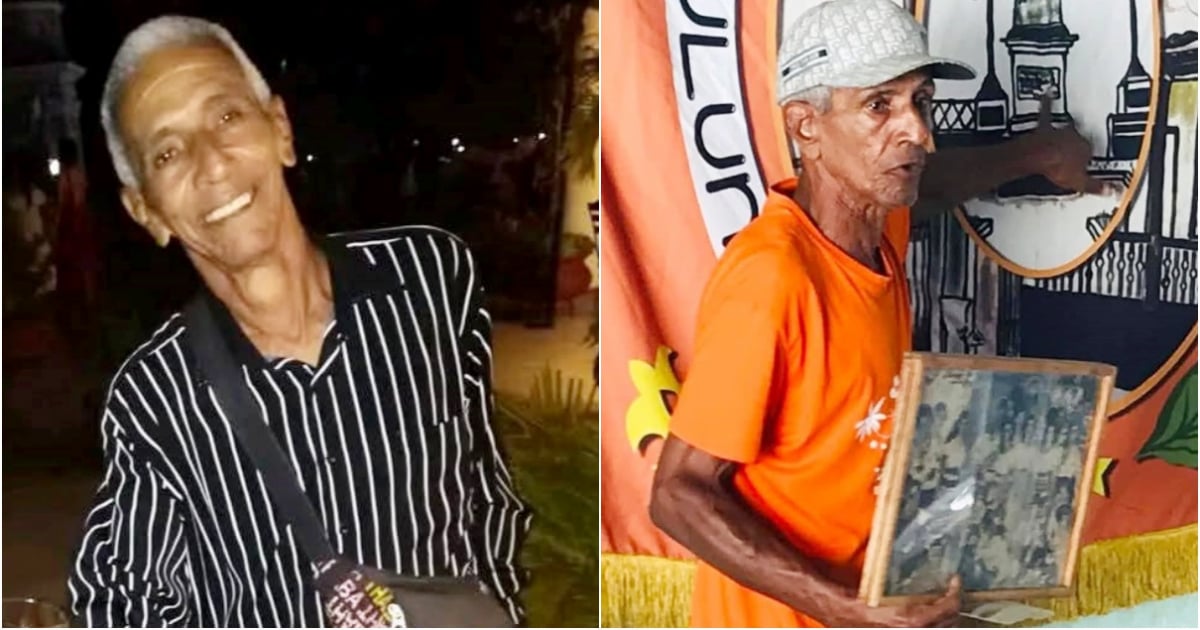
The city of Santiago de Cuba is grieving following the passing of Carlos Acosta Laguna, the director of Paseo La Placita and a cherished figure in the heart of the Santiago carnival scene.
“His departure marks the loss of a cornerstone in our city's cultural heritage, and a man who profoundly impacted the lives of those fortunate enough to know him," shared journalist Yosmany Mayeta Labrada on social media.
Mayeta reminisced about meeting Acosta during his teenage years, a time when he was just a dancer eager to learn, while Acosta was already a distinguished choreographer at Paseo La Placita. Under the guidance of the late Francisco Zarzabal 'El Nene,' Acosta became a mentor and role model within the vibrant environment of drums and endless rehearsals.
“As a choreographer, Carlos had a unique gift for turning dance moves into cultural identity and transforming simple formations into expressions of belonging. Together with other notable carnival choreographers, he elevated La Placita's artistry to a level that resonated across generations," Mayeta recalled.
Later, as the director of the parade, Acosta's influence grew even more apparent. He was a vigilant custodian of La Placita's history, a staunch advocate for its roots, and a tireless worker for popular culture," the journalist emphasized.
In 2017, Acosta Laguna was honored with the Premio Memoria Viva in the Personalities category for his dedication to preserving tradition.
For many years, academics, researchers, and media outlets sought his authoritative insights on the origins and evolution of the parade. Throughout his tenure at the helm of La Placita, he consistently garnered unanimous support from those who appreciated his dedication.
"Today, his passing not only casts a shadow over the carnival but also over all of us who have ever walked, danced, or dreamed within La Placita," the journalist added, noting that neither Acosta's age nor the cause of death was disclosed.
"Those of us who grew up there, who have felt the carnival pride since childhood, know that men like 'Carlitos' never truly die; they become tradition. Santiago loses a director. La Placita loses a pillar. We lose a mentor. Yet his legacy will continue in every July parade and every drumbeat. Carlos shaped not just a parade but also memory, identity, and spirit," concluded Mayeta Labrada.
The passing of Carlos Acosta Laguna has deeply impacted artists, carnival participants, and generations of Santiago residents who saw in him more than a choreographer; they saw a teacher, a mentor, and a symbol of popular identity.
A City in Mourning
Acosta Laguna's death has sparked an outpouring of grief on social media, where countless people shared their sorrow, gratitude, and admiration.
Many remembered him for his generosity, artistic rigor, unwavering commitment to his community, and warm personality.
Here are some of the most poignant reactions:
"A stalwart of our Santiago culture, a master of masters, unforgettable," one user wrote.
"Thanks for teaching us the art of dance. We shared many years at La Placita, from childhood to adolescence," recalled another.
"A great artist and an even greater father has left us. You leave a vast void, my king," expressed a former carnival member.
"Always kind, always ready to help. He was an exceptional neighbor," another commenter highlighted.
"He gave me my first opportunity to work in San Pedro del Mar. What a great loss"; "I knew him as a dance teacher, but also as an admirable human being. His charisma, smile, and discipline left a mark on us"; "Thank you for your patience and for never saying no to anyone. You helped everyone who approached you"; "He was the soul of the Kabiosilé project. A director of directors. May the Lord bless him," were some of the other sentiments shared.
"You were my teacher in the 1980s, and your legacy lives on in every step you taught. Eternal light for your spirit," another user stated.
"I couldn't bear to see you in that casket because I prefer to remember you alive. Fly high, Carlitos," expressed another emotional acquaintance.
In addition to these heartfelt tributes, several former dancers and artists confirmed that no representative from the Municipal Culture Directorate attended the funeral, an omission that was sharply criticized in the comments.
"It's a shame that no official institution was present at his final farewell. He was a giant in Santiago's culture," lamented one commenter.
Understanding Paseo La Placita
Paseo La Placita is one of the oldest and most beloved carnival parades in Santiago de Cuba. Originating in the 1930s in the neighborhood of the same name, it began as a spontaneous procession of young people playing makeshift drum sets from cans and dancing through the streets.
Over time, it evolved into a formal carnival group that integrates choreography, costumes, popular music, and oral tradition.
Recognized as an intangible cultural heritage, La Placita embodies not just an artistic expression but also the living history of a neighborhood that has embraced the carnival as its identity. For decades, Carlos Acosta Laguna was the heart and soul of this parade.
Frequently Asked Questions about Carlos Acosta Laguna and Paseo La Placita
Who was Carlos Acosta Laguna?
Carlos Acosta Laguna was the director of Paseo La Placita and a prominent figure in the carnival traditions of Santiago de Cuba, known for his contributions to choreography and cultural preservation.
What role did Carlos Acosta Laguna play in Paseo La Placita?
Carlos Acosta Laguna served as both a choreographer and the director of Paseo La Placita, where he was instrumental in elevating its artistic standards and preserving its cultural heritage.
What is Paseo La Placita?
Paseo La Placita is a historic carnival parade in Santiago de Cuba, renowned for its vibrant choreography, costumes, and music, reflecting the cultural identity and history of its neighborhood.