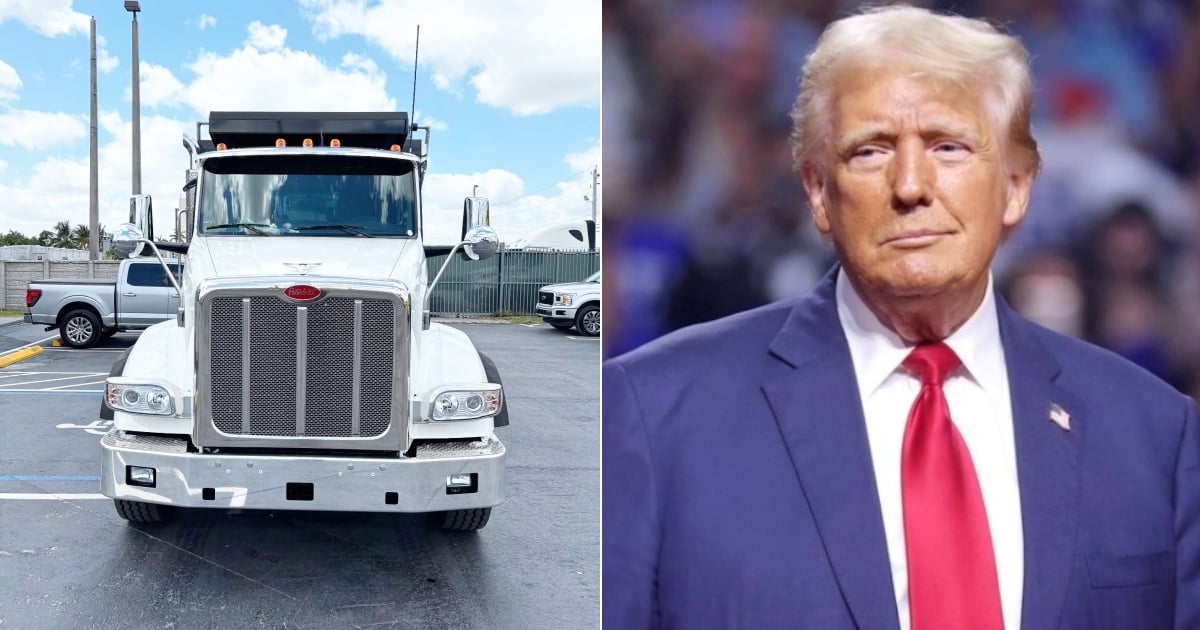
A federal appeals court in Washington D.C. has temporarily halted the implementation of a rule proposed by the U.S. Department of Transportation (DOT) that aimed to significantly restrict immigrants from obtaining commercial driver's licenses (CDL).
Unveiled in September, this regulation sought to limit eligibility to holders of only three specific visa types, excluding those with expired permits or other immigration statuses.
The court found that the federal government "failed to follow proper procedure in creating the new rule" and additionally "did not explain how the rule would enhance safety," as reported by American media outlets.
According to data from the Federal Motor Carrier Safety Administration (FMCSA), immigrants account for approximately 5% of CDL holders but are involved in just 0.2% of fatal accidents, challenging the narrative that underscored the need for the rule.
The Florida Incident That Sparked Controversy
The creation of this rule followed a widely publicized incident in Florida. Harjinder Singh, an Indian immigrant who entered the United States from Mexico in 2018, was accused of causing a truck accident in Fort Pierce that resulted in three fatalities.
Singh, who obtained his license in California, failed multiple knowledge and English proficiency tests in Washington state, according to court documents.
This case triggered intense scrutiny over the licenses issued to immigrants and was cited as a justification for tightening federal standards. However, the court found insufficient evidence to warrant a sweeping regulatory response affecting thousands of drivers indiscriminately.
Florida's Political Pressure and Practical Implications
Florida has been among the most aggressive states in the immigration and road safety debate.
Following the Fort Pierce accident, the state government intensified legal actions against states like California and Washington, accusing them of issuing CDLs to immigrants without meeting federal requirements for immigration verification and English proficiency.
An audit in California revealed that 17,000 licenses had been granted to immigrants with expired work permits, prompting the state to revoke those licenses.
However, following the recent court ruling, the restrictions are on hold, and states must continue operating under previous regulations. This means many immigrants who were ineligible under the new rule can continue to renew or maintain their licenses while litigation is ongoing.
For Florida, this presents a dilemma. While maintaining a tough stance on immigration, the state must also confront the practical consequences of restricting access to drivers in a sector already facing a workforce shortage. Freight transportation is vital for industries like agriculture, retail, and tourism in the state.
Federal Tensions and Reactions
The court's decision also questions the use of regulatory tools to impose restrictive immigration policies without clear technical support.
The DOT had indicated that the new rules would disqualify about 10,000 of the 200,000 current immigrant CDL holders. It also proposed that immigration status be verified through a federal database and that licenses be valid for only one year.
The Owner-Operator Independent Drivers Association (OOIDA), representing over 150,000 truckers, supported the measures. In a statement, its president Todd Spencer wrote, "Suspending visas for commercial truck drivers will help ensure that only qualified individuals obtain licenses," adding that "the misuse of visa programs [...] has led to an influx of drivers into our country who struggle to operate safely in full compliance with regulations."
Meanwhile, Transportation Secretary Sean Duffy announced in October that $40 million in federal funds would be withheld from California for refusing to enforce English language requirements during roadside inspections. To restore the funds, the state must ensure its inspectors evaluate drivers' English proficiency.
An Uncertain Outlook
The court ruling does not permanently eliminate the rule but freezes it while the legal process unfolds. This leaves states uncertain about their immigration and transportation policies.
For Florida, this could mean revising internal procedures or even adopting additional measures to strengthen immigration control, albeit without a federal mandate in place.
In the meantime, thousands of immigrant drivers will remain on the road with valid licenses, playing a crucial role in the national supply chain, at least until the courts decide whether the Trump administration's rule fits within the country's regulatory framework.
The judicial halt on federal restrictions for immigrant commercial licenses marks a turning point in a debate intertwining immigration policy, road safety, and economic needs. While Florida and other states will continue to push for stricter measures, the ruling underscores the importance of following legal procedures and basing public policies on objective data rather than isolated cases or perceptions. The controversy is far from over.
Frequently Asked Questions About Immigrant Commercial Driver's Licenses
What led to the court halting the Trump-era rule on commercial licenses?
The court stopped the rule because the DOT did not follow correct procedures and failed to demonstrate how the rule would enhance safety.
How does the court decision impact immigrant CDL holders?
The decision allows many immigrants who were ineligible under the new rule to continue renewing or maintaining their licenses while the legal process is ongoing.