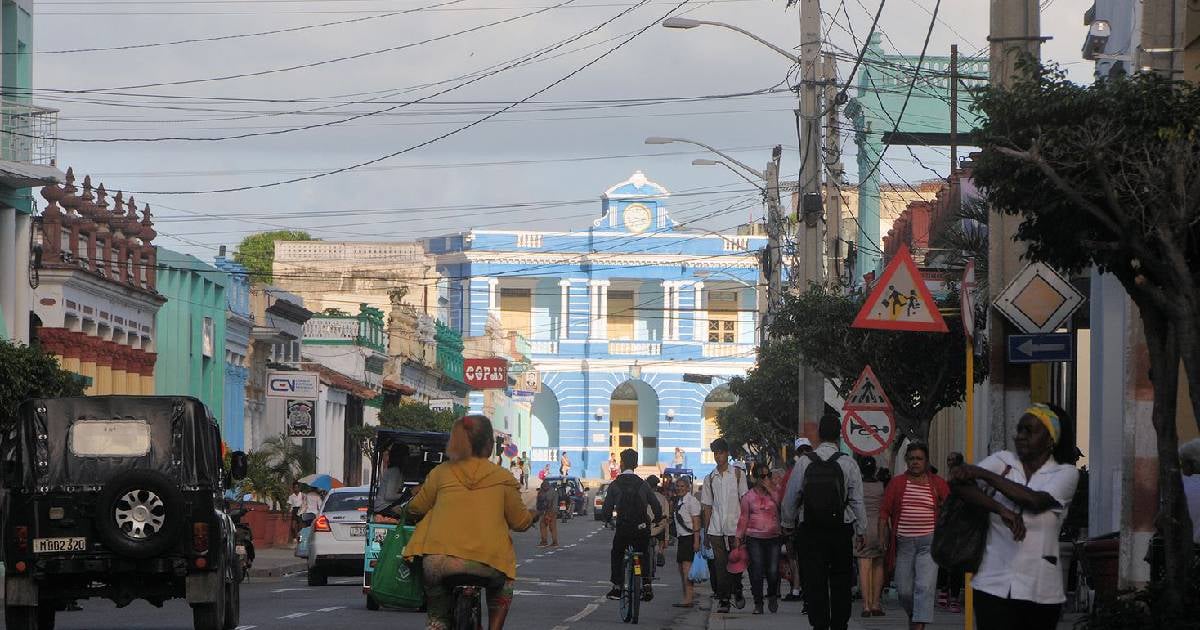
The Cuban government has refuted claims of a health crisis in the Las Tunas province following the spread of messages and complaints on social media alleging an increase in illnesses and deaths in the eastern region.
According to an article by the official media outlet Tiempo21Cuba, the General Directorate of Health in Las Tunas stated that there has been "no unusual increase in mortality associated with viral outbreaks during the indicated dates."
Released on November 15, the statement attributes the public alarm to the circulation of "unverified messages" and urges the population to rely only on "official channels" for information.
Health authorities confirmed that epidemiological surveillance continues, and healthcare institutions in the area "are providing timely medical assistance at all levels of care."
They also noted that the health system has implemented "a series of actions" to address the situation, especially in light of damage caused by Hurricane Melissa.
The statement concludes by encouraging citizens not to "spread rumors or unverified publications that aim to undermine confidence in institutions and disrupt social tranquility."
However, official statements were quickly challenged by numerous social media users, who insisted that the health situation in Las Tunas is far more severe than what the government is admitting.
Danay Torrejón directly questioned the purported actions mentioned in the statement. "Could you list the actions taken and where? There are mosquitoes and trash everywhere, the communal services are missing, and there are no fumigations. At the clinics, they don't even examine you; they tell you to find something on Revolico and take that because they don't even have thermometers," she wrote in an extensive comment criticizing the lack of official transparency.
Katy Martínez also expressed skepticism: "We want to know what measures have been taken because I don't see them anywhere, I just see everyone getting sick and nobody even coming to collect the trash."
Other users, like Rafelito Parra, reported the spread of the virus and the lack of state response: "You have to be shameless to publish something like that when there are people who caught the virus and didn't make it. In my neighborhood, there's not a single person who isn't sick. The first thing they should do is suspend classes to prevent more children from getting infected."
Meanwhile, Nelson Jiménez Díaz pointed out the concealment of information: "If there were a crisis, they wouldn't report it. The dumps are still in the streets, and the number of cases is also increasing," while Iliana Vargas Marrero demanded clarity: "There are many sick people throughout the province, and I haven't seen any fumigation. Could they explain the actions taken so that people can be more at ease?"
For Lisbet Rodríguez, the measures are insufficient: "The virus is increasing every day. In my block, everyone is sick, the street is a dump, and full of mosquitoes. Don't try to cover up the sun with a finger, the situation is quite grim."
In a similar vein, Mario Suñol compared the lack of information to what happened after Hurricane Melissa: "There might not be deaths directly caused by the disease, but there are many people with associated conditions who have died. They also claimed there were no deaths from Melissa, but there were. There are no medications or fumigation. Tell the truth, we are not fools."
Sandra de la Peña Ávila called for transparency: "I haven't seen any actions, but plenty of trash, leaks, and sick people. We only ask for truth, not excuses."
Dai Acosta, a resident abroad, reported knowing at least three people who died in Las Tunas with a positive diagnosis. "They tell you that you tested positive for the virus, but they don't specify which one. The virus of communism is the one causing the most harm," she wrote with irony.
The reactions reflect the growing public discontent over the lack of information and health management in the province.
While authorities repeat that "everything is under control," the population insists that outbreaks, trash, and mosquitoes remain part of the everyday landscape.
Amid the rise of arboviruses in Cuba, many citizens are questioning the whereabouts of José Ángel Portal Miranda, the Minister of Public Health, whose media absence has fueled speculation about the handling of the current health crisis.
The institutional silence has been interpreted by many as an evasion of effective action.
Testimonies leave no room for doubt: entire families are falling ill due to mosquito-borne diseases like dengue or chikungunya, lacking access to medications and qualified medical personnel.
Many affected individuals report having to self-medicate or resort to makeshift solutions in a context where institutions seem absent or overwhelmed.
In response to public pressure, the regime has started producing handmade natural repellents, a belated and questionable measure that highlights the lack of state planning in the face of cyclical epidemic outbreaks.
This initiative does not solve the structural problem of vector control, nor does it replace the fumigation campaigns that have been reduced or eliminated in many areas of the country.
Dr. Francisco Durán himself publicly admitted that the situation is critical, though he attempted to downplay its overall impact.
He acknowledged an increase in arbovirus cases and urged the public to intensify hygiene measures, but without mentioning structural solutions or concrete measures by the health system to contain the virus spread.
Understanding the Health Situation in Las Tunas
What are the main concerns raised by the citizens of Las Tunas?
Residents of Las Tunas have expressed concerns about the spread of mosquito-borne diseases, the lack of medical supplies, inadequate waste management, and insufficient public health measures.
How have the authorities responded to the allegations of a health crisis?
Authorities have denied the existence of a health crisis, attributing public alarm to unverified messages, while claiming that health surveillance and timely medical assistance are ongoing.
What actions are being taken by the government to address the situation?
The government has started producing natural repellents and claims to have implemented a series of actions to manage the health situation, though many residents report a lack of visible measures.
What are the implications of the current health crisis for the residents?
The ongoing health issues have led to widespread illness, self-medication, and public dissatisfaction with the perceived inaction and lack of transparency from health authorities.