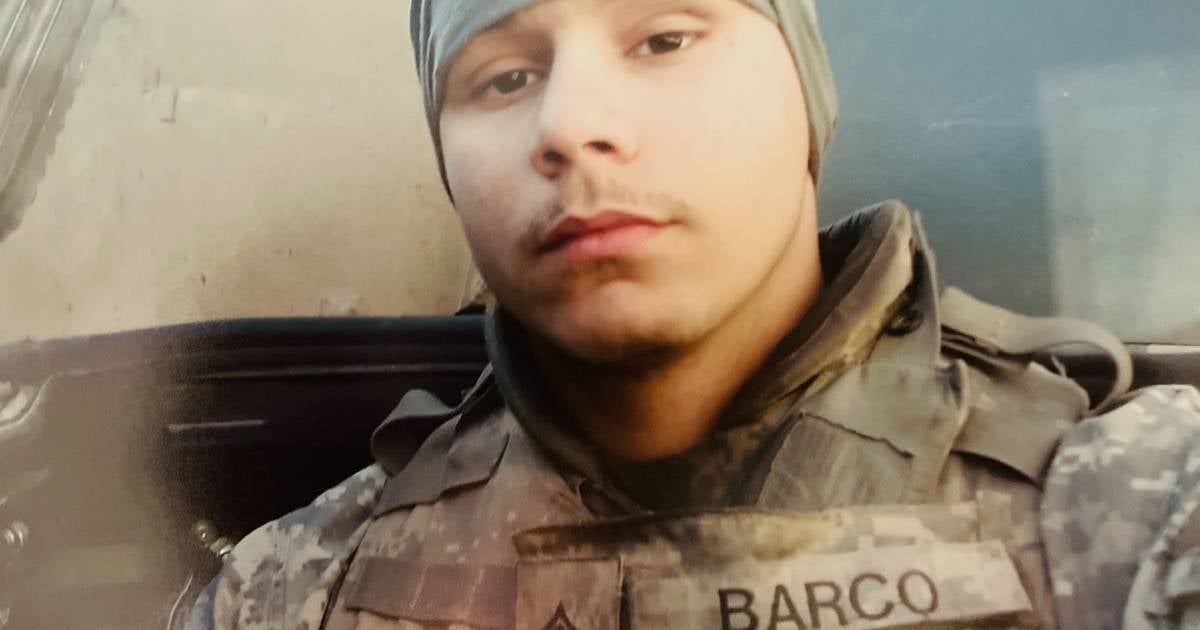
Before Immigration and Customs Enforcement (ICE) deported José Barco-Chirino, a 39-year-old sergeant, the events leading up to his deportation revealed a story steeped in deeper injustice and complexity than what was previously known to the Cuban public.
Military documents, medical testimonies, statements from his wife, and media reports confirm that this Iraq War veteran, the son of Cuban exiles and a recipient of the Purple Heart, should never have been redeployed, never received proper treatment for his injuries, and his citizenship application was lost by the state.
"This is a story of multiple failures by the U.S. military to one of its own, of a man who fought and shed blood for the United States believing he was earning the right to be called American, only to face deportation proceedings, and the tragic intersection of a new era of immigration policy with unfortunate timing," expressed Anna Stout, former mayor of Grand Junction, Colorado, to NPR.
Known as "Cuba" in Detention
According to an NPR report published in April, within the ICE detention center in Texas, José Barco was not recognized as "the hero" or "the Purple Heart recipient." He was simply referred to as "Cuba."
Born in Venezuela, Barco is directly tied to the Cuban exile community. His father was a political prisoner in Cuba, jailed for opposing the regime. After being released, the family fled first to Venezuela, where José was born, and later sought political asylum in the United States.
Barco arrived in the U.S. at the age of four, where he grew up, studied, and eventually served as a soldier. Throughout his childhood, he heard the tales of Cuban exile at home. Thus, when detained by ICE, other immigrants recognized him for his Caribbean accent; the son of Cuban dissidents, raised in America.
The Struggle of Identity and Deportation
This heritage, ironically, worsened his plight. When ICE attempted to deport him to Venezuela, the Venezuelan authorities rejected him. According to NPR, they doubted his birth certificate, claimed he "sounded Cuban," and insisted his story didn't align with that of a Venezuelan.
One official reportedly told him, "It's not good for you to be here. You're not from here. You have no one," NPR highlighted.
Regarding this, Barco told CNN, "My service, my sacrifice, my bloodshed didn't matter. I'm basically a man without a country."
An Unprotected Hero from Iraq
Barco's military history is well-documented by Frontline (PBS), which aired a 2010 report about his unit titled "The Wounded Platoon." He was deployed twice to Iraq, engaged in intense battles, and in 2004, survived a car bomb attack that hurled him against a wall while his comrades were trapped under a burning Humvee.
Military doctor Ryan Krebbs told NPR, "They were unconscious when he pulled them out. Barco was on fire after lifting the vehicle."
For this bravery, he was awarded the Purple Heart, a military decoration for those wounded or killed in action. The most critical part came after, when his traumatic brain injury (TBI) went undiagnosed and untreated.
Frontline confirmed there is no initial medical record evidence of Barco being unconscious or suspected of TBI, despite him suffering insomnia, nightmares, irritability, and hearing loss months later.
Returned to Combat Despite Injuries
His wife, Tia de Barco, told Fuser News that today, the military wouldn't allow a soldier with such injuries to return to combat: "That's now prohibited. But José was sent back."
In 2006, Barco returned to Iraq during one of the most violent years. Upon returning to the U.S., he was prescribed Ambien, a drug that can cause sleepwalking and automatic behaviors. Yet, two weeks before the incident that led to his imprisonment, his medication was changed, his wife explained.
"You're at war for four years, you come back, your medications change, and you get into an altercation where you're attacked... you can feel like you're back in combat," she noted.
The 2008 incident, where he injured a pregnant woman, resulted in a 15-year sentence. On the day he was released from prison, ICE was already waiting for him.
NPR confirmed an important fact: his commander in Iraq, Lieutenant Colonel Michael Hutchinson, certified that Barco completed his naturalization application in 2006 and was fully eligible. In his memo, quoted by NPR, Hutchinson wrote, "His approval should have occurred by late 2006. The package was lost."
Years later, Barco attempted to reapply for citizenship without success, as documented by CNN, Arizona Mirror, and NewsNation.
A GoFundMe campaign has also become crucial to understanding his case's magnitude. Besides raising funds, it publicly denounces how the U.S. treated a soldier who bled for the country.
The campaign emphasizes his Cuban family origin and the symbolism of his military service: "Sergeant Barco did what most Americans don’t, and he did it because this country gave him and his family a home when fleeing the Cuban regime."
It seeks assistance for legal expenses, basic needs, and medical care, noting that Barco can no longer access VA services following deportation:
"Your contributions will help cover legal fees, ensure the essentials while he rebuilds his life in a foreign country, and provide an initial payment for medical care as his family navigates the limited options available through the VA's Foreign Medical Program."
As of April 2025, the Department of Homeland Security (DHS) acknowledged that over 900 veterans have been deported or are at risk of deportation, despite their military service.
For veteran organizations, this statistic is devastating. Ricardo Reyes, director of VetsForward, told Arizona Mirror, "When a veteran is deported, all veterans are dishonored."
Frequently Asked Questions About José Barco's Deportation
What was the reason for José Barco's deportation?
José Barco was deported despite his military service due to a combination of lost citizenship paperwork and changing immigration policies.
How did José Barco's military service impact his deportation case?
His military service was a crucial aspect, as it highlighted the failures in the system that should have protected and supported him as a veteran.
What actions are being taken to support José Barco?
A GoFundMe campaign is raising funds for legal fees, basic needs, and medical care, while advocates continue to push for policy changes.