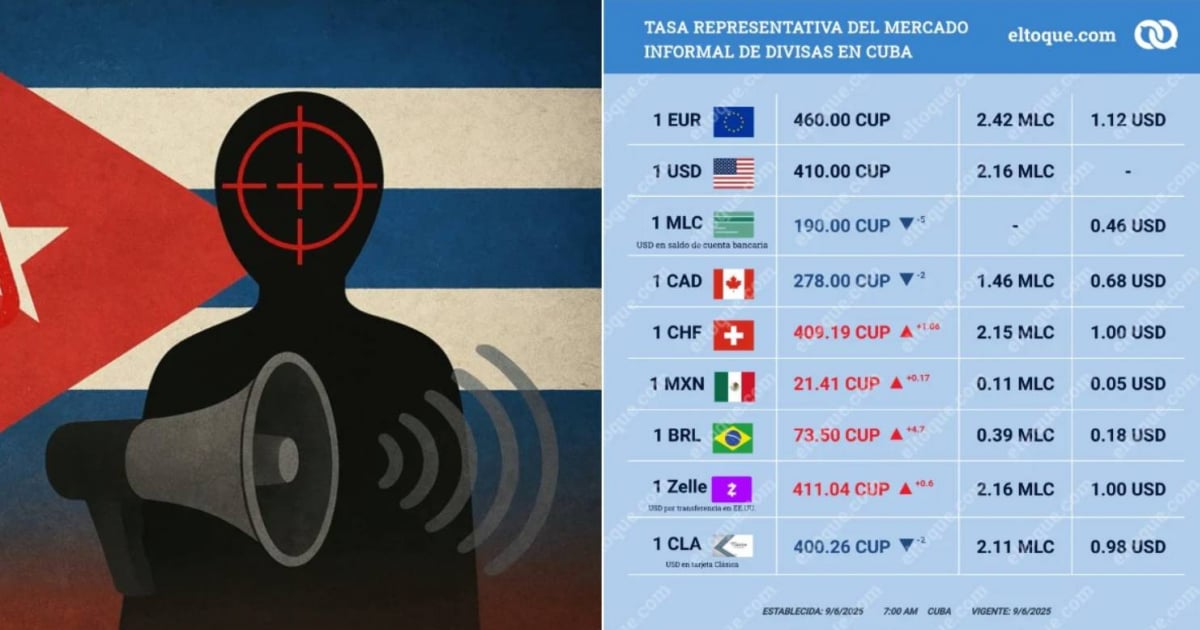
Social media erupted with reactions this past Saturday after Cuban Vice Prime Minister Roberto Morales Ojeda launched an attack on the independent platform El Toque, accusing it of "manipulating" the economy and "serving the interests of the United States government."
In a post on his X account (formerly Twitter), Morales Ojeda declared, "The subversive and manipulative role of digital platforms like El Toque, financed and operating at the service of the U.S. government, clearly shows their purpose: to intensify the economic war against Cuba and severely depress the income of our people."
However, this statement triggered a wave of responses from users both on and off the island, many of whom accused the government of attempting to shift blame for the national economic collapse.
"The blame lies with the @PartidoPCC. Idiots," replied user @FidelLadron1959. "The government doesn't need help depressing the people's income; you do a fine job of it yourselves," wrote @ogarciazaldivar, in a message that garnered numerous reactions.
Another user mocked the official stance, saying, "It's laughable to think a digital platform weighs more in Cuba's finances than the almighty State and the Central Bank of Cuba." Others echoed this sentiment, pointing out that the attacks on El Toque merely highlight the government's inability to take responsibility for the economic crisis plaguing the country.
"Pure lies, the only ones responsible for the country's crisis are you. Stop blaming others. You're mediocre in everything you do," wrote another network user.
Meanwhile, government supporters echoed hashtags like #NoAlToque and #UnidosXCuba, arguing that the platform "is an imperial tool" exploiting the effects of the blockade to create dissatisfaction.
Morales Ojeda's statements add to the state campaign against El Toque, spearheaded by Miguel Díaz-Canel himself, who accused the independent media outlet this week of receiving external funding to "devalue the Cuban currency" and "attack the national economy."
The president asserted on his X account that "the economic war against Cuba is designed to depress the income of the Cuban people to the maximum," and that the digital portal is part of that strategy.
The Central Bank of Cuba (BCC) backed these accusations, labeling the Informal Market Representative Rate (TRMi) published by El Toque as a "distorted signal" affecting prices and public decision-making.
Nonetheless, the BCC does not provide a transparent official exchange rate or a functional market to regulate the buying and selling of foreign currency in the country.
Activists and citizens have defended El Toque's work, emphasizing that the platform doesn't set the currency's value but rather reports information based on data collected from the informal market.
"El Toque doesn't create the exchange crisis; it merely reflects it. The blame isn't on them but on a government that charges in dollars and pays in worthless pesos," commented a user identified as @luqasman.
Activist Amelia Calzadilla also pointed out that the dollar's rise isn't due to external algorithms but rather to the government's own policies: "They sell food and appliances in foreign currency while paying miserable wages in pesos. That's what depresses the people's income."
For many Cubans, the offensive against El Toque is nothing more than an attempt to divert attention from the uncontrolled inflation, power outages, and food shortages that have been plaguing the island for months.
Understanding Cuba's Economic Crisis
What actions has the Cuban government taken against El Toque?
The Cuban government has accused El Toque of manipulating the economy and serving U.S. interests, as part of a broader campaign against the platform. This includes statements from high-ranking officials like Roberto Morales Ojeda and Miguel Díaz-Canel.
How is El Toque perceived by Cuban citizens?
Many Cuban citizens see El Toque as a platform that reflects the reality of the country's economic state rather than manipulating it. Activists and users defend its role in reporting data based on informal market exchanges.
What are the main causes of the economic crisis in Cuba?
The economic crisis in Cuba is attributed to various factors, including government policies that involve selling goods in foreign currencies while paying low wages in local pesos, and the impact of the U.S. blockade.