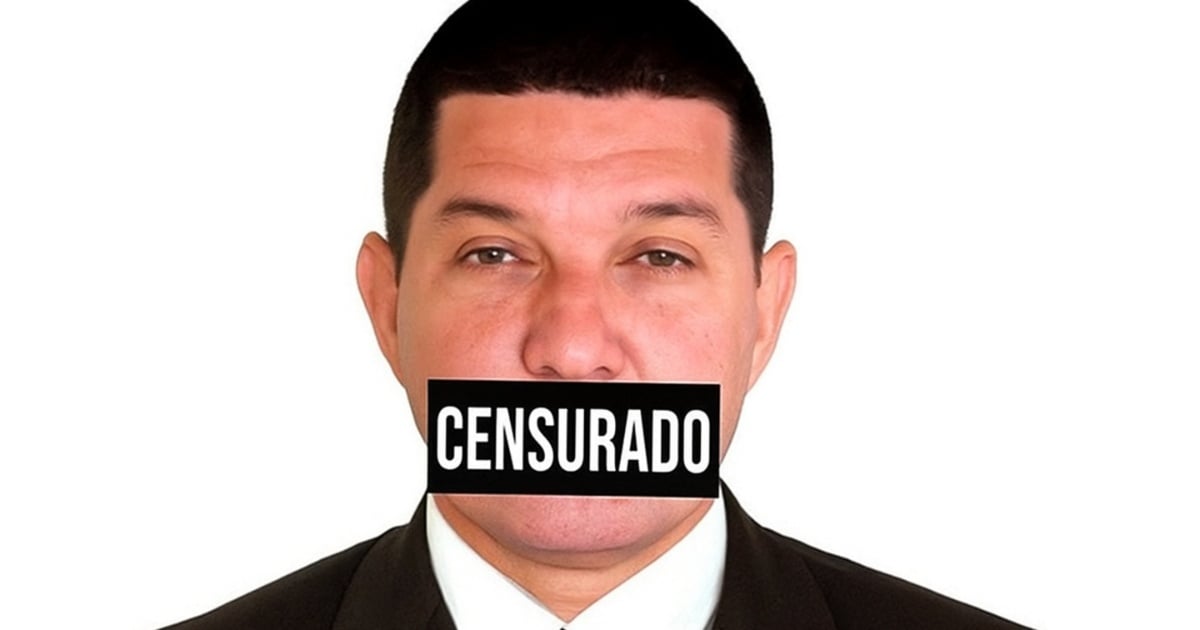
William Sosa, a Cuban resident from the province of Las Tunas, has been arrested for his social media posts criticizing the country's current state, according to his son, Miguel Sosa. Miguel insists that his father's sole "crime" was "thinking and writing."
In a social media post, Sosa's son revealed that State Security has charged his father with "disobedience" for ignoring prior warnings about his dissenting posts.
The family argues that this is an arbitrary arrest driven by his political views amidst a backdrop of increasing censorship and suppression of citizens who use the internet to challenge the regime's governance.
Miguel outlined that his father received an official summons and was subsequently detained on Wednesday, calling for public support to bring attention to the situation.
"His 'crime' was thinking and writing," Miguel wrote, portraying his father as a respectful man devoted to analyzing national issues and advocating for consistency and honesty in public discourse. "His only 'offense' was doing exactly what you have followed and respected for so long: sharing his economic and social analyses here."
In a broader statement, Miguel labels the arrest as illegal and "without legal foundation," emphasizing that Cuba's Constitution ostensibly upholds freedom of thought and expression, yet in reality, "human rights seem to be just hollow words."
He highlights that authorities issue "subjective warnings" without legal backing and arrest individuals for exercising their right to expose corruption and suggest solutions, rather than pursuing crimes like violence, femicides, theft, or extortion, which — he claims — go unpunished due to a lack of investigation.
In comments on the post, the son explains that the charge of "disobedience," covered under articles 186 and 189 of the Cuban Penal Code, carries penalties of six months to two years in prison or fines of up to five hundred quotas.
The family also shared an official summons as evidence that authorities had previously demanded his presence before the arrest was carried out.
Miguel emphasized the emotional toll of the situation: "There is a home that needs him, that is waiting for him, and that from this moment suffers a terrible anguish because of this situation."
He describes his father as an inconvenient yet non-violent voice for those in power: "All he has done is stand up for coherence, denounce corruption, and propose solutions... he never attacked anyone nor crossed any boundaries; he simply spoke from intelligence and reason."
In his view, the arrest represents yet another example of political persecution and the "unrestrained attack by institutions to silence the citizenry."
The situation of William Sosa unfolds in an environment where social media in Cuba has become a hazardous space for those expressing critical views on the country's economic, political, or social conditions. The complaint recalls, for instance, the case of an individual detained in Santa Clara after posting messages against power outages, which authorities interpreted as a threat to the "established order."
Such incidents, like the current one, have showcased the use of repressive tactics in response to peaceful digital expressions.
The text also references the application of "gag laws" and new regulations that extend the arsenal for punishing users for their online opinions, even when discussing personal experiences or citizen complaints.
Under this legal framework, fines, confiscations, and threats have been imposed to instill fear and curb public debate.
In Las Tunas, Sosa's son criticizes that while thousands of common crimes remain unaddressed, efforts are exhausted in silencing criticism to present an image of a perfect state that is not.
Miguel demands "FREEDOM FOR WILLIAM SOSA" and reminds everyone: "Behind this account that inspires so many, there is a family that only asks for justice and his return home."
Understanding the Legal and Social Context of Cuban Censorship
What charges is William Sosa facing for his Facebook posts?
William Sosa is facing charges of "disobedience," which under Cuban law can result in penalties of six months to two years in prison or fines of up to five hundred quotas.
Why is Sosa's arrest considered arbitrary by his family?
His family considers the arrest arbitrary because they believe it is motivated by his political opinions and the expression of these views on social media, which they assert is an illegal act with no legal foundation.
How does the Cuban government respond to criticism on social media?
The Cuban government often uses repressive measures, including arrests, fines, and threats, to silence criticism expressed on social media, utilizing laws and regulations that criminalize dissenting opinions.