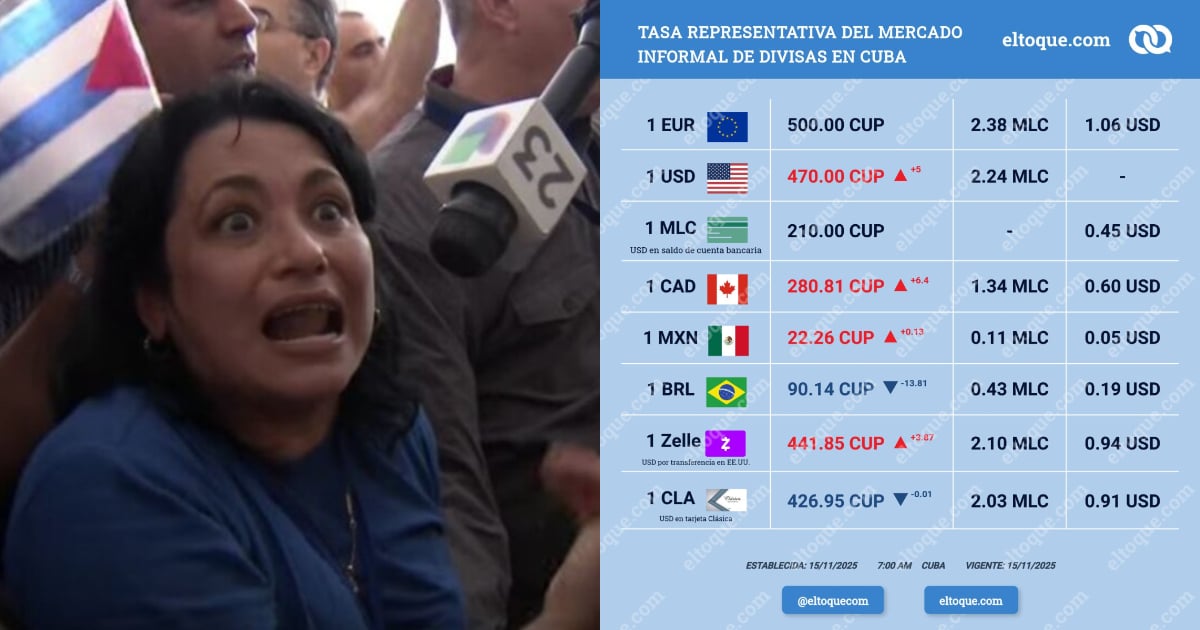
Susely Morfa, the first secretary of the Communist Party in Villa Clara, joined the official campaign against the independent media outlet El Toque on Saturday, accusing it of being a "harmful actor" to the economy. However, her statement was met with a wave of ridicule and comments pointing to the Communist Party of Cuba (PCC) as the true cause of the nation's economic decline.
In a post on her X account, Morfa shared a message titled "El Toque: From Economic Terrorism to Currency Trafficking," accusing the outlet of manipulating the economy under the guise of providing news services.
Morfa portrayed the media outlet as a threat to the stability of Cuban families, but the public reaction was swift and predominantly critical. One user, Osvaldo, commented, "The problem isn't El Toque; it's the PCC," while highlighting that dollar stores, peso salaries, and the failed Tarea Ordenamiento were all government decisions.
Another user remarked, "El Toque is the mirror where the dictatorship refuses to see itself."
Esperanza labeled the accusation of economic terrorism against a platform that publishes unofficial exchange rates as "insane," noting that the real control comes from a system that "seizes the truth" and uses scarcity as a tool of power.
Others were more blunt. "Economic terrorism was the Ordenamiento and the reordering," stated pim-pam-pum.
"Blaming El Toque for the socialist economy's disaster is like blaming the thermometer for the patient's fever," added Arte y paz.
There were also some messages defending the government's stance, such as Carlos Ismael Álvarez's, who accused the outlet of "currency trafficking" and acting like a "clandestine bank."
Yet the majority of responses were mocking or indignant: "Propaganda has driven you mad," wrote Gisèlle A, while another user questioned, "You still haven't answered who paid for your ticket?"
The public's responses highlight the growing rejection of the government's narrative and its inability to shift blame away from Miguel Díaz-Canel's administration for worsening the economic crisis.
The day before, Díaz-Canel had targeted the media outlet, accusing it of receiving external funding to weaken the Cuban currency and being part of an alleged "economic war" against the country.
The Central Bank of Cuba (BCC) also supported these claims, questioning the legitimacy of the Informal Market Representative Rate (TRMi).
The escalation began on October 29 when Foreign Minister Bruno Rodríguez spoke of "evidence" of supposed manipulation of the exchange rate.
Following this, official spokesperson Humberto López accused the outlet of being part of a "comprehensive economic war program" and operating a "financial terrorism" scheme, even suggesting potential legal actions and listing the project among entities "linked to terrorism."
The government's accusations clash with the reality of a non-functional currency exchange market, a gap that has forced both citizens and businesses to rely on informal market rates as a reference.
The official rhetoric attempts to portray El Toque's information as the root of the currency crisis, while avoiding self-criticism of government policies that sell food, essential goods, and appliances in foreign currency stores, while people earn wages and pensions in the heavily devalued Cuban peso.
Understanding the Controversy Surrounding El Toque
What accusations did Susely Morfa make against El Toque?
Susely Morfa accused El Toque of being a "harmful actor" to the Cuban economy, alleging that it manipulates the economy under the pretense of providing news services.
How did the public react to Morfa's accusations?
The public reaction was largely critical and mocking, with many comments pointing to the Communist Party of Cuba as the real cause of the economic problems, rather than El Toque.
What is the Central Bank of Cuba's stance on the issue?
The Central Bank of Cuba supported the government's accusations against El Toque, questioning the legitimacy of the Informal Market Representative Rate (TRMi).