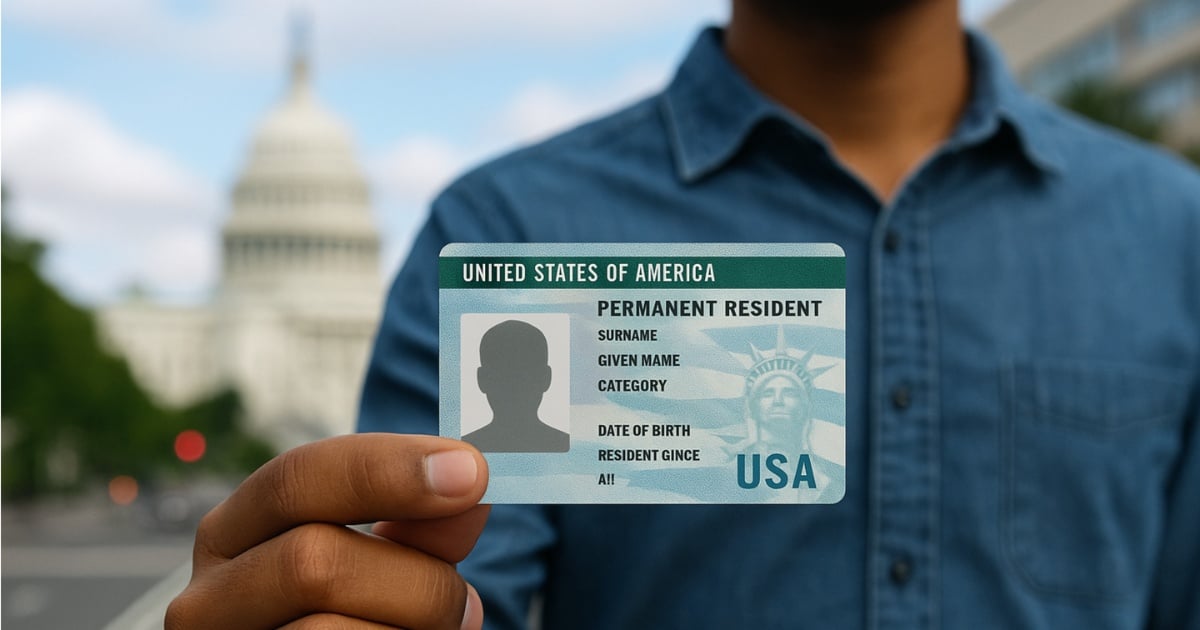
The United States government is planning to introduce a new immigration policy that could make it more challenging for immigrants from countries on President Donald Trump's travel ban list, including Cuba, to obtain green cards, asylum, parole, and other statuses.
According to internal drafts from the Department of Homeland Security referenced by The New York Times, the United States Citizenship and Immigration Services (USCIS) is set to start considering "country-specific factors"—the same ones supporting the travel ban—as "significant negative factors" when assessing applications.
This policy shift would impact green card, asylum, parole, and other status requests that require a "discretionary analysis," where officials weigh positive and negative elements before granting immigration benefits. However, this new policy would not affect citizenship applications and is still in the drafting stage.
Broader Impact on Immigration
Should this measure be implemented, it would significantly extend the administration's efforts to tighten immigration from countries deemed by Washington to lack reliable document verification systems or security cooperation.
Drafts from the agency indicate that some states don't share adequate background information, while in other instances, local authorities lack the capacity to issue passports or other documents, undermining USCIS's trust in the validity of such records.
Background and Restrictions
This discussion is part of the travel ban signed by Trump in June, targeting 12 countries, mainly from Africa and the Middle East. The order restricts travel to the U.S. for citizens from Cuba, Afghanistan, Chad, the Republic of the Congo, Equatorial Guinea, Eritrea, Haiti, Iran, Libya, Myanmar, Somalia, Sudan, and Yemen.
Additionally, it imposes partial restrictions on nationals from seven other countries, including Burundi, Laos, Sierra Leone, Togo, Turkmenistan, and Venezuela, barring them from permanent entry or certain visas.
Criticism and Legal Implications
Trump has defended the travel ban, citing a recent terrorist attack as highlighting "extreme dangers" of allowing entry to foreigners who, in the view of the White House, have not been properly vetted. He argued that individuals from these countries pose a higher risk of overstaying their visas.
Despite this, some exceptions exist: current visa holders, legal permanent residents, athletes traveling for the 2026 World Cup or the 2028 Los Angeles Olympics, and Afghans eligible for Special Immigrant Visas due to collaboration with the U.S. government in the Afghanistan war are exempt.
Immigration policy experts quoted by the Times argue that the proposal marks a major shift. Doug Rand, a former senior USCIS official during the Biden administration, called it "absurd" to apply something based on a person's country and described it as a "radical change."
Rand believes this represents an escalation of Trump's administration's attack on legal immigration, affecting individuals who have already undergone national security checks and are legally residing in the U.S.
Michael Valverde, a former USCIS official with over two decades of experience, noted that the agency has always struggled with validating documents from countries with weak security practices. However, making these difficulties a formal negative factor in applications is unprecedented.
Potential for Increased Denials
Analyst Sarah Pierce, who also worked at USCIS and now directs social policy at the Third Way think tank, asserted that "there's no way this policy won't increase denials," jeopardizing the notion of fair and impartial case reviews.
Pierce acknowledged that it is legitimate for the government to assess whether there is sufficient information to determine that an applicant poses no security threat. However, she criticized the predetermined judgment based on nationality, which could lead to legal challenges for discrimination by nationality.
The plan emerges as part of a broader movement by the administration to limit legal immigration pathways. Last month, the government reduced the number of refugees it would accept for the fiscal year and denied entry to thousands fleeing war and persecution, while reserving spots for predominantly white South African Afrikaners.
Meanwhile, USCIS has expanded social media investigations and "anti-American activities" checks for certain immigration benefit applicants, including those seeking green cards. The agency reported completing 12,502 individual social media verifications in fiscal year 2025.
According to the drafts cited by the Times, the same "negative factors" linked to the country of origin would also apply to asylum and humanitarian parole requests, potentially closing or severely complicating protection avenues for people already within the United States who have relied on individual case evaluations.
Rand emphasized that the change aims to "reach into the heart of America and shift established expectations" for those already in the country with legal status.
The draft itself acknowledges that USCIS does not know how the new policy would affect denial rates, although several experts anticipate a significant increase in rejections and a surge of lawsuits.
Pierce suggested that the rule would be especially vulnerable because, unlike the border entry ban, it applies to individuals already within the United States, introducing a different legal gray area from traditional travel bans.
For now, the plan remains in draft form, but if confirmed, it would represent another tightening of U.S. immigration policy, directly impacting green card, asylum, and other benefit applicants whose fate could increasingly depend on their country of origin.
FAQs on the Impact of New Immigration Policies
What countries are affected by Trump's travel ban?
The travel ban affects citizens from Cuba, Afghanistan, Chad, Republic of the Congo, Equatorial Guinea, Eritrea, Haiti, Iran, Libya, Myanmar, Somalia, Sudan, and Yemen, with partial restrictions on Burundi, Laos, Sierra Leone, Togo, Turkmenistan, and Venezuela.
How might the new policy affect green card applications?
The policy could lead to increased denials of green card applications by considering "country-specific factors" as significant negatives, affecting individuals from countries on the travel ban list.
Are there any exceptions to the travel ban?
Yes, exceptions include current visa holders, legal permanent residents, athletes traveling for major events, and certain Afghans eligible for Special Immigrant Visas.
What criticisms have been raised about the new policy?
Critics argue that the policy unfairly targets individuals based on nationality, compromises fair case reviews, and may increase legal challenges due to perceived discrimination.