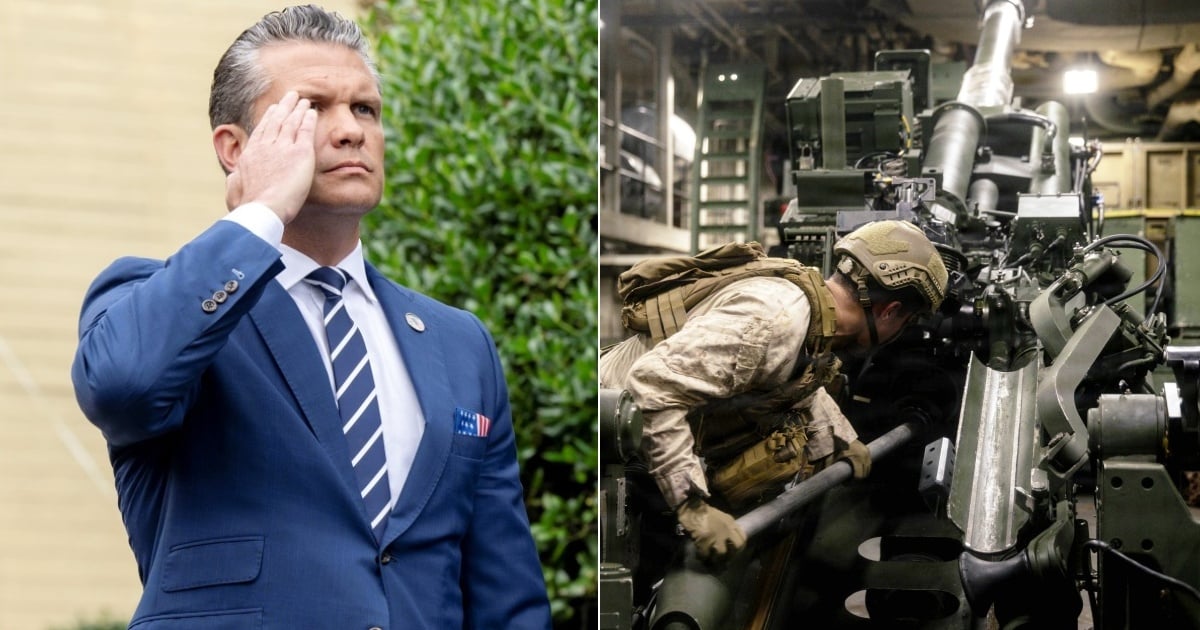
The Trump administration has unveiled a significant military operation in Latin America, dubbed "Southern Spear," signaling a strategic shift in U.S. military engagement in the region.
Defense Secretary Pete Hegseth announced this initiative, which underscores an increased military presence aimed at combating drug trafficking. However, the move also carries a political message by applying pressure on Venezuelan leader Nicolás Maduro.
Strategic Goals and Military Leadership
Announced via the social media platform X, Hegseth stated: "President Trump has directed action, and the Department of Defense is executing. Today, I announce Operation Southern Spear. Led by Joint Task Force Southern Spear and @SOUTHCOM, this mission defends our homeland, ousts narcoterrorists from our hemisphere, and shields us from the drugs killing our citizens."
The operation targets so-called "narcoterrorists," a term used to describe Latin American drug trafficking networks accused by Washington of funneling fentanyl and other synthetic drugs into the U.S. The initiative is spearheaded by the United States Southern Command (SOUTHCOM), which oversees operations in 31 countries across South America, Central America, and the Caribbean.
Assessing the True Nature of the Mission
Despite official statements, the tactical and geographic specifics of the mission remain undisclosed, prompting speculation among analysts and media over whether "Southern Spear" represents a new phase of military escalation or merely a rebranding of ongoing operations.
Since summer, the Pentagon has ramped up its presence in the Caribbean, particularly off the Venezuelan coast, with the deployment of warships, destroyers, amphibious forces, and most notably, the USS Gerald R. Ford aircraft carrier, the largest and most advanced in the world.
According to reports, Pentagon officials have also presented President Trump with "updated options" for potential military action against Venezuela, though no definitive decision has been reached.
Legal and Ethical Concerns of Military Actions
Alongside the announcement, the U.S. has escalated military operations against vessels suspected of drug trafficking. As reported by CNN, at least twenty lethal strikes have been conducted in Caribbean and eastern Pacific waters, resulting in approximately 80 deaths, many without legal justification or formal identification.
These actions have attracted criticism from European allies and regional actors, leading Secretary of State Marco Rubio to assert, "Europeans will not dictate how Washington defends U.S. national security."
Regional Reactions and Diplomatic Tensions
The Venezuelan government swiftly condemned the U.S. actions. In a televised address, President Maduro accused the U.S. of fabricating "false narratives" to justify its military buildup in the region.
Venezuelan Defense Minister Vladimir Padrino López described the U.S. deployment as a "brazen assault on the sovereignty and peace" of Venezuela and Latin America. In response, Caracas staged a domestic military exercise involving 200,000 troops to safeguard the nation against an "imperialist threat."
Underlying Motives: Anti-Drug Efforts or Geopolitical Pressure?
Experts have questioned the operation's stated objectives. Elizabeth Dickinson of the International Crisis Group noted, "An aircraft carrier offers little utility in combating drug trafficking." She argues that such a deployment serves more as a political and symbolic gesture aimed at increasing pressure on the Maduro regime rather than effectively curbing drug trade routes.
With the introduction of Operation Southern Spear, the Trump administration is executing one of the largest U.S. military deployments in Latin America in decades, cloaked in a narrative of protecting the "American neighborhood." However, the operation intertwines political motives, legal challenges, and unprecedented escalation in U.S. hemispheric policy.
In the absence of operational clarity and transparency about its implications, "Southern Spear" raises concerns on multiple fronts: regional diplomatic relations, respect for Latin American sovereignty, and the legality of lethal actions in international waters.
Key Questions About Operation Southern Spear
What is the main goal of Operation Southern Spear?
The primary goal is to combat drug trafficking in Latin America while applying political pressure on the Venezuelan government under Nicolás Maduro.
Who is leading Operation Southern Spear?
The operation is led by the United States Southern Command (SOUTHCOM), responsible for military operations in South America, Central America, and the Caribbean.
How has Venezuela reacted to the U.S. military operation?
Venezuela has condemned the operation, accusing the U.S. of using false narratives to justify militarization, and has responded with military exercises to protect against perceived threats.