Freddy Núñez Estenoz, distinguished playwright and founder of the Teatro del Viento company, has taken to social media to express his dismay over Cuba's severe health crisis. This crisis is characterized by the breakdown of healthcare services, insufficient mosquito control, and the rampant spread of dengue and chikungunya across the nation.
In a heartfelt and extensive post on Facebook, Núñez Estenoz described Cuba as "a sick, abandoned, and dying country," arguing that the current situation "is more about neglect than blockade," a direct challenge to the regime's narrative that blames the U.S. embargo for the health crisis.
"The health crisis we are experiencing today is more about neglect than BLOCKADE..., more about irresponsibility than BLOCKADE..., more about abandonment than BLOCKADE," he declared, emphasizing that the country's plight stems from widespread indifference rather than external factors.
A Nation in Distress
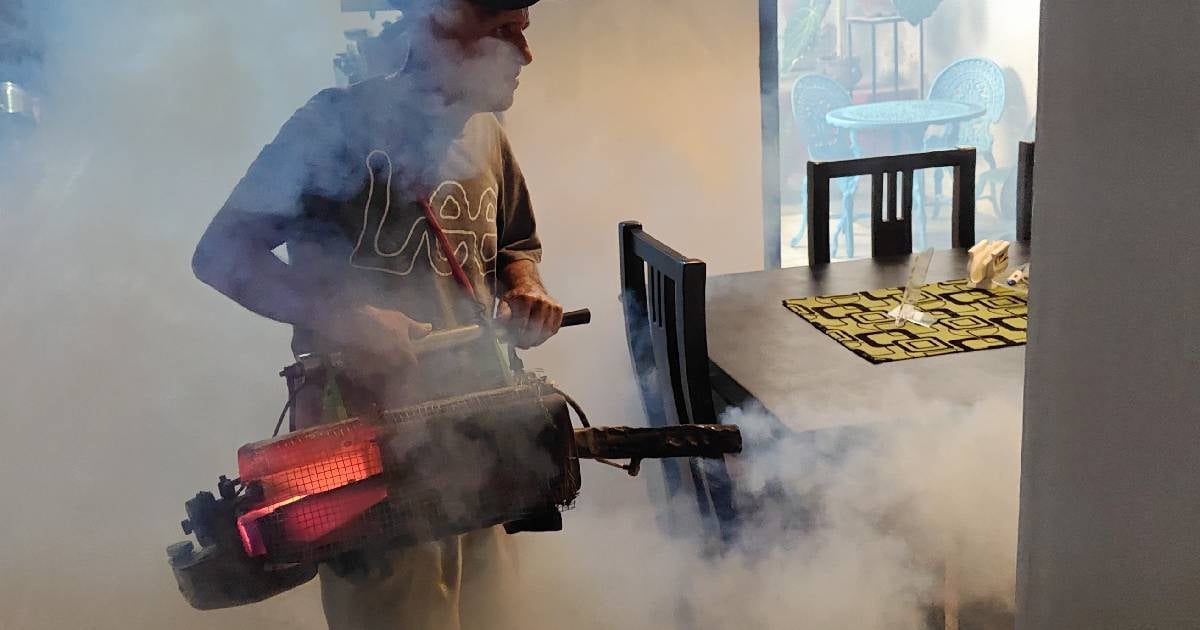
The playwright recounted how his street was finally fumigated "after a long time," but lamented that the action was too late and merely served to meet a statistic, while trash piled up less than 200 meters from his home, obstructing passage.
"All my neighbors have recently fallen ill with some arbovirus..., no one is spared, we're all doomed to endure this agony," wrote Núñez Estenoz.
Criticism of Government Responses
The artist further criticized the regime's Round Table devoted to arboviral diseases, labeling it "cosmetic and triumphalist," and accused official media of concealing the true severity of the crisis and the fatalities caused by the outbreak.
"Where reality is omitted..., where the collective tragedy of a sick country is reduced to a statistic..., where deaths don't appear, because there are deaths and not a few," he lamented.
Cuba's Health Emergency
The theater director's remarks come at a time when Cuba is grappling with a health emergency, with tens of thousands of confirmed chikungunya and dengue cases, as well as a steady spread of the Aedes aegypti mosquito in nearly every province, according to the Ministry of Public Health's reports.
The nation is on high alert, with Havana, Holguín, Matanzas, Camagüey, Cienfuegos, and Villa Clara among the hardest hit. However, failures in fumigation, medicine shortages, and a lack of basic resources exacerbate the crisis and fuel social discontent.
"The blockade does not apply to China, and fumigation equipment is manufactured in China," Núñez Estenoz noted, debunking the government's arguments regarding the causes of the health system's collapse.
A Stranded Island
The artist concluded his message with a striking metaphor about the country's condition: "We are a sick country, sick of everything..., abandoned, tired, and dying. We are a stranded island at the mercy of mosquitoes and other creatures sucking our blood..., leaving us stiff, frozen, but still lucid, at least lucid enough to face them head-on."
Freddy Núñez Estenoz's words resonate beyond the cultural sphere, echoing the frustration of citizens living amid garbage, mosquitoes, and governmental negligence, while the regime continues to use the embargo as an excuse for the crisis, and official media attempts to mask the collapse with empty speeches and manipulated statistics.
Key Questions About Cuba's Health Crisis
What are the main causes of the health crisis in Cuba?
The health crisis in Cuba is largely attributed to neglect, irresponsibility, and abandonment rather than the U.S. embargo. Poor fumigation practices, shortages of medicines, and inadequate resources further exacerbate the situation.
Which diseases are currently prevalent in Cuba?
Cuba is currently facing a surge in cases of dengue and chikungunya, primarily due to the widespread presence of the Aedes aegypti mosquito, which is a vector for these diseases.
How has the Cuban government responded to the health crisis?
The Cuban government has been criticized for its inadequate response to the health crisis, with efforts like the Round Table discussions being seen as insufficient and overly optimistic. There is also criticism of the media's role in downplaying the crisis.