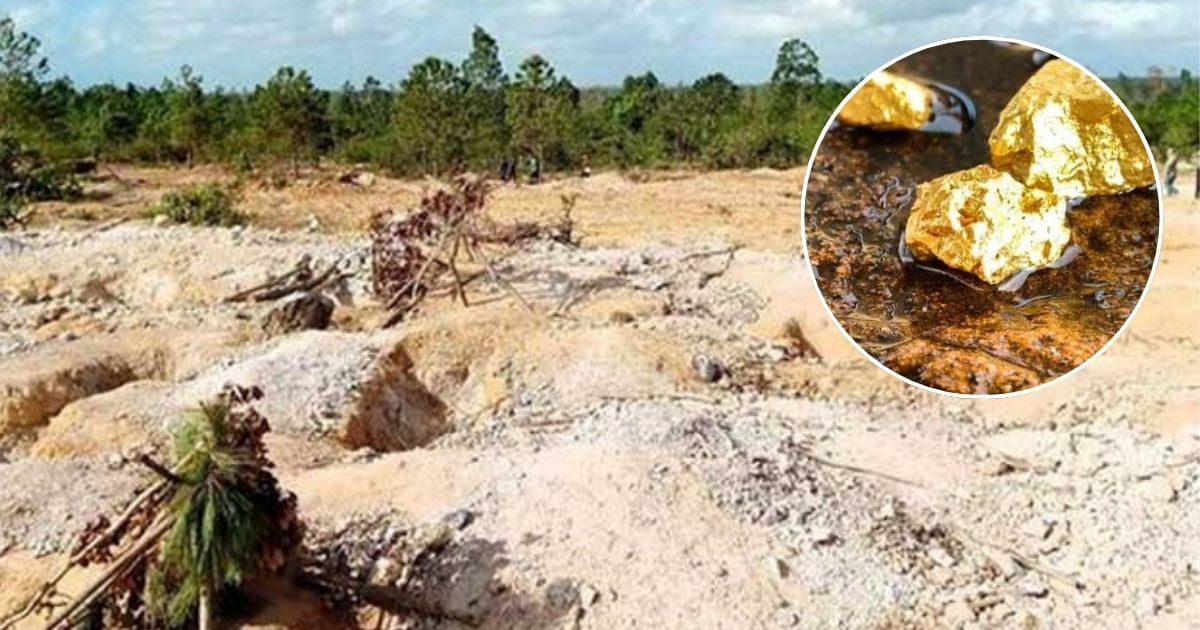
Antilles Gold, an Australian mining company, has announced plans to kick off a fresh drilling initiative at La Demajagua mine, located on the Isla de la Juventud, starting in early 2026. This venture, a long-standing collaboration with Cuba's state-owned GeoMinera S.A., has been met with a mix of anticipation, skepticism, and the stark realities of Cuba's economic situation.
The proposed strategy includes an additional 10,000 to 15,000 meters of drilling to refine estimates of gold, silver, and antimony deposits. This will form the basis for a Definitive Feasibility Study, anticipated to be completed by 2027. By that time, the company aims to determine whether the project will finally proceed to commercial operation—a goal that has been repeatedly delayed over the years due to technical setbacks and market fluctuations.
In a statement, the mining firm detailed plans to employ two new drilling machines operated by a division of Xinhai Mining, a prominent Chinese partner in several extraction projects on the island. Antilles Gold believes this drilling campaign will enhance resource classification and potentially increase antimony reserves. Antimony is a highly sought-after mineral in the tech industry, with international prices nearly tripling those in the Chinese market.
Despite the touted potential of the deposit, Antilles Gold's projections hinge on an operation that has yet to commence, and its stock remains at historic lows—closing at just 0.009 Australian dollars per share as of November 12, with limited analyst coverage and negative technical indicators, according to TipRanks data.
The company remains optimistic, projecting a turnaround by 2027. It plans to invest approximately $60 million in "excess cash" generated from another developing mine, Nueva Sabana, to further the La Demajagua project. Additional funding would rely on loans tied to the Chinese contractor and prepayments from future gold concentrate sales.
La Demajagua has been hailed for years as one of Cuba's significant mining bets. In 2021, Antilles Gold reported "spectacular" concentrations of gold and silver from initial drillings, with peaks reaching 109 grams of gold per ton and over 1,700 grams of silver. The following year, the company raised its projections, suggesting the potential for various concentrates, including one rich in antimony, a critical metal for semiconductors and batteries.
However, despite these announcements, commercial exploitation has yet to commence. The optimistic rhetoric clashes with doubts about the Cuban state's actual capacity to support a project of this scale amidst an energy collapse, financial crisis, and infrastructure deficiencies.
Antilles Gold maintains that the global market is currently more favorable due to rising prices of gold, silver, and antimony. However, the Cuban population has heard similar promises before. La Demajagua, successor to the historic Delita mine, has yet to become the prosperous resource it has been heralded as for over a decade.
Key Questions About La Demajagua Gold Exploration
When is the new drilling program at La Demajagua set to begin?
The new drilling program at La Demajagua is scheduled to start in early 2026.
What minerals are being targeted in the La Demajagua project?
The project focuses on extracting gold, silver, and antimony.
Why has the commercial exploitation of La Demajagua been delayed?
Delays have been caused by technical setbacks, market changes, and challenges related to Cuba's economic and infrastructure issues.