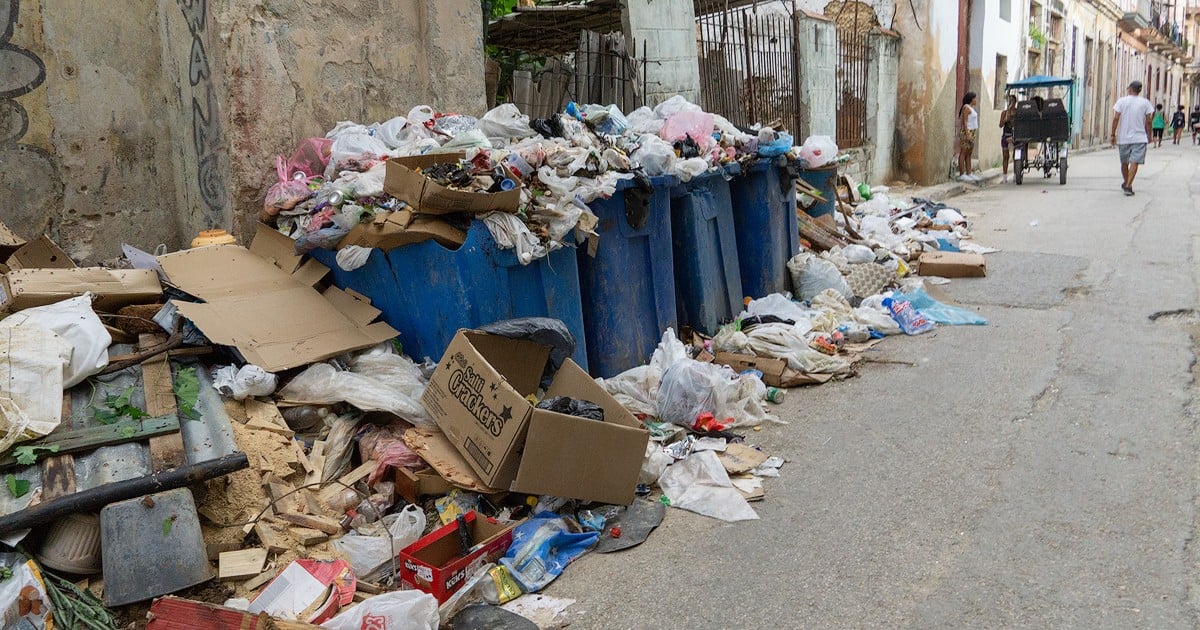
Independent journalist José Raúl Gallego sparked a social media storm with his sharp critique of Granma newspaper's recent portrayal of Havana as a "smart and sustainable city."
In a Facebook post, Gallego directly challenges the stark contrast between the regime's fantasy and the harsh reality faced by Havana's residents.
"A smart and sustainable city when they can't even manage to collect garbage, ensure minimally efficient transport, or provide basic medicines," Gallego stated.
He argues that behind this 'joke' lies the regime's strategy to continue siphoning resources from international organizations and the European Union, which allocate funds and infrastructure for new development projects.
"They showcase a QR code on a wall and a PowerPoint presentation as results, while the country continues to fall apart and its people are left to suffer," he emphasized.
His post garnered hundreds of supportive comments, painting a bleak picture of the urban landscape: streets littered with garbage and sewage leaks, homes on the verge of collapse, hospitals lacking basic supplies, and a city plagued by structural neglect and chronic shortages.
Activist Lara Crofs remarked, "Seeing this makes me feel like I'm in a parallel world... meanwhile, neglect, filth, infections, and a circus without bread spread like a dark cloud over the city."
Other users echoed these sentiments with a mix of irony and outrage.
"A city as smart as the lemon-scented doctor of science president," joked one commenter.
"Granma's jokes are one of a kind! They could put on a theater show to have us all in stitches," added lawyer Manuel Viera.
"Granma currently holds the award for meme of the year and best virtual show on social media," wrote another.
Smart City vs. Reality Check
The comments highlight the impossibility of achieving "smart city" standards given the dire state of the infrastructure.
"Sure, and with what Internet? And electricity? And infrastructure? For them, smart is putting a TV on the street and a QR code that probably only works for the first week. These people must be either sick or on something really strong," detailed a professor.
Dissatisfaction also resonates from the Cuban diaspora.
"They mock the Cuban people. Díaz-Canel claims he can't provide a bed for a hurricane victim, but has resources to turn Havana, which is falling apart by the day, into a smart city. If he were truly smart, he would have resigned by now," commented a Cuban from Las Vegas.
The Granma article that sparked this criticism claims that Havana is moving towards a smart and sustainable city model by integrating digital tools, efficient resource management, and citizen participation, with technology serving the people.
However, the remarks from Gallego and the online community expose the "smart city" narrative promoted by the official press as disconnected from the everyday reality of the city, where the lack of basic services, health insecurity, and urban decay condemn the population to survive in a deteriorating environment.
The digital community's response underscores the gap between the official narrative, which promotes symbolic technological achievements, and the real experiences of Cubans, who question the use of superficial projects as tools to attract external resources.
Meanwhile, the people continue to face the collapse of infrastructure, shortages, and state neglect.
Questions Surrounding Havana's "Smart City" Initiative
What is the regime's strategy behind promoting Havana as a smart city?
The regime's strategy is to attract resources from international organizations and the European Union by showcasing symbolic technological achievements, despite the city's crumbling infrastructure.
How do Havana's residents view the "smart city" narrative?
Residents see the "smart city" narrative as disconnected from their daily reality, marked by a lack of basic services, health insecurity, and urban decay.
What criticisms did José Raúl Gallego express about the smart city initiative?
Gallego criticized the initiative as a farce, highlighting the regime's inability to manage basic services while using the smart city concept to draw in external resources.