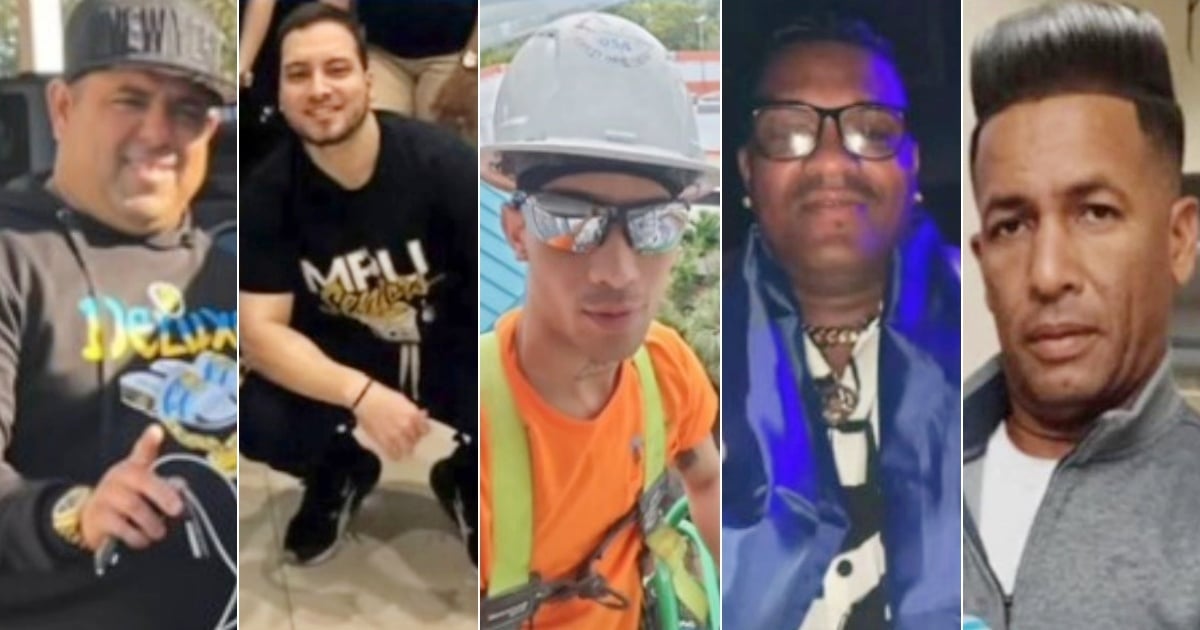
The faces of anguish, uncertainty, and desperation are embodied by individuals like Giovanys Vidiaux Reve, Frank Rodríguez Curvelo, and Iván García Pérez. These are just a few among the numerous Cubans with I-220A immigration status who have recently been detained by the U.S. Immigration and Customs Enforcement (ICE).
Joining these names are others such as Frank González and Reinel Panfet, each facing similar grim realities.
The Plight of Loved Ones Left Behind
Marielys Gómez, the wife of Giovanys Vidiaux Reve, reached out to Univision journalist Javier Díaz, pleading for assistance and visibility regarding what she terms an injustice. "I am writing to you with my heart in my hand. My husband was detained during a scheduled appointment with ICE in Houston, despite complying with all his legal obligations. He has no criminal record, not even a traffic ticket," she expressed.
Gómez emphasized that her husband, at 45, arrived in the U.S. in 2021 with an I-220A, allowing him to stay under supervised release while his immigration case was pending. Throughout this period, he worked for an energy company, supporting his family. His abrupt detention on November 4th has left her devastated. "I have a son with autism who needs constant medical care. I can't work, I'm alone with two kids, without support. Why detain a responsible father, a hardworking man?" she questioned.
New Father Faces Detention
Another heart-wrenching story is that of Frank Rodríguez Curvelo, 30, who was also detained on November 4th. His wife, Arlet, is now left alone to care for their newborn while grappling with the shock of her husband's arrest.
"I never imagined they would arrest him, especially now as we were just starting our life as a family. He has no criminal record, only work experience in an American company," shared the young mother, still nursing her infant. Frank is currently held at the notorious Alligator Alcatraz detention center.
From Nursing Graduate to Inmate
The case of Iván García Pérez has galvanized an entire academic community. This 26-year-old Cuban nurse was detained on November 7th in Miramar, Florida, on the very day he received clearance to take the NCLEX exam, the final step to obtaining his professional nursing license in the U.S.
"Iván is not a criminal. He's a calm, ambitious young man trying to improve himself. Today, he's scared, away from his family, and we are shattered, unable to comprehend how this could happen," wrote his cousin Rubén Banegas. Students from Miami Regional University released a video demanding his release, highlighting his compliance with all immigration requirements and lack of a criminal record. His family has reached out to congress members to prevent what they see as an arbitrary and cruel deportation.
A Growing Legal Limbo
Beyond Giovanys, Frank Rodríguez, and Iván, others, including Frank González and former sports coach Reinel Panfet, have also been reported detained, though specific details of their cases remain undisclosed. The common thread among them is their shared vulnerability under the I-220A status.
This personal turmoil reflects a broader issue affecting over 400,000 Cubans living in the U.S. under the I-220A immigration provision, a form of supervised parole that has increasingly revealed its shortcomings. Immigration attorney Willy Allen has frequently cautioned about the I-220A's risks: although it ostensibly permits migrants to stay in the country while their cases are adjudicated, in reality, it places them in a precarious situation.
"It's a legal limbo that can lead to deportations without a final order," Allen has noted. "And while it might eventually be recognized as valid parole under the Cuban Adjustment Act, the legal process could leave many victims in its wake," he added.
As these families call for justice, frustration mounts over the apparent silence or ineffectiveness of Cuban-American political representatives, who have been unable to halt this rising tide of detentions. "Families are being torn apart without giving a fair chance to those who abide by the law. These aren't criminals; they're workers, parents, students, people simply seeking a dignified life," activists and supporters of the detained lament.
Understanding the I-220A Immigration Status
What is the I-220A immigration status?
The I-220A is a form of supervised release that allows immigrants to remain in the U.S. while their immigration cases are pending. It is often used for individuals who do not qualify for asylum or other forms of relief.
Why are Cubans with I-220A being detained?
Cubans with I-220A are being detained due to the vulnerabilities in their immigration status, which can result in deportation without a final order. The increase in detentions highlights the precarious nature of the I-220A status.
What actions are being taken to address these detentions?
Families and supporters are calling on political representatives and seeking legal assistance to prevent deportations and highlight the injustices faced by those with I-220A status.