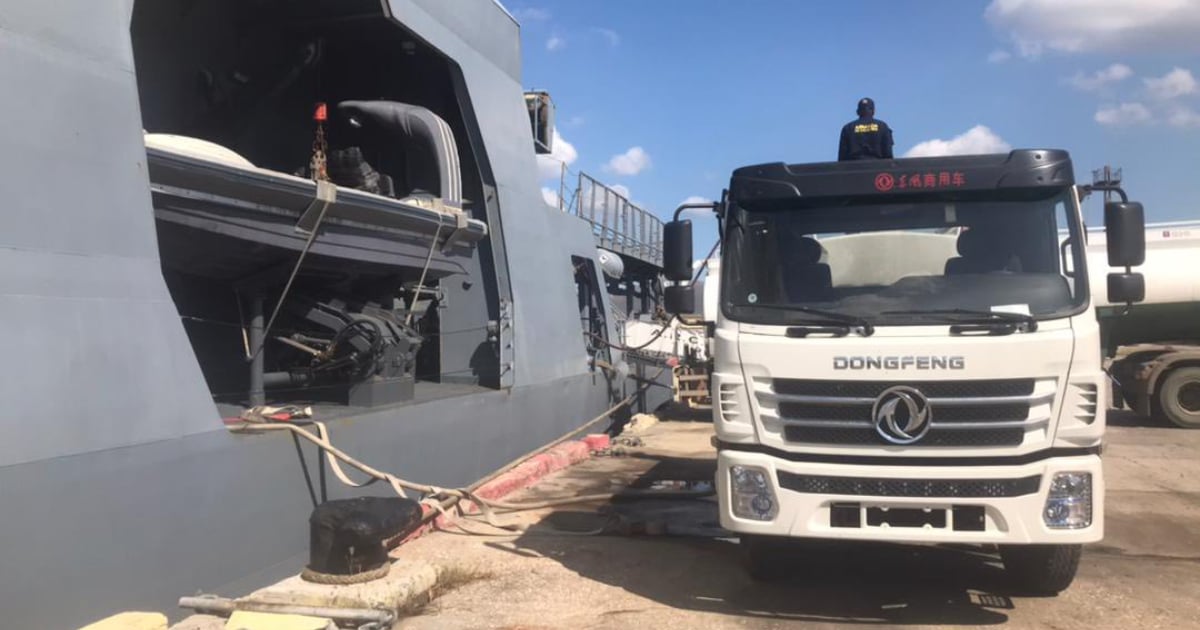
The Colombian Navy vessel, ARC Victoria, recently delivered a crucial shipment of 95 cubic meters of water to the port of Santiago de Cuba. This humanitarian aid, provided in response to the devastation caused by Hurricane Melissa, was confirmed by Aguas Santiago, the local water utility company, and Cuba's Customs through their official social media channels.
Aguas Santiago highlighted this donation as part of the broader international support extended to Santiago de Cuba following the hurricane, emphasizing the solidarity among "brotherly nations." Meanwhile, Cuban Customs noted that Colombia's contribution included 246 tons of humanitarian supplies designated for affected communities, with the water shipment being a key component transported by the Colombian vessel.
Images circulated online depict Cuban water trucks loading the essential water supply from the ship docked at Santiago's port.
Public Outcry and Distrust
The delivery sparked a wave of reactions on social media among Cuban citizens, revealing a mix of outrage, skepticism, and distrust towards Cuban institutions handling the water supply. Many users expressed dismay over Cuba's reliance on foreign water donations while severe water shortages persist in the eastern provinces.
Comments like "Cuba doesn’t even have water" and concerns about certain neighborhoods in Santiago going without water for over two months were common. Questions arose about whether the aid would genuinely reach those in dire need, with some lamenting, "Even water needs to be donated here," and others accusing officials of selling supplies in dollar stores.
Responses to the Customs' post echoed these sentiments: "It's shameful, we don't even have water," "How can water be brought from another country?" and "And yet they claim Cuba isn't a failed state." Despite this, some defended the gesture of solidarity, acknowledging that heavy rains and floods can contaminate local sources and trigger health risks.
International Assistance Amid Water Crisis
This water shipment is part of a larger humanitarian cargo of 244 tons that arrived in Cuba on November 6 from Cartagena, Colombia. Coordinated by Colombia's National Unit for Disaster Risk Management (UNGRD) and the Colombian Foreign Ministry, the aid package included food, potable water, blankets, and fuel aimed at assisting those affected in eastern Cuba.
Distribution of this aid has begun in Guantánamo, where Navy and UNGRD representatives have provided food kits, hygiene supplies, and bottled water in hurricane-impacted areas. Hurricane Melissa left significant damage to homes and infrastructure in Cuba's eastern regions.
In Granma province, recent reports from authorities revealed the arrest of two individuals involved in the illegal sale of water in Bayamo, amidst widespread public dissatisfaction over water scarcity and distribution irregularities.
A Donation Highlighting Infrastructure Challenges
While Cuban authorities have praised the international community's generosity, the sight of a foreign ship supplying potable water has underscored the severe water infrastructure crisis plaguing the island.
In Santiago de Cuba, many neighborhoods continue to report issues with water supply despite rainfall and promises of restored services in various municipalities. This situation has reignited discussions about the inefficiencies of the state-run water systems, the neglect in maintaining pipelines, and the inequitable distribution of this essential resource that, as locals testify, often fails to reach those who need it most.
Understanding Cuba's Water Crisis
Why did Colombia send water to Cuba?
Colombia sent water to Cuba as part of a humanitarian aid package in response to Hurricane Melissa's impact, which severely affected water supply systems in the region.
What challenges does Cuba face in water distribution?
Cuba struggles with outdated infrastructure, inadequate maintenance, and unequal distribution of water resources, leading to frequent shortages and service disruptions.
How have Cubans reacted to receiving foreign water aid?
Many Cubans have expressed frustration and disbelief over the need for foreign water aid, questioning the government's ability to manage domestic resources effectively.