The military tensions in the Caribbean have evolved beyond a mere political standoff between Washington and Caracas. According to an analysis by The Telegraph, a potential U.S. military strike on Venezuela could trigger a global economic upheaval, driving oil prices down and delivering a severe blow to the Russian economy.
British journalist Matthew Lynn argued in the publication that if President Donald Trump were to intervene, the ramifications would extend beyond military and political spheres, fundamentally altering the world's energy landscape.
A Sleeping Oil Giant Awaits Awakening
Venezuela boasts the largest proven oil reserves globally—303 billion barrels, as reported by the U.S. Energy Information Administration—surpassing both Saudi Arabia and Iran. Yet, years of corruption, sanctions, and industrial collapse under Chavismo have left the nation producing just a fraction of its potential.
While Saudi Arabia exports $180 billion annually in crude and Russia around $120 billion, Venezuela's exports barely reach $4 billion. Once a producer of three million barrels daily in the 1990s, the country now struggles to exceed 700,000.
Lynn suggests that a regime change inviting Western investment could rejuvenate Venezuelan oil production within months. "Everyone knows where the oil is and how to extract it; all that's missing is a functional government," he noted.
Trump's Pivotal Geopolitical Decision
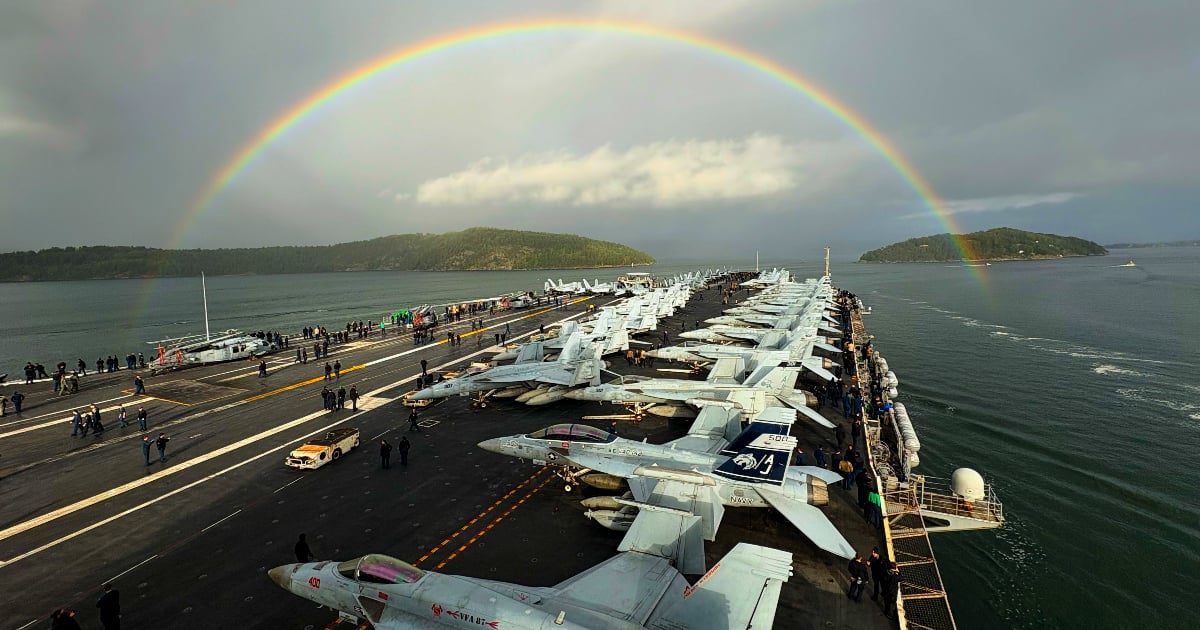
The Telegraph's analysis aligns with the largest U.S. military deployment in the Caribbean since the Gulf War: the USS Gerald Ford aircraft carrier is en route, while several destroyers and nuclear submarines patrol off the Venezuelan coast.
Trump has expressed a desire to "eliminate the cartels" operating out of Venezuela, a resolve supported by Congress, which dismissed a resolution aimed at limiting his powers under the War Powers Resolution.
The article suggests that a combined intervention—eschewing a massive land invasion but utilizing air and naval support—could topple Nicolás Maduro, already weakened and accused of drug trafficking by Washington.
The Domino Effect: Russia, Saudi Arabia, and Latin America
Lynn's theory is straightforward: a free and productive Venezuela, outside of OPEC, could unleash a global oil surplus. The impact would be devastating for major exporters like Russia and Saudi Arabia, but advantageous for the rest of the world, reducing inflation and energy costs.
"Putin couldn't sustain his war in Ukraine with oil at $30 a barrel," the economist noted. Additionally, the Kremlin would lose a strategic ally in Latin America, weakening Cuba and Nicaragua, whose regimes rely on Caracas for financial and logistical support.
Simultaneously, Saudi Arabia, facing a growing fiscal deficit, might be forced to cut spending and subsidies, while Western economies could breathe easier.
A Chess Move or a Leap into the Unknown?
The question remains whether Trump will dare to execute the plan. The president has publicly expressed doubts about the risks of direct intervention, aware that a military failure—similar to the Bay of Pigs in 1961—could embolden his adversaries and tarnish his legacy.
Nevertheless, if successful, the operation could mark the boldest stroke of his second term: overthrowing a dictator allied with Moscow, reopening the Venezuelan oil market, and potentially collapsing Putin's economy and his primary resource for the aggressive imperialist war in Ukraine.
The board is set. All that remains is for the U.S. president to make the decisive move that could once again shift the global balance of power.
Implications of U.S. Intervention in Venezuela
What could be the economic impact of a U.S. intervention in Venezuela?
A U.S. intervention in Venezuela could lead to a dramatic decrease in global oil prices, impacting major exporters like Russia and Saudi Arabia while benefiting global markets by reducing energy costs.
How might Venezuela's oil production change with a new government?
With a functional government, Venezuela could quickly reactivate its oil production, significantly increasing output and contributing to a global oil surplus.
What are the potential geopolitical risks of a U.S. intervention?
A failed intervention could strengthen adversaries and damage U.S. geopolitical standing, drawing parallels to past military failures.