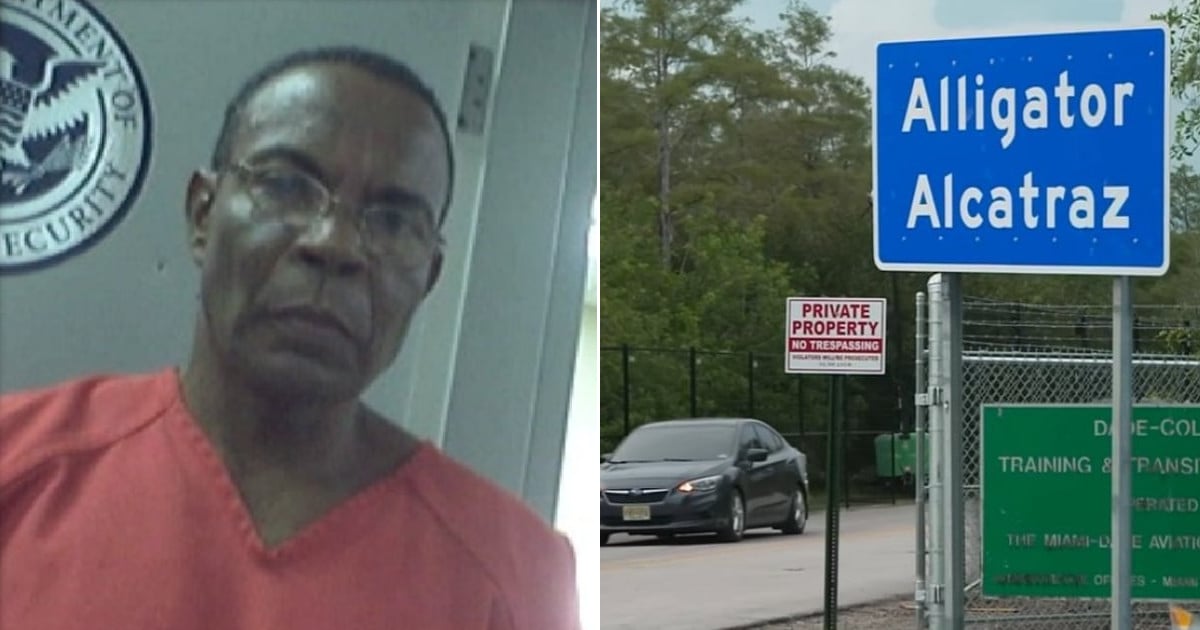
A Cuban man who came to the United States during the 1980 Mariel boatlift is currently held at the Alligator Alcatraz immigrant detention center in the Everglades, Florida, as he awaits deportation.
Félix Arrebato Blanco, who has been in the U.S. for over four decades, now faces expulsion due to his criminal record, despite holding permanent residency. The Immigration and Customs Enforcement (ICE) disclosed this in a recent statement.
According to the agency, Arrebato Blanco's criminal record includes charges of sexual abuse of minors, carrying concealed weapons, and failing to register as a sex offender, as reported on the social media platform X.
Historical Context of the Mariel Exodus
In 1980, the U.S. welcomed Arrebato Blanco among a wave of Cuban dissidents fleeing communist Cuba and the authoritarian regime of Fidel Castro. During the six-month period from April to October, over 125,000 Cubans left Cuba through the port of Mariel and arrived in Florida. Many, like Arrebato Blanco, were granted permanent residency as part of President Jimmy Carter's initiative to provide a safe haven in the U.S.
Unfortunately, ICE indicated that Arrebato Blanco "squandered his opportunity." He has been detained at Alligator Alcatraz since November 2nd, awaiting deportation.
ICE's Strategy and Deportation Policies
ICE has labeled Arrebato Blanco as "the worst of the worst" in Miami, categorizing him among immigrants with serious criminal backgrounds who pose a threat to public safety. The agency's goal is to permanently remove such individuals from the country.
The Mariel boatlift is one of recent Cuban history's significant migration waves. Thousands sought refuge in Florida to escape the poverty and oppression of Castro's regime. This influx included common criminals and individuals released from prisons and psychiatric facilities, as the Castro government aimed to rid itself of those deemed "undesirable."
Controversial Deportations to Third Countries
Recently, ICE detained another Cuban from the Mariel era with a lengthy criminal history involving drug possession and aggravated assault. These arrests are part of the strict immigration policies under the Trump administration, which target undocumented immigrants, particularly those with criminal records.
Backed by a Supreme Court ruling, the current U.S. administration has deported migrants with violent crime convictions to third countries when their home nations refuse to accept them. This decision has faced criticism from human rights organizations and legal experts.
At least four Cubans with significant criminal records and final deportation orders from ICE have been sent to African countries like South Sudan, Eswatini, and Rwanda, while others have been transferred to Mexico.
The Cuban government refuses to accept individuals with criminal records from the U.S. or those who have been abroad since before the January 2017 migration agreements, resulting in deportations to third countries, some of which pose risks of torture or death.
According to the Department of Homeland Security (DHS), over 42,000 Cubans face final deportation orders, but the Cuban regime's reluctance to readmit them complicates the expulsion process.
Meanwhile, deportation flights from the U.S. to Cuba continue monthly under existing agreements between the two countries. Last Thursday, 232 individuals were returned to the island, marking the tenth aerial operation since Trump took office. In total, 1,231 Cuban migrants have been deported from the U.S. to Cuba by air between January 23 and November 6, 2025.
FAQs on Cuban Deportations and ICE Policies
What is the Mariel boatlift?
The Mariel boatlift was a mass emigration of Cubans who departed from the port of Mariel, Cuba, to the United States in 1980. It was a result of economic stagnation and political repression under Fidel Castro's regime.
Why is Félix Arrebato Blanco being deported?
Félix Arrebato Blanco is facing deportation due to his criminal record, which includes charges of sexual abuse of minors, carrying concealed weapons, and not registering as a sex offender, despite holding permanent residency in the U.S.
How does ICE classify immigrants like Arrebato Blanco?
ICE classifies immigrants with serious criminal records, like Arrebato Blanco, as "the worst of the worst." These individuals are considered threats to public safety and are prioritized for deportation.
What challenges do deportation processes face with Cuba?
Deportation processes face challenges because the Cuban government refuses to accept individuals with criminal records or those who have been outside the country since before the 2017 migration agreements, leading to deportations to third countries.