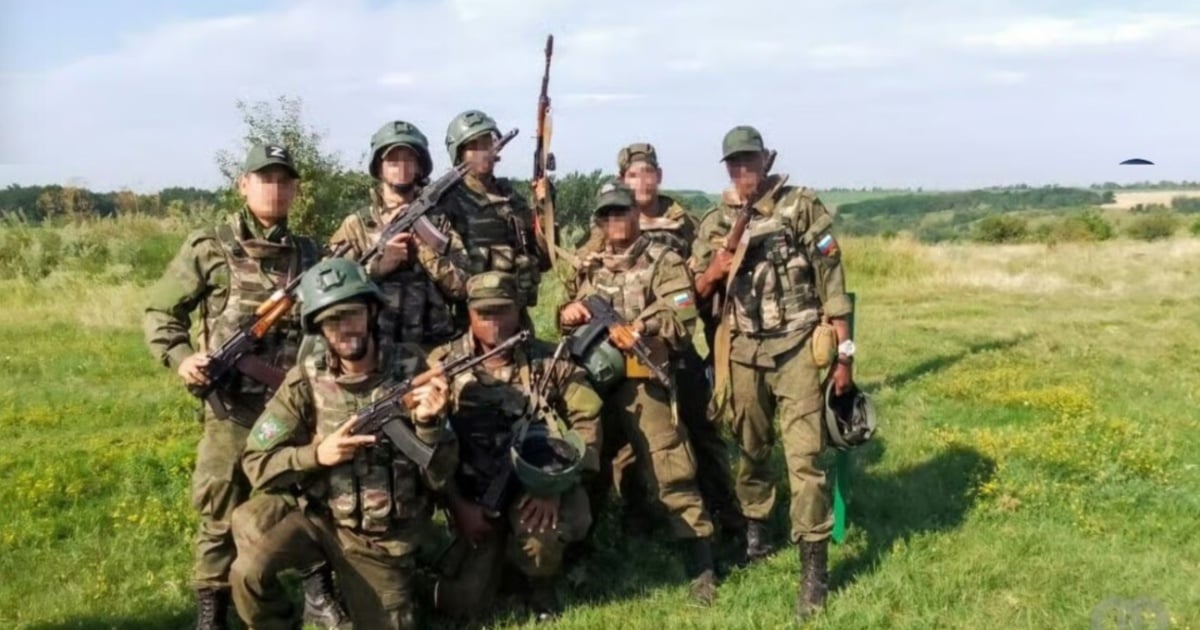
In a recent announcement from Miami, Ukrainian authorities have identified the remains of 39 Cuban nationals who perished while fighting for Russia against Ukraine. Maryan Zablotskiy, a Ukrainian official, stated that Ukraine is committed to continuing the identification of these individuals and informing their families back in Cuba about the fate of their loved ones.
During a press conference broadcasted by the independent outlet Cubanet, Zablotskiy, who chairs the Free Cuba Committee in the Ukrainian Parliament, disclosed that in addition to the identified individuals, "hundreds of Cuban fighters" remain unidentified. Furthermore, he revealed that Ukraine is holding four Cuban prisoners, all of whom are being treated in accordance with humanitarian standards.
Two potential solutions were proposed for the prisoners: exchanging them for Ukrainian detainees held by Russia, or releasing them on humanitarian grounds, contingent upon the Cuban government freeing a group of political prisoners. Zablotskiy highlighted that since the invasion began, Russia has not requested the exchange of foreign fighters, only Russian nationals.
The conference, organized by the Cuban Resistance Assembly and the Cuban Democratic Directorate, saw opposition leader Orlando Gutiérrez-Boronat share details about the 39 confirmed deceased, with the list published on Cubanet. The document accounts for 1,028 Cubans recruited by Russia, including 39 fatalities, although Zablotskiy referenced 41 during the discussion.
The report stated that three Cubans died in 2023, while 36 lost their lives in 2024, with ages ranging from 23 to 58. Zablotskiy mentioned that the largest foreign contingent in Russian ranks consists of these Cuban recruits, according to reports from Ukraine's foreign ministry.
Ukrainian officials may continue to identify bodies and formally communicate findings to relatives in Cuba. However, some Cuban fighters have expressed unwillingness to return home, while others are trapped, unable to leave despite completing their contracts with the Russian military, complicating repatriation efforts.
Economic Motivations and Exploitation
The draw for many of these recruits is primarily financial. With Russia offering salaries of around $2,000 a month, the contrast is stark compared to the average $20 monthly earnings in Cuba. Yet, lurking beneath this financial incentive is a web of deceit and exploitation. Many recruits were misled by false promises of civilian jobs in Russia, only to find themselves thrust into combat without proper military training or clear contracts.
Significantly, documents were signed in Russian without official translations, leaving the Cubans legally vulnerable. The Defense Intelligence of Ukraine (HUR) outlines the strategic use of foreign fighters as a political strategy for the Kremlin: the deaths of foreign recruits do not invoke social benefits or familial pressures on the Russian government.
This tactic aids in concealing the domestic impact of the conflict and sustaining an unpopular war among Russian citizens. Ukrainian forces have captured several Cuban nationals, with at least one admitting to being deceived by the promise of a civilian job before being deployed to the front lines.
Social and Political Ramifications
Exile media has released partial lists of recruits and highlighted recruitment networks, travel routes to Russia, and the vulnerabilities exploited by those organizing the recruitment. The social dimension of this issue is rooted in Cuba’s structural crisis: shortages, power outages, low wages, and deteriorating economic conditions push many young Cubans to take extreme risks.
Analysts cited by Forbes suggest that Havana either tolerates or facilitates recruitment in exchange for economic and political benefits, while to Moscow, Cuban recruits represent "war labor" that reduces costs and minimizes political backlash. Ukrainian advisor Anton Gerashchenko has characterized this as importing "cannon fodder" from Latin America to bolster the offensive.
Despite the Cuban Ministry of Foreign Affairs stating that "Cuba does not participate with military personnel in foreign conflicts," it has not denied the existence of recruitment networks or the exodus of thousands of Cubans to Russia since 2023. Meanwhile, Russian officials have acknowledged the presence of foreign fighters, including Cubans, in combat zones, further fueling diplomatic tensions over recruiters, routes, and responsibilities.
With estimates suggesting up to 25,000 Cuban recruits and an undetermined number of casualties, this issue has become a significant international facet of the ongoing conflict. Kyiv remains committed to identifying fallen combatants and informing their families in Cuba, as calls grow to investigate those profiting from recruitment and protect citizens caught in economic desperation and contractual opacity.
FAQs on Cuban Involvement in the Russia-Ukraine Conflict
Why are Cubans being recruited to fight in Ukraine?
Many Cubans are being recruited to fight in Ukraine due to economic incentives offered by Russia, with salaries far exceeding typical earnings in Cuba. Additionally, some recruits are misled by false promises of civilian employment.
How is Ukraine handling captured Cuban fighters?
Ukraine is treating captured Cuban fighters humanely and is considering their release on humanitarian grounds or through prisoner exchanges with Russia, contingent on political negotiations.
What is the response of the Cuban government to the recruitment of its citizens?
The Cuban government officially states that it does not participate with military personnel in foreign conflicts, although it has not specifically addressed the recruitment networks or the travel of Cubans to Russia.