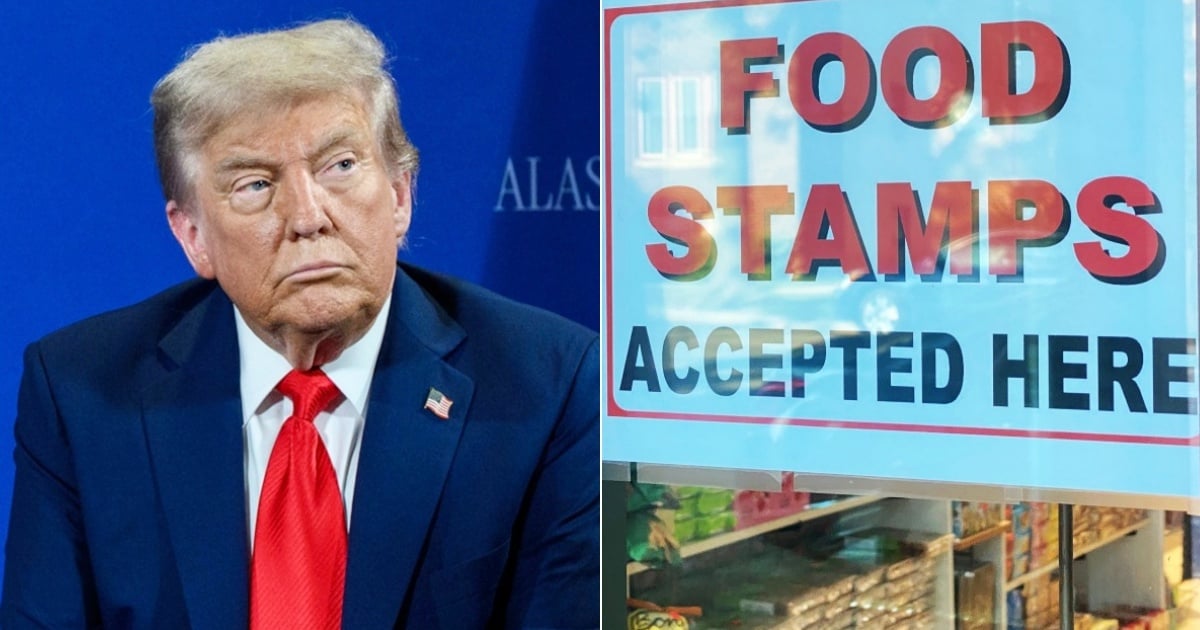
The United States is currently embroiled in a profound legal, political, and humanitarian crisis surrounding the Supplemental Nutrition Assistance Program (SNAP), commonly referred to as “Food Stamps.” This critical program supports one in eight Americans.
Increasing uncertainty about the future of SNAP has been fueled by a partial federal government shutdown and a series of conflicting judicial decisions, leaving millions of families unsure if they will be able to put food on the table this month.
The Supreme Court is poised to make a significant ruling that could decide whether states can resume full SNAP payments or if the suspension initiated by former President Donald Trump's administration will continue. The administration argued that "funds might be needed elsewhere," and thus sought to fully block payments while the congressional deadlock is resolved.
The Uneven Judicial Landscape and Immediate Impact
The legal turmoil has manifested into a patchwork of inequality across the country. While states like Hawaii and New Jersey have managed to distribute full benefits, others, such as Nebraska and West Virginia, have not dispensed any funds. States like Texas and North Carolina have issued partial payments, leading to distressing situations for many.
Take Jim Malliard from Franklin, Pennsylvania, for instance. At 41, he is in a dire predicament, as reported by AP. Malliard cares for his blind wife, who has suffered multiple strokes, and his teenage daughter with medical issues. Previously, he received $350 monthly in SNAP benefits; now, he has received nothing.
The Trump administration had agreed to comply with two court orders from October 31 requiring at least partial funding, permitting up to 65% of payments. However, a judge recently ordered full program funding, even if it meant tapping into emergency reserves. This decision was temporarily halted by the Supreme Court.
Legal Deadlock Without a Clear Resolution
The latest setback for the government occurred on Monday when an Appeals Court upheld the order to resume full funding. Judge Julie Rikelman, affirming the decision of Judge John McConnell, was unequivocal: “Without this program, tens of millions would go hungry—the first link in a chain of health and financial harms—especially at the onset of winter.”
The judges harshly criticized the federal government's inaction. “It sat idly for nearly a month,” Rikelman warned. Her panel colleague, Gustavo Gelpí, concurred, highlighting the severity of the harm caused by the delay.
Meanwhile, the government has made another attempt to halt the full disbursement of benefits, announcing it would submit a supplemental document to the Supreme Court by 4:00 p.m. Monday. “The response to this crisis is not for federal courts to reallocate resources without legal authority,” argued Solicitor General D. John Sauer. “The only way to end this crisis […] is for Congress to reopen the government,” he added.
Potential Reopening and Legislative Actions
The Senate has approved a plan to reopen the government, which includes fully restoring SNAP funds through the end of the fiscal year. House Speaker Mike Johnson called on his colleagues to return to Washington to vote on the bipartisan agreement negotiated between Democrats and Republicans in the Senate.
Former President Trump has not confirmed whether he will sign the legislation if it reaches his desk, though he stated, “It seems like we are close to ending the shutdown.” However, even if the law passes, it remains unclear how long it will take to restore the full flow of benefits, leaving millions in suspense.
Grassroots Support in Times of Government Inaction
In response to government paralysis, some citizens are stepping up. In Carthage, New York, teacher Ashley Oxenford has set up a small community pantry in her front yard. “I think I've spent money on sillier things than trying to feed people during a manufactured famine,” she explained.
Oxenford's gesture reflects a growing national frustration. The SNAP program, existing for over half a century, has never faced a situation like this. Its joint management by the federal government and states, coupled with confusing directives from the Department of Agriculture (USDA), has led to an unprecedented situation.
Many states began making full payments after receiving instructions that were later revoked, and now they are uncertain about how to proceed. In some cases, they have been asked to reverse already scheduled payments, which is both logistically and legally complex.
FAQ on the SNAP Program Crisis
What is the current status of SNAP payments in the U.S.?
SNAP payments are currently affected by conflicting judicial decisions and a partial government shutdown, resulting in uneven distribution across states.
How has the Supreme Court been involved in the SNAP funding issue?
The Supreme Court is set to rule on whether states can resume full SNAP payments or continue the suspension initiated by the Trump administration.
What actions have been taken by the Senate regarding SNAP funding?
The Senate has approved a plan to reopen the government, which includes fully restoring SNAP funds through the end of the fiscal year.