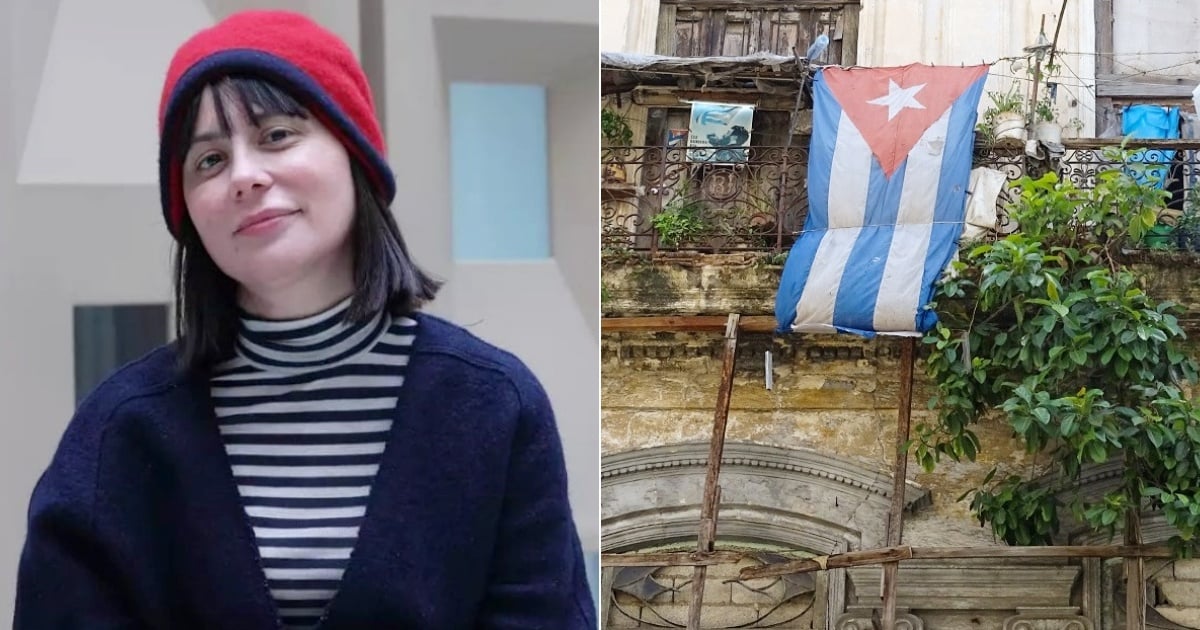
Cuban author Wendy Guerra Torres has issued a powerful denunciation of the humanitarian crisis engulfing Cuba through a heartfelt message shared on social media.
Her message, which has gained significant traction recently, highlights not only the collapse of essential services on the island but also serves as a direct appeal to the international community to urgently address the severe social, health, and human disaster that the Cuban people are enduring.
Guerra, who has built a successful literary career from exile, articulates a collective pain that seldom finds a platform in major international media outlets.
The Depth of Cuba's Crisis
With a sharp and uncompromising perspective, she describes overwhelmed hospitals, children left to fend for themselves, citizens isolated after natural disasters, and an entire population struggling amidst hunger, a lack of medicine, social chaos, and systematic censorship.
Her analysis transcends opinion, emerging as a desperate call for help.
A Call for Accountability
Guerra's writing not only raises alarms but also demands accountability.
She asserts that the Cuban government has forsaken its duty to protect its citizens, clinging to an obsolete utopia that now merely serves as a pretext to repress, silence, and punish.
"My nation is mortally wounded," she warns, emphasizing that Cuba's situation is not a temporary crisis but a deep anthropological wound threatening to inflict irreparable damage on the very fabric of society.
Guerra concludes with one of the most forceful statements in her analysis: the Cuban government, unable to save its people, must resign immediately.
An Urgent Moral Obligation
For Wendy Guerra, this is not just a political responsibility but an urgent moral duty. If those in power do not hand over the country to those capable of saving it, they will be marked in history as the executioners of a nation teetering on the brink of extinction.
Below is the complete text published by Wendy Guerra on Facebook:
The international community must know. Please: I ask all my colleagues, friends, editors, translators, agents, and journalists in every language to read and share.
In #Cuba, right now, thousands are dying or suffering due to the spread of known and unknown diseases and viruses unleashed by the severe unsanitary conditions plaguing the island. The country has become a giant landfill, while the authorities pretend or look the other way.
Hospitals and pharmacies lack the medicines and resources needed by overwhelmed Cuban doctors to control an epidemic that, without being declared a national emergency, prevents international aid organizations from intervening.
Maintaining a non-existent utopia—valued more by them than the lives of an entire population—is their priority. Currently, children, young people, and the elderly are left to their fate within homes or in hospitals and clinics overwhelmed by the sick.
There is hardly any public transportation to reach health centers. After Hurricane Melissa, hundreds of Cuban citizens in the eastern part of the country find themselves isolated in remote areas, having seen their homes and belongings destroyed.
Every day, thousands go to bed without eating or have nothing for breakfast before facing their day. Wages are insufficient to buy food, soap, detergent for bathing, washing clothes, or transportation to move around towns and cities.
Today's Cuba is complete chaos, where only a few survive the social collapse; and those few lack guarantees to maintain their businesses, constantly threatened and controlled by the long arm of the authorities.
Chemical drugs have emerged, altering and affecting the will of teenagers and adults, who are found prostrate in the streets, lost or convulsing. Hundreds of beggars search through piles of garbage daily for food or clothing.
Newspapers and international agencies that had correspondents on the island have been dismissed for trying to report the truth. The news bureaus that remain must temper the reality to avoid expulsion.
Independent journalists not imprisoned, "regulated," or exiled risk their freedom telling stories that the rest of the world struggles to edit because they sound dystopian.
Power outages, water shortages, and, above all, family separation and displacement are the everyday reality for Cubans. The hope for the return of electricity, children, grandchildren, parents, and siblings is the daily plea on the island.
The people, unable to protest or express what is happening due to a decree, survive under a thick silence, which is the only thing keeping them from the prisons where thousands of Cubans who have peacefully taken to the streets remain locked up.
The exile community economically supports a significant portion of the Cuban population, sending money, medicine, and food for survival, ironically, for the Cuban state, this exile that keeps them alive with oxygen is seen as their greatest enemy.
Silence is the punishment imposed by militants, leaders, and dictators of a single party that, in four years, like the USSR, will mark 70 years in power.
My nation is mortally wounded; the rest of the world must understand the depth of the anthropological damage.
The collapse of #Cuba should not be viewed as an isolated phenomenon; this breakdown is not just endemic—it will contaminate and drag with it all the distorted, manipulated, and power-corrupted ideological meanings that we once applauded and that brought us to this point.
A #Government, a leader, a #FailedState that cannot #save a #nation has the duty, the moral obligation, the #URGENT responsibility to #resign and leave the country in the hands of those who can rescue it; otherwise, it will go down in history as the executioner that finished us off and exterminated us as a nation.
Understanding Cuba's Humanitarian Crisis
What are the main issues highlighted by Wendy Guerra regarding Cuba's crisis?
Wendy Guerra emphasizes the collapse of basic services, overwhelmed hospitals, lack of medicines, social chaos, and systematic censorship in Cuba. She also highlights the dire situation of isolated citizens and the population's struggle with hunger and health crises.
Why does Wendy Guerra believe the Cuban government should resign?
Guerra argues that the Cuban government has abandoned its duty to protect its people and clings to an obsolete utopia. She insists that if the government cannot save its citizens, it has a moral obligation to resign and hand over the country to those who can rescue it.