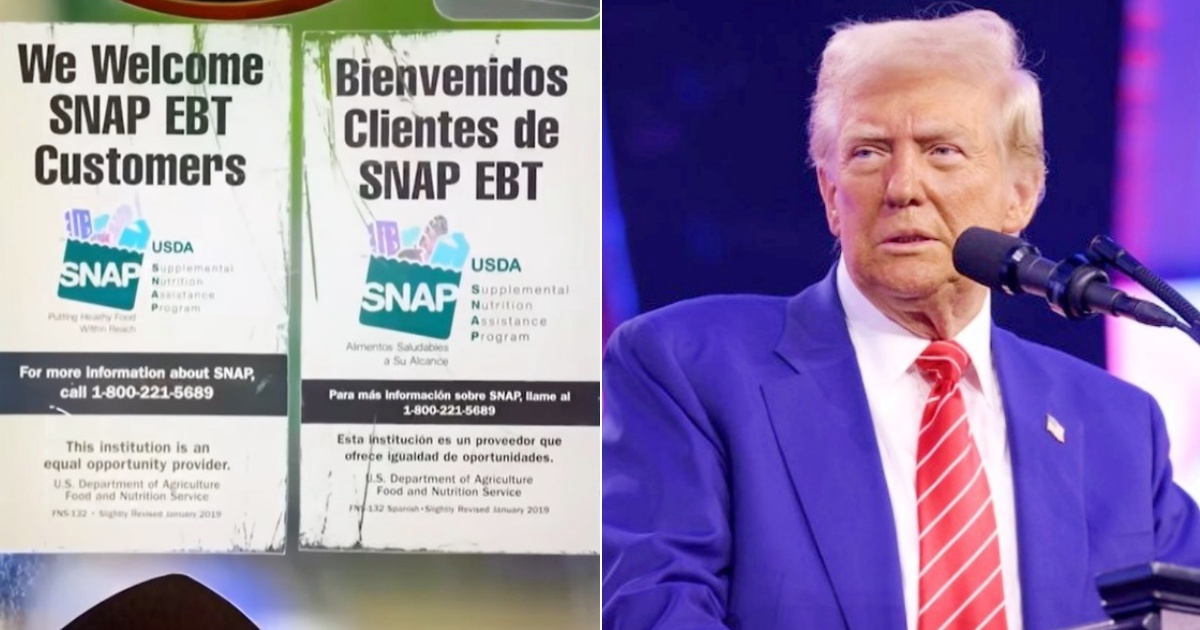
In a move that has ignited a fresh legal and administrative battle between the federal government and over two dozen states, the United States Department of Agriculture (USDA) has demanded that state governments "immediately revoke" the Supplemental Nutrition Assistance Program (SNAP) payments disbursed last week under a court order.
This directive follows the Supreme Court's suspension of judicial mandates that compelled the federal government to fund these payments.
However, a significant portion of these funds has already been distributed, benefiting millions in need.
Legal Turmoil Amid Administrative Disarray
The federal government's demand emerged as more than two dozen states warned of "catastrophic operational disruptions" if they do not receive reimbursement for funds used to distribute SNAP benefits.
This warning is part of an urgent lawsuit filed on Saturday with the First Circuit Court of Appeals. The states argue that the Trump administration's refusal to reimburse could trigger a major humanitarian and administrative crisis.
"States could be faced with demands to return hundreds of millions of dollars in total," the legal document notes. Additionally, governors fear that a lack of funds could lead to severe consequences: unpaid vendors, food supply chain disruptions, and a surge of new lawsuits.
Wisconsin Faces Operational Collapse
Wisconsin is among the most critically affected states, having already loaded SNAP benefits onto electronic cards for 700,000 residents, including 270,000 children, before the judicial suspension.
However, the Department of the Treasury has blocked reimbursements to the state, potentially leaving it without funds as soon as Monday, according to a comprehensive statement from Governor Tony Evers' administration released on Sunday.
Governor Evers has firmly rejected the federal government's order, stating, "No." He defended the legality of the transfers made under judicial protection: "In accordance with an existing court order, Wisconsin legally loaded benefits onto the cards, ensuring that nearly 700,000 Wisconsin residents, including almost 270,000 children, had access to basic food," Evers emphasized.
He further accused the Trump administration of breaking its promise: "The Trump Administration assured Wisconsin and other states that they were actively working to implement full SNAP benefits for November and would 'complete the necessary processes to make funds available.' To date, they have not done so."
The SNAP Program at the Heart of a Prolonged Legal Battle
This conflict marks the latest chapter in a lengthy struggle between state and federal governments over the scope and funding of SNAP, the largest food assistance program in the United States, serving over 42 million beneficiaries monthly.
In November, non-profit organizations and state attorneys general filed a lawsuit to compel the Trump administration to restore full SNAP benefits following previous cuts.
Last week, after receiving favorable court rulings, states promptly released the funds, backed by judicial decisions. However, in a swift maneuver, the Trump administration appealed and secured a suspension of these rulings from the Supreme Court on Friday night.
Despite most of the funds already being distributed, the USDA deemed the payments invalid. In an official communication to state SNAP directors, Patrick Penn, Deputy Assistant Secretary of Agriculture, wrote: "To the extent that states submitted complete SNAP payment files for November 2025, this was unauthorized. Therefore, states must immediately undo any actions taken to issue full SNAP benefits for November 2025."
Meanwhile, organizations that initiated the initial lawsuit fear that retroactively nullifying payments under current court orders sets a dangerous precedent for the implementation of social policies and undermines the legal certainty of federal programs nationwide.
The Trump administration's directive to reverse already executed SNAP payments has plunged states into a large-scale operational crisis. Beyond the numbers and power disputes, the battle over Food Stamps is fundamentally a fight for the meals of millions of families.
The states' responses—both legal and political—will shape the direction of this dispute in the coming weeks. But one certainty remains: the food security of over 40 million people is once again at stake.
FAQs on SNAP Payment Reversal Controversy
Why is the USDA demanding states to revoke SNAP payments?
The USDA is demanding the revocation of SNAP payments following a Supreme Court suspension of judicial orders that required the federal government to fund these payments.
What are the potential consequences for states not reimbursed for SNAP funds?
States may face catastrophic operational disruptions, including unpaid vendors, food supply chain issues, and an influx of new lawsuits if they are not reimbursed for the funds used to distribute SNAP benefits.
How has Wisconsin been affected by the SNAP payment reversal?
Wisconsin is critically affected as it had already distributed SNAP benefits to 700,000 residents. The Treasury's block on reimbursements could leave the state without funds shortly.