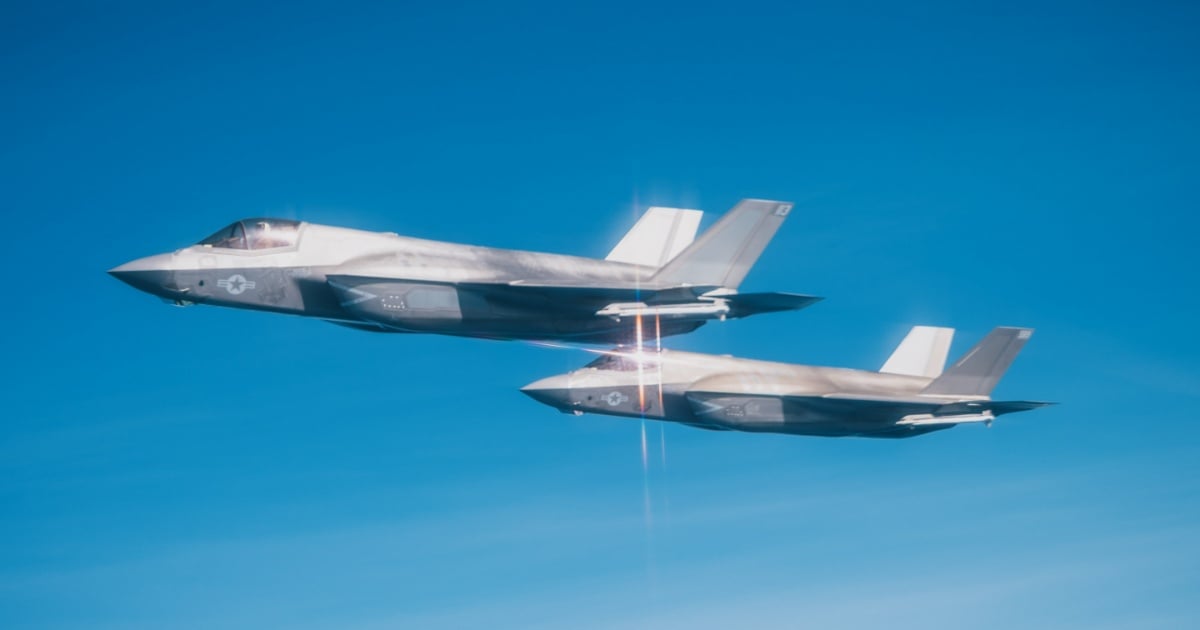
The United States has announced the routine deployment of F-35B Lightning II jets in the Caribbean as part of its anti-drug trafficking initiatives under the Southern Command's directive.
According to a tweet this past Saturday from the Southern Command, "U.S. Marine Corps F-35B Lightning II aircraft are conducting routine flights within the Southern Command's area of responsibility. U.S. forces are stationed in the Caribbean to support the Southern Command's mission, the Department of War-led operations, and the President's priorities to dismantle drug trafficking networks and safeguard the homeland."
Escalating Force Against Drug Traffickers
Since returning to the White House, the Trump administration has ramped up its direct force strategy against drug traffickers, authorizing military actions without Congressional approval. Last Tuesday, two suspected drug traffickers were killed during a U.S. military strike against a vessel suspected of smuggling drugs in the eastern Pacific.
This operation, described as "kinetic and lethal," took place in international waters and resulted in no American casualties. President Trump recently stated he would not seek a formal declaration of war against the cartels, which his administration views as foreign terrorist organizations.
"We're simply going to eliminate those bringing drugs into our country," Trump declared last month during a national security roundtable. The strike on Tuesday marked at least the sixteenth such action against suspected drug-smuggling vessels in the Caribbean and the Pacific since January, with an estimated 66 fatalities.
Human rights organizations, including the American Civil Liberties Union (ACLU) and the Center for Constitutional Rights, have questioned the legality of these strikes. Despite criticism, the Trump administration has reiterated that protecting the homeland and eradicating the cartel threat remains "the top national priority."
U.S. Relations with Venezuela
On Wednesday, Trump stated that airstrikes against "terrorist cartels" are not confined to Venezuela, and that other countries are involved in the military operations his government is conducting in the Caribbean and the Pacific. These remarks were made during his address at the America Business Forum (ABF) in Miami, where he emphasized that the attacks target criminal networks linked to Nicolás Maduro's regime.
"We're dismantling terrorist cartels connected to Maduro's regime in Venezuela and others. It's not just Venezuela; there's a lot happening," the U.S. President expressed. These statements come as his administration considers potential military strikes on targets within Venezuela. Meanwhile, NBC, as cited by EFE, reported that the Trump administration is weighing similar actions against Mexican cartels.
During his speech, the President asserted that his policy aims to "rid cities of violent crime" and bolster national security. "Venezuela emptied its prisons into our country. Nobody wants that. We're making our country safe and beautiful again," he affirmed.
Trump also mentioned that his administration has heightened deportations of members from gangs like MS-13 and Venezuela's Aragua Train, labeling them as "dangerous criminals." "These are bad people. We're sending them out of the country, back to where they came from. We've renamed the Department of Defense as the Department of War," he added.
Prior to the President's remarks, Venezuelan opposition leader and 2025 Nobel Peace Prize laureate María Corina Machado publicly endorsed Trump's strategy. In a virtual message, she stated, "Maduro started this war, and President Trump is finishing it," labeling the Chavista leader as "the head of a narco-terrorist structure attacking the Venezuelan people."
Frequently Asked Questions on U.S. Military Operations in the Caribbean
What is the purpose of deploying F-35B jets in the Caribbean?
The deployment of F-35B jets in the Caribbean is part of the U.S. Southern Command's mission to combat drug trafficking and protect national security interests in the region.
How has the Trump administration approached drug trafficking?
The Trump administration has taken a more aggressive stance, authorizing military actions against drug traffickers without Congressional approval, and viewing cartels as foreign terrorist organizations.
Why are human rights organizations concerned about U.S. military strikes?
Human rights organizations have raised concerns about the legality of these military strikes, questioning whether they adhere to international law and respect human rights.
What are the implications of U.S. military actions in Venezuela?
U.S. military actions targeting criminal networks linked to Venezuela's regime could escalate tensions and involve other countries in the region, impacting diplomatic relations and regional stability.