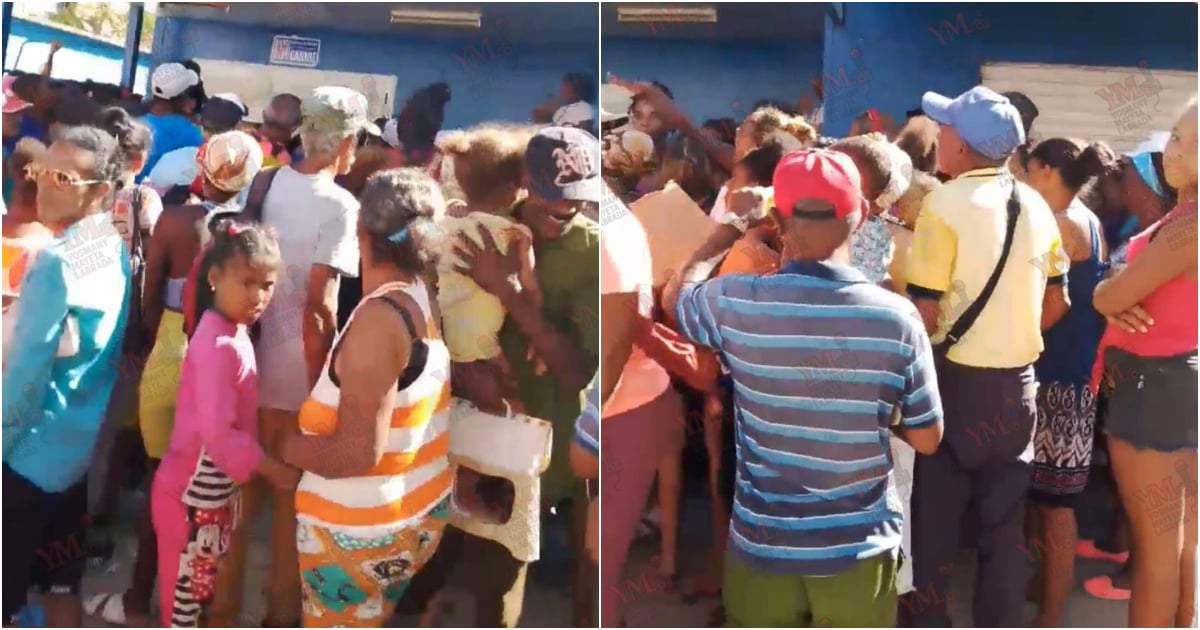
A chaotic scene unfolded at a store in Santiago de Cuba on Friday when police officers deployed pepper spray on mothers with children amidst a crowd frantic to purchase food. The incident erupted during the sale of sausages, highlighting the desperation faced by residents.
This event took place at a shop in Micro 3, located in the El Salao district, which was designated as the sole sales point for a batch of sausages. Hundreds gathered there despite the spread of various viruses in the region, including dengue and chikungunya.
According to a Facebook report by independent journalist Yosmany Mayeta Labrada, the gathering was so overwhelming that officers resorted to pepper spray to disperse the crowd, disregarding the potential consequences.
Eyewitnesses reported that women with children, some still in their arms, were coughing and screaming as nearby residents tried to make way for them to escape the chaos.
“There were small children, pregnant women, people crying,” a local resident recounted. “Instead of organizing, they sprayed and fought with the crowd.”
Other reports suggest that several mothers nearly fainted due to the suffocating conditions.
Residents directly blame local authorities for the incident. “Why sell such a high-demand product at a single location for the entire area?” questioned a neighbor. “This shows the lack of planning we have.”
Criticism also targeted Maritza, the president of the local council, accusing her of being absent during the incident and failing to provide solutions to manage the situation.
On social media, the outrage was palpable. One user criticized the abrupt change in the distribution system: “They started selling six packages per person and then switched to selling by household, excluding children under 18. Don’t children eat?”
Others suggested that the government should organize sales based on family units or ration cards to prevent chaos and resale. “They should deliver products to each home, like they did with the donations,” wrote another resident.
The atmosphere was further strained by allegations of corruption. “Donations are being diverted, and social workers are profiting from what should go to the people,” a local resident claimed.
Reports also indicated that outside the store, sausages were being resold for as much as 250 pesos.
For the past three days, the queue for sausages has witnessed pushing, fights, and fainting incidents. “There have been multiple brawls, and the police only react when things are already out of control,” said Luis Ricardo Llanes, an eyewitness.
This episode underscores the ongoing collapse of local management and the deterioration of social coexistence amid widespread shortages in Santiago de Cuba.
Following Hurricane Melissa, the community faces severe food shortages, long lines, and a lack of transparency in resource distribution.
Recently, Santiago residents reported that ground meat distributed to children as part of the family basket was spoiled and showed signs of decomposition.
During a presidential visit to the town of El Cobre, a young man directly confronted leader Miguel Díaz-Canel, criticizing the lack of aid to those affected by the storm and the absence of effective leadership to coordinate relief efforts.
The official Facebook page "Héroes del Moncada" reported that two men from the José Martí District in Santiago de Cuba were arrested after being caught exploiting the hurricane's aftermath to commit acts of looting.
Key Questions on the Food Sale Chaos in Santiago de Cuba
What triggered the use of pepper spray in Santiago de Cuba?
Police used pepper spray to disperse a large crowd gathered at a sausage sale, which included mothers with children, due to the overwhelming number of people and chaotic conditions.
What criticisms have been directed at local authorities?
Residents have criticized local authorities for poor planning, selling high-demand products at a single location, and failing to manage the situation effectively, with particular criticism aimed at Maritza, the local council president.
How has the community reacted to the distribution system changes?
The community expressed indignation over abrupt changes in the distribution system, which excluded children under 18, and called for more organized distribution methods to prevent chaos and resale.