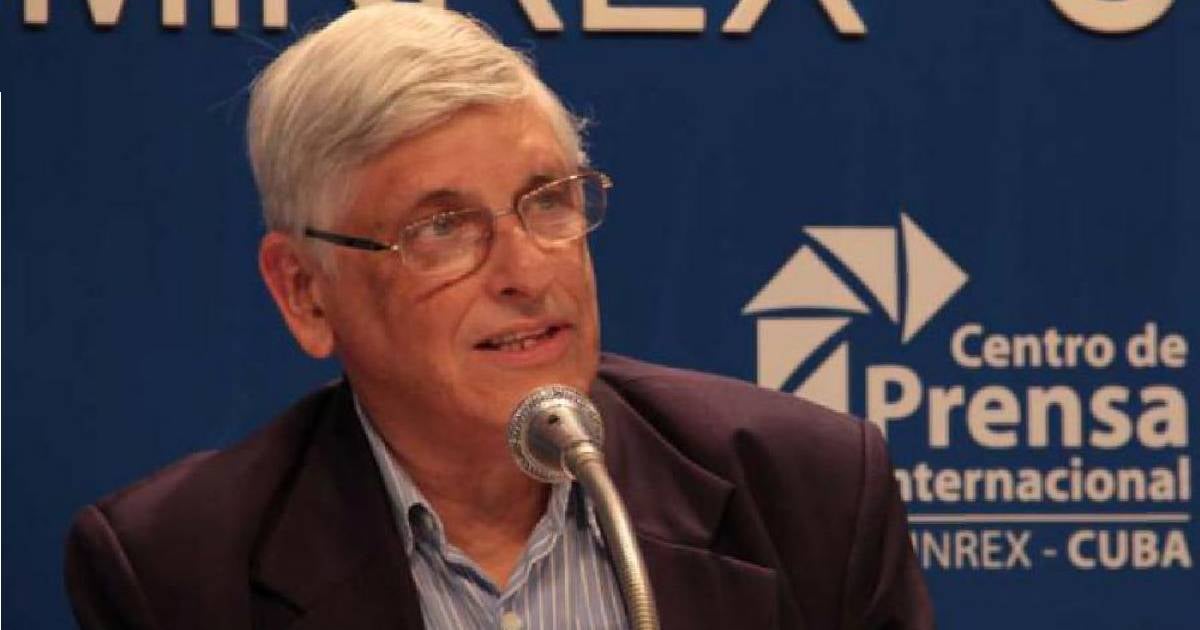
The Peruvian Ministry of Foreign Affairs announced on Friday that Cuban Ambassador Carlos Zamora has "ended his duties and permanently left the country." This decision followed a meeting with Vice Foreign Minister Félix Denegri Boza on October 28 to discuss Zamora's activities during his tenure.
This diplomatic exit comes amidst regional political and diplomatic tensions, particularly after Mexico requested safe passage for former Prime Minister Betssy Chávez, who faces charges of alleged rebellion in Peru.
In an official statement, the Peruvian Foreign Ministry indicated that, after a legal review and expert consultations, the government believes that the practice of diplomatic asylum has been "distorted" as it is being used to shield individuals accused of common crimes.
The statement describes the Peruvian government's stance that interpreting the 1954 Caracas Convention to classify ordinary crimes as political persecution is an "improper use," which they argue distorts the original intent of the agreement.
The text released by the Foreign Ministry argues, "The right of asylum has been corrupted by being granted to those who do not experience persecution in democratic states."
The Peruvian government also announced its intention to present a proposal to the Organization of American States (OAS) to amend the Caracas Convention. The goal is to prevent its "misrepresentation" and ensure that "the rule of law is respected by all inhabitants of the Americas."
While the statement does not specify the exact reasons for the Cuban ambassador's departure, the mention of his "activities" implies that the Peruvian government questioned the actions of the Cuban diplomatic mission during its time in Lima.
Zamora, appointed in 2022, left the country amid a growing atmosphere of tension between Lima, Mexico City, and Havana.
The Peruvian Foreign Ministry concluded by saying that the decisions taken will be communicated "in due course" as consultations with other OAS member countries continue.
Meanwhile, the departure of the Cuban representative marks another chapter in the region's diplomatic frictions, where debates over the use of political asylum are once again at the forefront.
News in development...
Frequently Asked Questions about Peru's Diplomatic Tensions
Why was the Cuban ambassador expelled from Peru?
The Peruvian government expelled the Cuban ambassador due to concerns over his activities during his tenure, which they suggest may have been inconsistent with diplomatic norms.
What is the controversy surrounding the Caracas Convention of 1954?
The controversy involves the interpretation of the Caracas Convention to classify common crimes as political persecution, which Peru considers a distortion of the agreement's original intent.
How is the Peruvian government responding to the asylum issue?
The Peruvian government plans to propose changes to the Caracas Convention at the Organization of American States to prevent its misuse and ensure adherence to the rule of law.