On Friday, broadcaster Laritza Camacho reignited public debate over one of the Cuban government's most ambitious yet unmet promises: the construction of 50,000 homes annually, translating to at least one new home per day in each municipality. Her comments on Facebook have brought this issue back into the spotlight.
Camacho reminded her followers that President Miguel Díaz-Canel made this pledge back in 2018, during a time when the same U.S. embargo, which the government now frequently cites as the source of all woes, was in place. She questioned whether the economic, material, and planning conditions necessary to fulfill such a commitment were ever truly present.
In her post, she asked, "Where did they expect to get the resources to build those homes? Were the necessary conditions established? Was the budget properly planned? Were they counting on the embargo ending? Were they just playing with us, buying time, or simply lying for the sake of lying?"
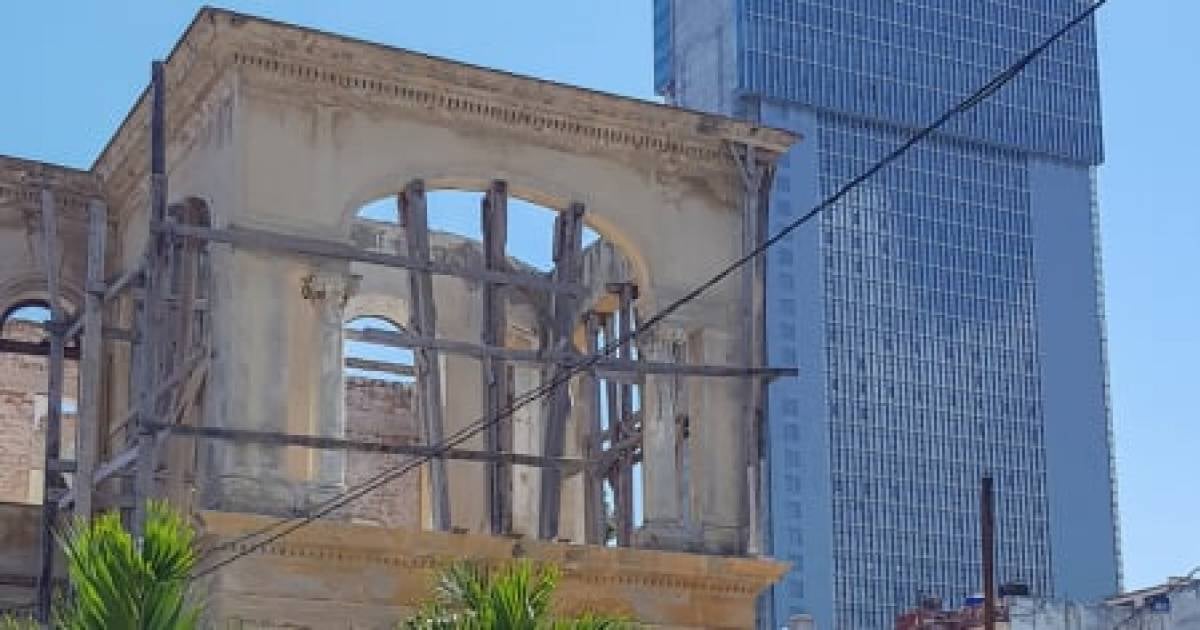
Camacho’s reflection sparked a heated discussion, with numerous comments echoing feelings of frustration and exhaustion. Some users pointed out that six years later, the housing crisis has worsened: thousands of families remain in shelters, live in dilapidated homes, or endure makeshift housing, while proposed solutions like container homes are viewed as undignified stopgaps.
Martha Mejías expressed disbelief at the ongoing construction of luxury hotels amid the worsening housing situation. "I've always thought it's illogical to build so many luxury hotels while the housing issue becomes increasingly chaotic," she commented, referring to the prioritization of tourism investments despite the shortage of materials for residential construction.
Mery Muller, 68, added that the root of the issue lies in a lack of structural planning. "If they had sat down to plan sensibly from the beginning, the complete failure wouldn't have been so thorough," she remarked.
The tone of the comments is overwhelmingly one of complete distrust in official promises. "No one will respond because there's not a single argument that can answer that," stated Nelson Soto. Herminia Delgado questioned, "They legislate so much, plan so much, but where are the results?"
Others were more blunt. Ariel Pruna wrote, "They lie knowing their lies have no consequences. They know their hold on power doesn’t rely on the people." Meanwhile, Denia Riera captured the general sentiment: "I'll never understand what kind of soul these people have that they never tire of lying to us and humiliating us."
The post also highlighted a painful comparison: the rapid construction of hotels versus the sluggish or nonexistent progress on housing projects. Staly Pérez sardonically noted, "The ratio of hotel rooms to homes built should yield some interesting data."
Camacho posed another question shared by many: "How many homes could be built in Oriente with the $70 million they plan to donate to victims?" For many, this figure symbolizes the disconnection between governmental rhetoric and the country's pressing needs.
Camacho urged the government not to underestimate the people and to explain their actions, asserting, "If we can understand the electricity board's charts, something similar from the Ministry of Construction would be child's play for us."
The comment thread evolved into a form of collective catharsis. Beyond the criticism of unfulfilled promises, it reveals a populace demanding transparency, accountability, and respect.
According to preliminary official figures, at least 45,282 homes were damaged by Hurricane Melissa, most suffering roof damage. Cuba faces a housing deficit exceeding 800,000 homes, with 398,364 needing rehabilitation and 407,219 requiring new construction, according to official data.
This year, the plan was to complete 10,795 homes, but by July, only 2,382 had been built, achieving just 22% of the state plan and less than 0.3% of the national deficit, reflecting the sector's paralysis due to material shortages, the collapse of local industry, and poor government management.
In the province of Granma alone, over 110,000 homes are in poor or average condition, and about 30,000 have dirt floors, acknowledged by Prime Minister Manuel Marrero in late September.
Weeks ago, Cuban economist Pedro Monreal analyzed that investments in "hotels, business services, and real estate activities" comprised half of the total investment in Havana during 2023, according to official data, an excessive focus on the tourism sector despite the country's multisystemic crisis.
Monreal emphasized that this investment is 10 times greater than that allocated for electricity, gas, and water supplies and more than 70 times higher than that for communal services, responsible for urban maintenance and city cleanliness.
The government presents the project to convert shipping containers into housing for those affected by climate events as a "swift and comfortable alternative," as well as a display of creativity and efficiency amidst the crisis.
FAQs on Cuba's Housing Crisis and Government Promises
What was the original housing commitment made by Díaz-Canel?
In 2018, President Miguel Díaz-Canel promised to build 50,000 homes annually in Cuba, roughly one new home per day in each municipality.
What are the current challenges facing Cuba's housing sector?
Cuba's housing sector struggles with a severe deficit, material shortages, the collapse of local industry, and inadequate government management.
How does the government's investment in tourism compare to housing?
Investments in tourism, particularly in hotels and real estate, significantly outpace those in housing, electricity, and communal services.
What alternative solutions has the Cuban government proposed for housing?
The government has proposed converting shipping containers into housing as a quick and efficient alternative for those affected by climate events.