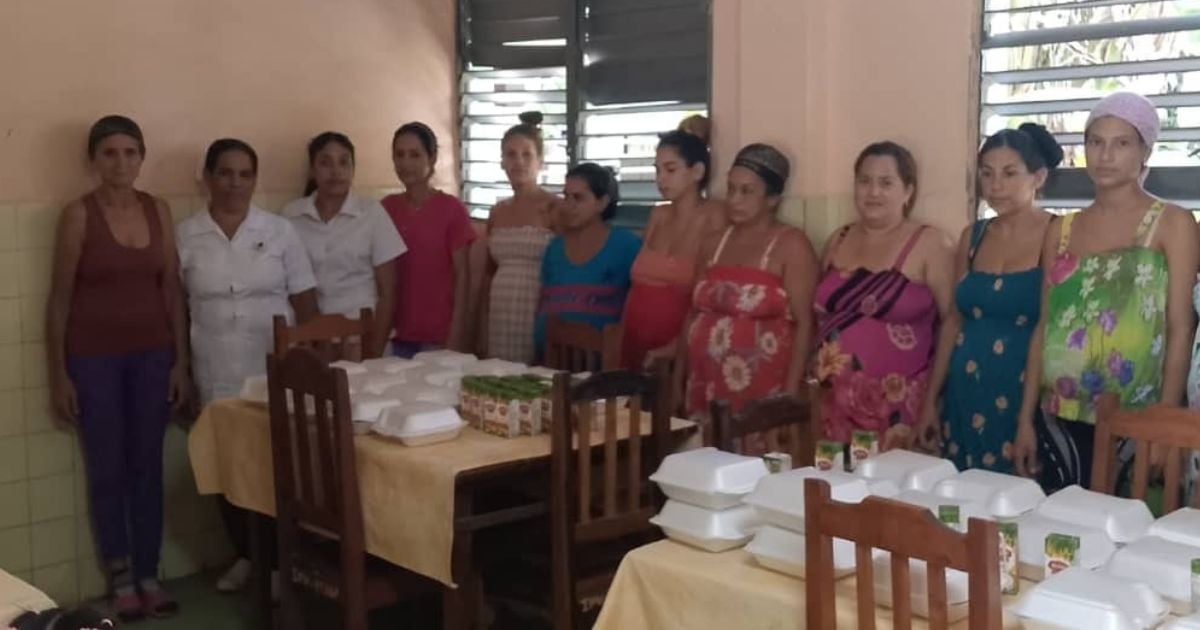
In a generous act of kindness, the Rikan-Vega family donated over 90 meals in Yara, a municipality in Granma province, targeting pregnant women, seniors, and individuals supported by local social services.
The Yara Municipal Health Directorate shared on their official Facebook page that the contribution included 32 lunches for the Municipal Maternity Home, 20 for residents of the Elderly Home, and 45 for vulnerable people served by the MINSAPITO assistance program.
The statement noted that “each dish was received with heartfelt gratitude, like a silent embrace saying: ‘you are not alone,’” expressing appreciation to the family for “nurturing hope, kindness, and dignity” amid the challenging conditions faced by many in the area.
Municipal leaders publicly acknowledged this generous act, emphasizing that such actions strengthen social bonds and support for the neediest sectors, highlighting the failure of the Cuban government to set a solidary example.
In truth, these gestures fill the void left by institutional shortcomings that the regime fails to address.
“Yara will not forget these heartfelt gestures. Today, you are part of our history,” concluded the official message.
The donation was made in the backdrop of increasing social vulnerability in Granma province, where soaring food prices and a lack of public resources have intensified the needs of the elderly, expectant mothers, and low-income families.
This situation, echoed across Cuba, has worsened in the eastern region following Hurricane Melissa's impact.
After Hurricane Melissa hit eastern Cuba, various expressions of citizen solidarity have flourished, forming a critical support network for those affected.
One of the most notable initiatives came from the Cuban diaspora when a church in Spain launched a campaign to collect food, medicine, and clothing to send to the impacted areas.
Within the island, the spirit of community has also emerged strongly. In Guisa, Granma, a resident offered his generator to the neighborhood, allowing dozens of families to charge phones and preserve refrigerated food.
This generosity echoes across other provinces, where Cubans, often with limited means, share what they have to ease their neighbors' hardships.
Spontaneous aid has also reached mothers in dire situations. In Holguín, dozens rallied to support a mother and her children who lost everything, sending hygiene products and cash.
This wave of support, coordinated through social media, demonstrates the growing connection between Cubans inside and outside the country.
Moreover, citizen-led fundraising campaigns have successfully gathered supplies and resources to distribute in remote rural communities.
These efforts not only bridge the gap left by state inefficiency but also reaffirm the vital role of civil society in times of crisis.
Community Support and Social Challenges in Granma
What prompted the Rikan-Vega family's donation in Granma?
The Rikan-Vega family donated over 90 meals in response to the increasing social vulnerability in Granma, aiming to support pregnant women, the elderly, and individuals in need due to the lack of adequate resources from the government.
How has the community responded to Hurricane Melissa in eastern Cuba?
Following Hurricane Melissa, the community has shown a strong spirit of solidarity, with citizens offering support through donations and services to those affected, showcasing the power of grassroots efforts in overcoming crises.
What role does civil society play in addressing Cuba's challenges?
Civil society in Cuba plays a crucial role in filling the gaps left by state inefficiency, organizing support networks and resources to help those in need, especially during times of crisis.