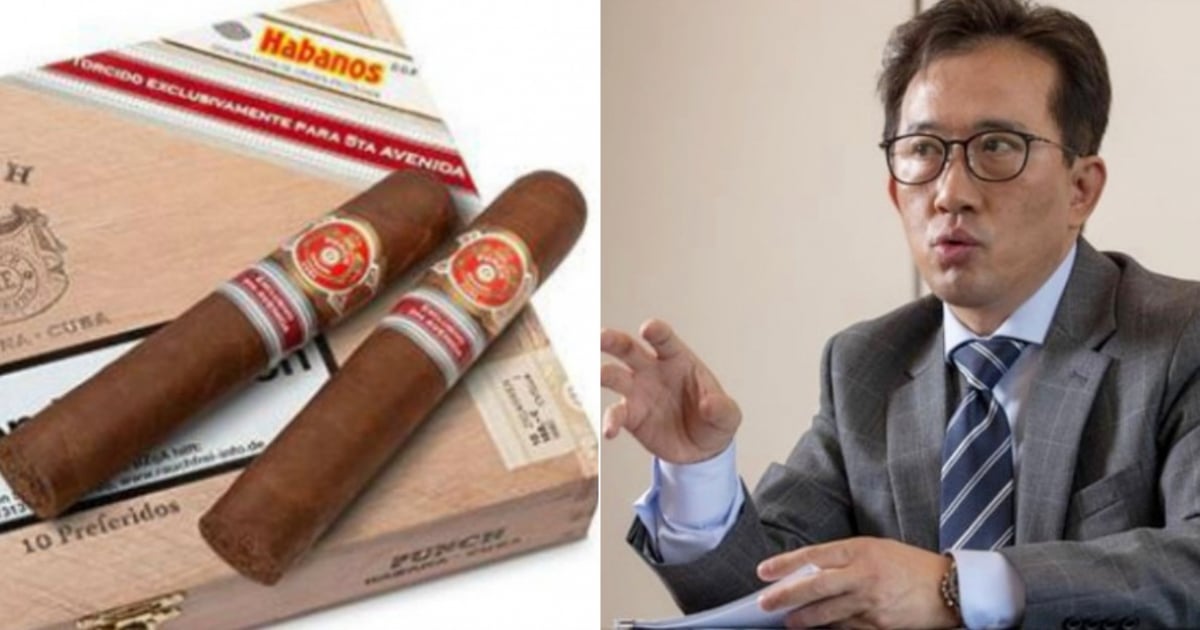
Lee Il-kyu, once the North Korean ambassador to Cuba, has disclosed an intricate network of smuggling, espionage, and political influence orchestrated by Kim Jong-un's regime across Latin America.
In an interview with EFE, Lee revealed that North Korean embassies across the region—especially the one in Havana—have long served as hubs for illicit activities and covert intelligence operations. These embassies have also acted as platforms for propaganda and collaboration with allied governments.
After defecting to South Korea two years ago following over a decade of sporadic diplomatic service in Cuba, Lee claims intimate knowledge of the regime’s practices throughout the continent.
Lee outlined that the North Korean embassy in Havana functioned as a base for smuggling Cuban cigars, a highly lucrative venture for North Korean officials. He explained, "They pack the cigars in diplomatic pouches, which aren't inspected, buy them in Cuba at $50 a box, and sell them abroad for $1,000."
He further asserted that "all diplomats are involved in these businesses," driven by the insufficient official salaries provided by Pyongyang, which are inadequate for living in their assigned countries.
These kinds of illegal operations, protected by diplomatic immunity, are widespread within the regime's external network, not just in Latin America but also in Africa and Southeast Asia.
Diplomatic Network: Espionage and Economic Survival
Born in 1972 and fluent in Spanish, Lee held the position of Deputy Director of Latin American Affairs and Political Counselor at Pyongyang's embassy in Havana, one of the highest ranks in North Korean diplomacy.
His defection marks him as one of the highest-ranking officials to abandon North Korea's system in recent years.
According to his testimony, North Korean embassies in Latin America not only manage diplomatic relations but also harbor spies and finance their operations through smuggling.
"North Korea has many spies acting under the guise of diplomats," Lee stated, adding that countries like Cuba, Venezuela, and Mexico serve as key points due to their ideological affinities or strategic geographic positions. In Cuba's case, the cooperation has been notably close.
"Cuba has significant influence, has always been a member of the UN Human Rights Council, and often votes in favor of North Korea or abstains on sanctions," Lee explained. Between 2008 and 2020, Havana voted six times against resolutions condemning human rights violations in North Korea, according to the Center for the Opening and Development of Latin America (CADAL).
The Double Life of a Regime Diplomat
Last August, the former North Korean diplomat admitted to smuggling Cuban cigars to China to support his family. Earning only $500 a month, which wasn’t enough to sustain him in Cuba, Ri managed to smuggle Cuban cigars to China to supplement his income, as he disclosed to the BBC, although he did not provide additional details on the operations or how he obtained the cigars.
The defector recounted that, despite the regime's strict control, North Korean diplomats abroad enjoy certain freedoms not found within the country. In Cuba, for instance, they could form friendships with foreigners—excluding Americans or South Koreans—and even consume prohibited cultural products like South Korean movies or music.
Lee was personally decorated by Kim Jong-un in 2016 for his role in recovering the Chong Chon Gang ship, detained in Panama three years earlier for transporting Cuban weapons hidden beneath sugar sacks. In 2018, he led the diplomatic team that welcomed Díaz-Canel to Pyongyang and exchanged a few words with the North Korean leader himself.
His decision to flee, he explained, stemmed from his frustration with "a system where one is born and dies with the same fate" and his desire for a free future for his family.
Currently residing in Seoul, he works for the Advisory Council for Peaceful Unification of Korea and has published his memoir, "The Kim Jong-un I Saw," in Japan, soon to be available in Spanish and English.
"In South Korea, I can choose my work; here, at least, I don't fear starving," Lee stated, as he now dedicates his life to exposing the hidden mechanisms of the regime he served for over a decade.
His revelations not only shed light on the economic survival strategies of North Korean diplomacy but also underscore the role that countries like Cuba have played—whether out of affinity or convenience—in maintaining one of the world's most repressive and secretive systems.
Cuba: A Key Ally for Pyongyang
Lee's statements reignite focus on the close relationship between Cuba and North Korea, two of the last communist regimes on the planet. Both governments have maintained political and military ties since 1960, when they established diplomatic relations.
In 2018, Miguel Díaz-Canel visited Pyongyang with his wife and was received with honors by Kim Jong-un. The following year, one of North Korea's top officials, Ri Su-yong, vice chairman of the Central Committee of the Workers' Party, traveled to Havana to meet with high-ranking Cuban officials. These visits have solidified an alliance that blends ideological affinity with strategic convenience.
According to Lee, Pyongyang's government has skillfully leveraged this relationship to maintain networks of influence in the region and partially escape the isolation imposed by international sanctions. "They seek allies who also feel attacked by the West," he noted.
Understanding North Korea's Diplomatic Tactics in Latin America
How did North Korean embassies use diplomatic immunity for illegal activities?
North Korean embassies utilized diplomatic immunity to conduct illegal activities by using diplomatic pouches, which are not subject to inspection, to smuggle goods such as Cuban cigars.
Why are North Korean diplomats involved in smuggling activities?
North Korean diplomats engage in smuggling because their official salaries from Pyongyang are insufficient to support their living expenses in the countries where they are posted.
What role does Cuba play in North Korea's international strategies?
Cuba serves as a key ally due to its ideological alignment with North Korea and its strategic geographic position, aiding North Korea in maintaining networks of influence and evading international sanctions.