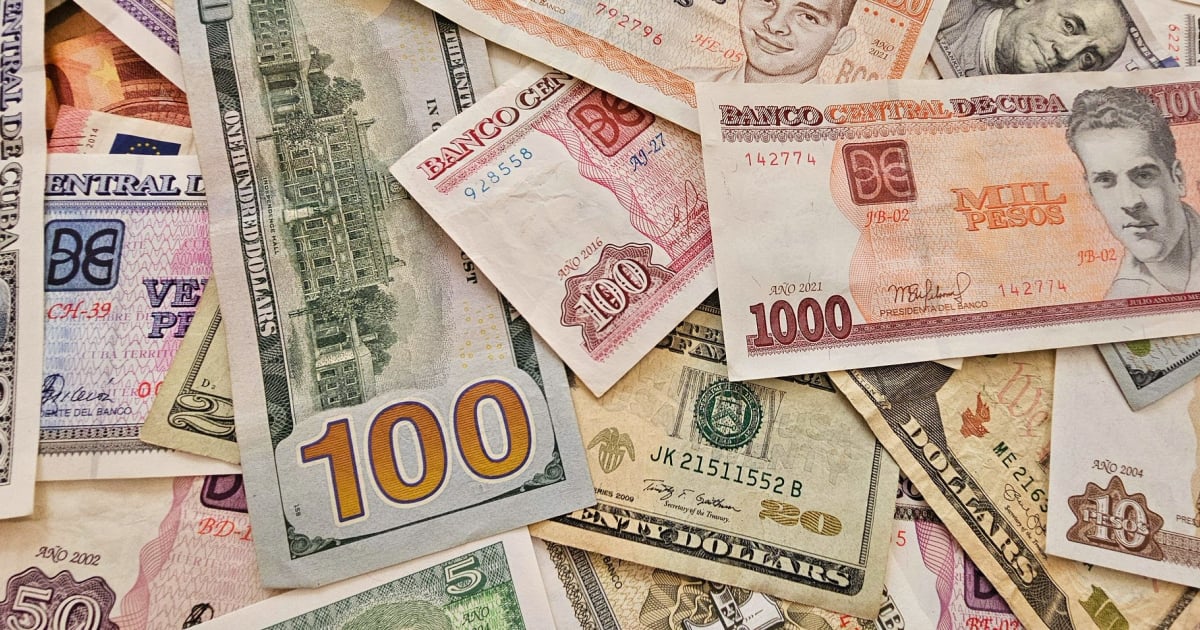
The recent news about the continuous drop in the informal dollar rate in Cuba has grabbed national attention. While some Cubans feel relieved, others are skeptical, viewing this as merely a fleeting moment in the ongoing crisis. What’s truly driving this decline? Is there hope for a sustained recovery of the Cuban peso, or is it just a temporary lull amidst the storm? By delving deeper and comparing with similar historical episodes in the region, it becomes clear that this is part of a much more predictable and structural dynamic.
Initially, the reduction in the informal dollar rate—from highs around 490 CUP to recent levels of 415-420 CUP—mirrors the speculative cycles seen in parallel markets across Latin America. This phenomenon, known as “overshooting,” occurs when negative expectations fueled by rumors, institutional crises, or fears of new restrictions lead to massive currency purchases. Prices surge beyond their real equilibrium until some event or campaign triggers a selling panic and the market corrects downward. This pattern has repeated in places like Argentina with the “blue dollar” and in Venezuela during its informal dollarization, where parallel exchange rates go through phases of euphoria and depression, ultimately pointing to long-term depreciation of the local currency.
The recent decline in Cuba does not offer a real solution to the underlying issues causing it. Despite the correction, fiscal deficits, runaway inflation, currency shortages, and lack of trust in the local currency persist. As seen in Argentina and Venezuela, temporary declines often lead to new phases of dollar appreciation when negative expectations resurface and economic fundamentals do not improve.
Mass psychology plays a critical role in these fluctuations. Rumors of new controls, state actions, or inflation news can prompt thousands of small savers and entrepreneurs to rush to buy dollars, driving prices far beyond what actual currency flows would justify. Coordinated disinformation campaigns, whether to inflate or depress exchange rates, also contribute to this volatility. This happened during economic crises in Latin America, where parallel dollar prices soared and plummeted frenetically, creating speculative bubbles and bursts that gave the illusion of stability, only to reveal later that structural problems remained.
In Cuba’s case, this combination of speculation, expectations, and rumor milling is exacerbated by the lack of a transparent exchange market, restricted access to currency, and persistent inflation. Although it may seem like the dollar is “falling,” historical experience and macroeconomic analysis suggest that without fundamental structural reforms—like genuine economic opening, institutional transparency, and restored confidence in the peso—any decrease in the currency will be temporary. In regional cases analyzed, governments that ignored these signals saw that downward corrections were almost inevitably followed by even faster episodes of currency depreciation.
So, what can be expected moving forward? It is likely that the dollar rate will resume its upward trend once the “speculative shock” passes. The incentives for dollar demand remain: the population continues escaping from the peso as a store of value, and companies need currency to operate in an environment of increasing imports and shortages. Governments in Cuba and other countries facing similar situations have shown great difficulty in maintaining any relative exchange stability when they do not credibly address the root of their economic problems.
In conclusion, the decline of the informal dollar in the Cuban market is more of an illusion than a genuine change of course. The history of the region demonstrates that without structural economic transformation, what goes up and down in the black market for currency is determined more by cycles of panic and collective enthusiasm than by real macroeconomic improvements. It is evident, then, that Cuba is caught in this unsustainable loop until it decides to tackle its weaknesses at the root, as dictated by the lessons of Latin American economic history.
Understanding Cuba's Currency Crisis
What is causing the decline of the informal dollar rate in Cuba?
The decline is attributed to speculative cycles where negative expectations fueled by rumors and fears of restrictions lead to massive currency purchases, thus causing price surges beyond real equilibrium, followed by a market correction.
Is the recent drop in dollar rates a sign of economic recovery in Cuba?
No, the drop does not indicate an economic recovery. Structural issues like fiscal deficits, inflation, and currency shortages remain unresolved, suggesting the decline is temporary without genuine reforms.
How does mass psychology influence currency fluctuations in Cuba?
Mass psychology influences currency fluctuations as rumors of controls or state actions can lead to a rush to buy dollars, driving prices beyond real currency flow justifications, contributing to volatility.
What lessons can Cuba learn from other Latin American countries regarding currency stability?
Cuba can learn that without structural reforms, any currency stability is temporary. Addressing economic weaknesses at their root is essential to avoid repeated patterns of currency depreciation.