The year 2025 marks a period of heightened tension across the Caribbean and South America. An unprecedented U.S. military deployment near Venezuela's coast exemplifies Washington's strategy to apply pressure on Nicolás Maduro's regime. This move also tests the regional security framework and introduces a new chapter of confrontation with Havana.
Massive U.S. Military Presence
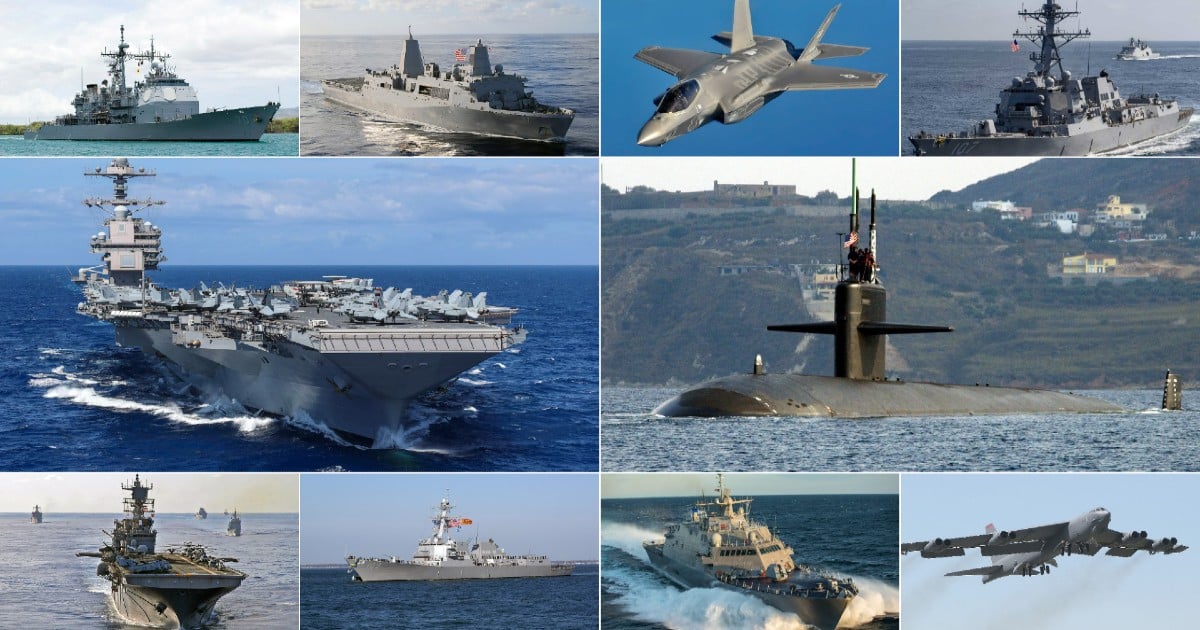
Since October, the United States has stationed a formidable military force off the Venezuelan coast. This includes the nuclear-powered aircraft carrier USS Gerald R. Ford, accompanied by destroyers such as the USS Gravely, Jason Dunham, Sampson, Bainbridge, and Stockdale. Amphibious ships like the USS Iwo Jima, San Antonio, and Fort Lauderdale, along with the cruiser USS Lake Erie and the nuclear submarine USS Newport News (SSN-750), form part of this force. Air assets include F-35 and F/A-18 fighters, B-1B and B-52 bombers conducting exercises near Venezuelan shores, maritime patrol planes, and MQ-9 Reaper drones. Additionally, helicopters and special forces enhance rapid response and intelligence operations, with over 10,000 Marines and commandos participating in advanced landing drills.
This deployment has bolstered the U.S. military presence in strategic locations like Puerto Rico and the Virgin Islands, ensuring continuous air and naval operations.
Strategic Goals: Maximum Pressure and Selective Intervention
While the official U.S. narrative focuses on combating drug trafficking, the scale of the deployment suggests a dual objective: undermining Maduro's regime and projecting power to global rivals like Russia and China present in the region. Analysts believe a full-scale invasion is unlikely due to its high costs and risks. Instead, a "limited offensive" involving missile strikes and bombings on critical infrastructure—such as ports, air bases, and military headquarters—and commando operations targeting high-profile objectives is more plausible. The aim is not to forcibly remove Maduro but to create internal divisions that might lead to a negotiated or forced political transition under the constant threat of escalation.
Regional Reactions and Cuba's Pivotal Role
Within this context, Cuba acts as a crucial intermediary between Caracas and regional allies. Havana has publicly declared its "full and complete" support for Maduro's government, both in international forums and through mass rallies and diplomatic campaigns. Cuban President Miguel Díaz-Canel and Foreign Minister Bruno Rodríguez have aligned entirely with Venezuela, condemning what they call an "imperial aggression" affecting the entire region. The Cuban government has mobilized signatures, demonstrations, and propaganda, and continues to provide intelligence and security advisory support to the Venezuelan regime, maintaining a decades-long revolutionary alliance.
However, diplomatic sources and independent analyses indicate that despite its vocal solidarity, Cuba has made it clear it will not engage in military combat against the U.S. due to the significant risk to its own internal stability in the event of direct intervention. Support remains limited to logistical, training, and intelligence assistance, along with maintaining political alliance in every possible forum.
Economic and Strategic Implications for Cuba
The U.S. military buildup also directly impacts Cuba due to its energy dependence on Venezuela and the naval blockade's effect on oil flow and technical assistance. A prolonged military escalation between the U.S. and Venezuela could deliver a nearly fatal blow to Cuba's already fragile economy and severely limit Havana's international maneuverability. Consequently, Cuba leverages its diplomatic influence in multilateral organizations and non-aligned forums to curb or mitigate the isolation of the Caracas-Havana axis.
Conclusion: An Explosive Geopolitical Equation
The 2025 crisis between the U.S. and Venezuela exposes the limitations of hard power, the complexities of foreign intervention, and the significance of "invisible" alliances like that of Cuba and Venezuela. Despite Washington's superior military capabilities and relative domestic consensus for limited force actions, it faces the challenge of managing a regional escalation with difficult economic, political, and symbolic consequences.
Cuba, though currently avoiding direct combat, remains an essential part of the equation, enhancing Venezuela's strategic resistance potential and adding uncertainty and risk to any U.S. military operations. The Caribbean's geopolitical situation in 2025 is volatile, and any miscalculation could escalate the conflict beyond the original intentions of the involved parties.
Key Questions on U.S. Military Actions Near Venezuela
What is the main goal of the U.S. military deployment near Venezuela?
The primary aim is to apply maximum pressure on Nicolás Maduro's regime while projecting power to global rivals like Russia and China, who are active in the region.
How does Cuba fit into the geopolitical dynamics involving Venezuela and the U.S.?
Cuba acts as a pivotal ally to Venezuela, providing diplomatic support and intelligence aid while avoiding direct military engagement with the U.S.
What are the potential consequences of a prolonged U.S.-Venezuela conflict for Cuba?
A drawn-out conflict could severely damage Cuba's fragile economy by disrupting its energy supply from Venezuela and limiting its international diplomatic options.