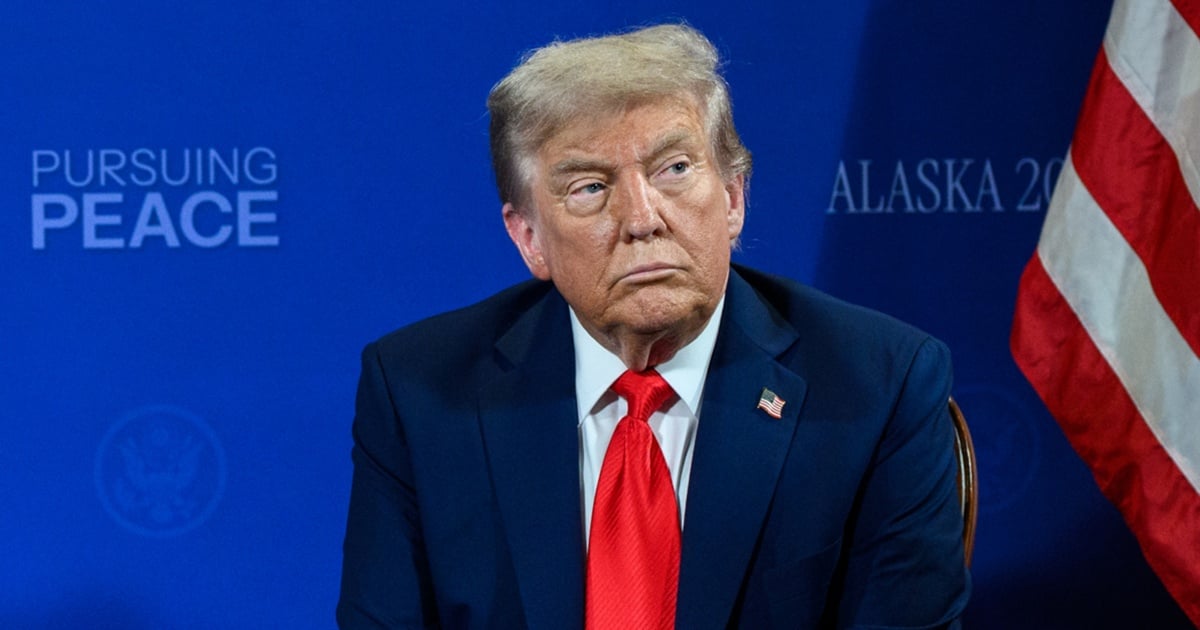
In a critical electoral event that served as a barometer for the American political landscape, Donald Trump has publicly acknowledged the defeat of the Republican Party in several state and local elections held this Tuesday across six states in the United States.
However, rather than taking direct responsibility, the former president attributed these Republican setbacks to external factors and strategic omissions.
On his social media platform, Truth, Trump responded on Tuesday night with a mix of resignation and reproach.
“TRUMP WAS NOT ON THE BALLOT AND THE GOVERNMENT SHUTDOWN WERE THE TWO REASONS REPUBLICANS LOST THE ELECTIONS TONIGHT, ACCORDING TO ELECTION ANALYSTS,” he wrote in all caps, a trademark of his more emphatic posts.
External BlameHis comments reflect a habitual strategy of diverting accountability to outside causes, specifically citing his absence on the ballots and the protracted federal government shutdown, which stirred uncertainty and tension among voters.
These elections have effectively served as a referendum on his indirect leadership and the Republican Party's ability to secure key regions without his direct involvement.
Democratic Dominance in Key States
The midterm elections held this Tuesday unfolded in a context of stark political polarization, impacting local and state offices across six states.
Even though congressional seats were not at stake, the results carry significant implications for the national political trajectory, highlighting a Republican retreat, particularly in strategic urban centers.
New York: Mamdani Makes History
Democrat Zohran Mamdani, 34, has become New York's youngest mayor since 1892 and the first of Muslim faith.
His victory was decisive, surpassing independent Andrew Cuomo and Republican Curtis Sliwa with over 50% of the votes counted.
Mamdani, known for his progressive stance and supported by figures like Bernie Sanders and Alexandria Ocasio-Cortez, focused his campaign on free transportation, affordable housing, and fair-priced basic goods.
“New York is not for sale,” he declared at a rally in Queens, addressing the impact of real estate speculation in the city.
Trump, critical of Mamdani's ideology, labeled him a “communist” and threatened to cut federal funding as retaliation for his election.
New Jersey: Sherrill Becomes Governor
In New Jersey, Democrat Mikie Sherrill defeated Republican Jack Ciattarelli, a political ally of Trump, winning 57% to 43% of the votes counted.
Sherrill, a former congresswoman and naval aviator, becomes the state's second female governor, succeeding fellow Democrat Phil Murphy.
“I will lead with courage and never forget whom I serve,” said Sherrill, 53, upon learning of her victory.
Her triumph in strategic counties is a significant blow to Trump's attempt to regain influence in Democrat-leaning states.
Virginia: Spanberger Shatters Glass Ceilings
Former CIA agent Abigail Spanberger has been elected as Virginia's first female governor, defeating Republican Winsome Earle-Sears with 55% of the votes.
“Virginia chose pragmatism over partisanship,” celebrated Spanberger, who based her campaign on lowering living costs, equity, and public employee advocacy.
Her victory returns the state's leadership to the Democrats, contrasting with the prior Republican rise in the region driven by Trump.
Democratic Urban Stronghold
In other major cities, Democrats solidified their presence:
In Cincinnati, Aftab Pureval was reelected mayor by a wide margin against Republican Cory Bowman, half-brother of Vice President JD Vance.
Mary Sheffield became the first woman to hold the mayoral office in Detroit, defeating Solomon Kinloch Jr.
In Pittsburgh, Democrat Corey O’Connor, son of former mayor Bob O’Connor, won the mayoral race against Tony Moreno.
Andre Dickens was reelected in Atlanta with more than 50% of the votes, reinforcing Democratic dominance in Georgia's capital.
Voters Reject Extremism
The election outcomes reflect an urban electorate mobilized by progressive and social agendas, favoring leaders who prioritize practical governance over radical partisan rhetoric.
Republican losses, particularly in states and cities where Trump had aspirations of control, cast doubt on his ability to continue leading the party beyond his personal influence.
Beyond the failure to place aligned candidates in key positions, these elections have exposed a rift between moderate Republican bases and the Trumpist wing, which seems to have lost traction in more diverse and complex territories.
Although Trump has publicly acknowledged the Republicans' poor outcomes, his subsequent rhetoric of deflecting personal responsibility and blaming external factors—such as the government shutdown and his absence on the ballots—illustrates his reluctance to accept the erosion of his influence among electoral bases.
Trump's Influence on Republican Setbacks
What reasons did Trump give for the Republican defeats?
Trump attributed the Republican defeats to his absence from the ballots and the federal government shutdown, as stated by election analysts.
How did the elections serve as a referendum on Trump's leadership?
The elections acted as a referendum on Trump's indirect leadership and the Republican Party's ability to win key areas without his direct presence.
What impact did these elections have on the Republican Party?
The elections revealed a setback for the Republican Party, highlighting a division between moderate bases and the Trumpist wing, and raising questions about Trump's continued leadership.