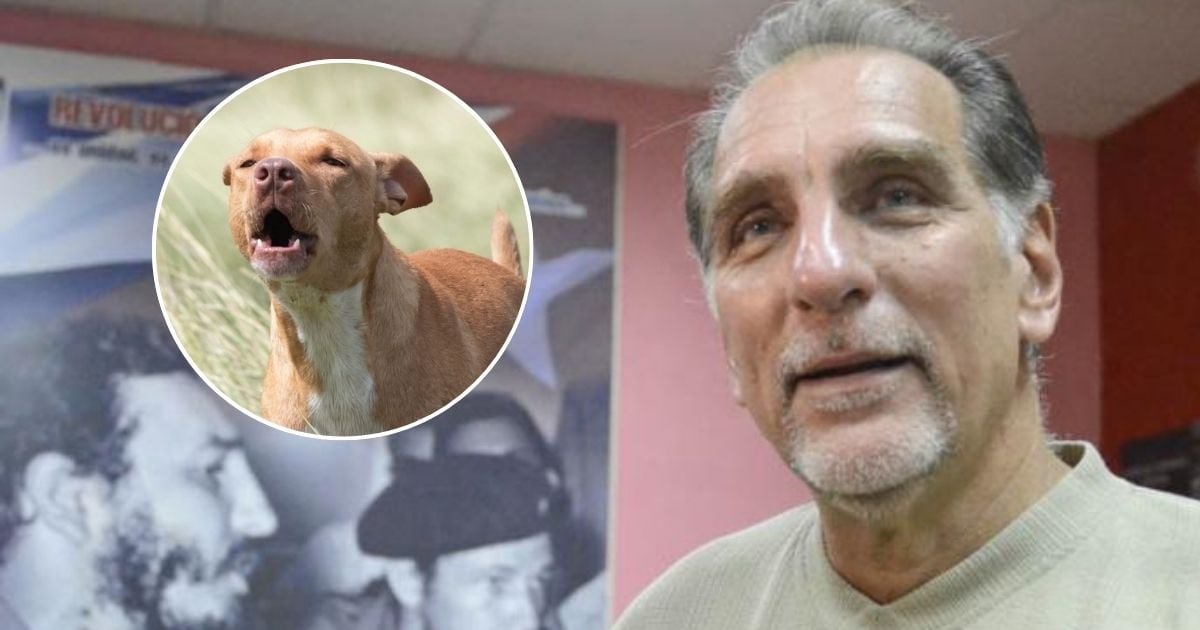
René González, a former Cuban intelligence officer, stirred controversy on social media this Tuesday with a post questioning the public's attention towards a dog left behind during Hurricane Melissa's impact on the Granma province.
In his Facebook post, González drew a parallel between the outrage over the dog's abandonment and CNN's coverage of the Iraq war, suggesting that while the country was being ravaged, American media was reporting from the Baghdad Zoo on the fate of the animals there.
The ex-spy suggested that the Cuban reaction to the abandoned dog mirrors that media spectacle. "Now it seems that the First Secretary of Granma owes explanations for someone else's decision not to evacuate their dog," he wrote, implying that concern for the animal distracts from human rescue operations.
“I like animals and oppose any form of abuse, but my experience makes me wary of those who care more for embryos and animals than for people,” González added, seemingly referencing the activists and citizens who condemned the incident.
González's comments followed days after images and reports of a dog left unrescued during Hurricane Melissa in the Cauto River area of Granma went viral, sparking outrage across social media, with hundreds of Cubans demanding accountability and explanations from local authorities.
In response, several official Cuban media outlets and regime figures tried to discredit the criticisms, dismissing them as media exaggeration.
González joined the debate within this context, bolstering the official stance and subtly accusing activists of distorting priorities amid a national emergency.
The Animal Welfare Cuba organization, specifically its Havana chapter (BAC-Habana), responded to González's remarks in a Facebook statement, lamenting how "figures with such reach prefer to distort a legitimate cause rather than acknowledge the importance of empathy."
“Our cause doesn’t seek the limelight; it seeks consistency. It doesn’t aim to compete with human suffering but to remind us that compassion is not species-specific,” the group asserted, emphasizing that animal advocacy is also part of social sensitivity and responsibility.
BAC-Habana further denounced attempts by the government to politicize and ridicule public outrage instead of addressing the lack of protocols and sensitivity towards animals during disasters.
The incident involving the dog in Granma has reignited discussions about the absence of a genuine animal protection policy in Cuba and the authorities' lack of empathy in situations that deeply affect the public.
While regime voices continue to deflect attention, activists highlight that “a society ignoring the suffering of its most defenseless members—be they human or animal—loses its humanity.”
Debate on Animal Welfare in Cuba
Why did René González criticize the public's reaction to the abandoned dog during Hurricane Melissa?
René González criticized the public's reaction because he believed it distracted from the more critical issue of human rescue operations during the hurricane, drawing a comparison to media coverage during the Iraq war.
How did the Animal Welfare Cuba organization respond to González's statements?
The Animal Welfare Cuba organization responded by emphasizing that their cause seeks consistency and compassion rather than media attention, criticizing figures like González for distorting a legitimate cause.
What broader issues has the incident with the Granma dog highlighted in Cuba?
The incident has highlighted the lack of a real animal protection policy in Cuba and the authorities' insufficient empathy towards incidents that resonate with the public.