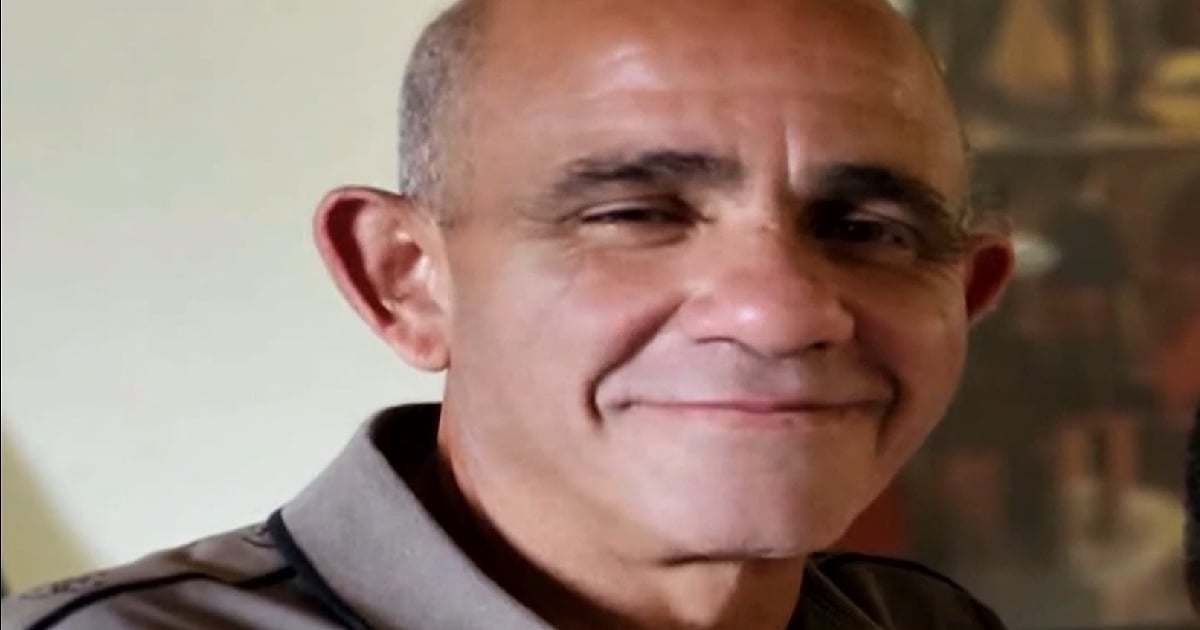
The family of Justo Betancourt, a Cuban who has lived in the United States for more than three decades, is experiencing an anxious time after he attended a routine annual immigration court appointment and never returned home.
Betancourt, now 63, has spent 36 of those years in the U.S. He was taken into custody last Wednesday by the Immigration and Customs Enforcement (ICE) and is currently held at the Alligator Alcatraz Detention Center in the Everglades, according to his daughters who spoke to Local10 News.
The family, residing in South Florida, was caught off guard by this development and is deeply concerned about Betancourt's future. He is a single father who raised his two daughters on his own, worked for many years, and contributed to the community, according to family accounts.
His daughter, Kannis Betancourt, who lives in Miami, shared that her sister and aunt realized hours later that he had been taken away after he entered the courthouse.
A significant worry for his family is Betancourt's fragile health condition; he suffers from type 2 diabetes and requires insulin injections twice daily, as stated by his elder daughter, Arianne. The inadequate conditions and subpar medical care at Alligator Alcatraz, repeatedly criticized in the past, could jeopardize his life.
"The only time we spoke with him, he told us they said if he wanted insulin, he could get it in Mexico," his daughter revealed, alarmed by the lack of compassion and the looming threat of her father's possible deportation.
Five years ago, Betancourt faced conspiracy charges, but the case was later dismissed. However, he remained on probation since then. The family argues that he deserves humane treatment and should not be detained, as he poses no threat to the community.
"We are all human. No matter what we've done or the mistakes we've made, we all have the capacity to change and improve. As a country, we should strive to be better," stressed Arianne.
Betancourt's family is collaborating with lawyers and immigrant advocates to explore legal strategies, such as a humanitarian bond motion or a medical review, to secure his temporary release, as reported by CubaenMiami. Simultaneously, they have launched a social media campaign advocating for his humanitarian release.
"My father was never a burden to this country. He worked, paid taxes, and helped his neighbors. We only ask that he be treated with respect and humanity," Arianne stated to the digital media outlet.
"We want his right to live with dignity to be respected. We're not asking for privileges, just common sense," she emphasized.
Incidents like Betancourt's have become more frequent over the past year due to stricter immigration policies under President Donald Trump's administration, leading to massive raids and expedited deportations of undocumented immigrants with criminal records.
ICE operations at and around immigration court exits have resulted in the arrest of numerous immigrants—including Cubans—who attended routine hearings as part of their status regularization process.
Immigrant rights organizations have criticized this practice as a form of intimidation and a violation of due process.
President Trump, in a recent interview, stated that ICE raids "haven't gone far enough because we've been held back by judges, the liberal judges appointed by (former Democratic presidents) Biden and Obama."
The president defended ICE's aggressive tactics, saying, "because you have to get people out" and "many are murderers."
It was announced this Sunday that ICE plans to implement an artificial intelligence (AI) system to track and analyze the activity of millions of social media users, aiming to identify immigrants through their posts, images, and digital locations.
FAQs on ICE Detention and Immigrant Rights
What are the reasons for ICE detaining immigrants at court appointments?
ICE often detains immigrants at court appointments as part of their enforcement efforts to track individuals with unresolved immigration issues or criminal records.
How can families support detained immigrants?
Families can support detained immigrants by hiring legal representation, advocating for humanitarian release, and raising public awareness through social media and community campaigns.
What are the health risks for detainees with medical conditions?
Detainees with medical conditions face significant health risks due to inadequate medical care and poor conditions in detention facilities, which can exacerbate their illnesses.