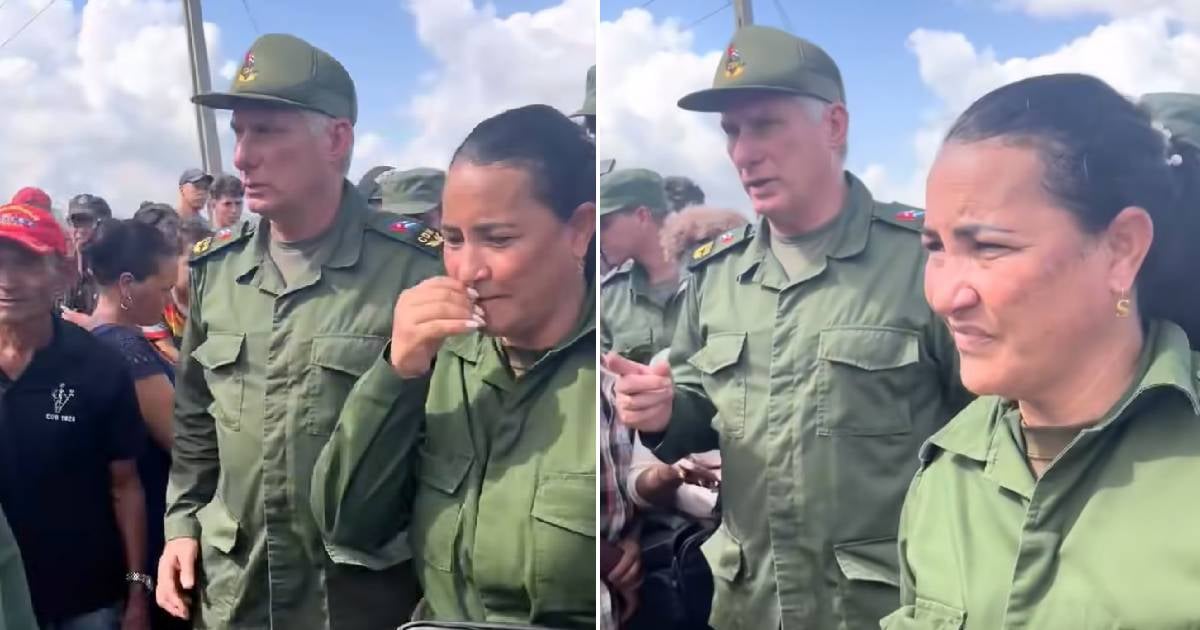
Cuban leader Miguel Díaz-Canel Bermúdez toured the severely affected town of El Recreo in Cauto Cristo (Granma) this Tuesday, following the havoc wreaked by Hurricane Melissa. The storm led to the overflow of Cuba's largest river, the Río Cauto.
In video footage and social media posts documenting the visit, Díaz-Canel is heard asking locals, "Is the water down yet?"—a question that seemed out of touch with the catastrophe's scale.
The Struggle of a Partially Submerged Community
El Recreo, home to just 234 people across 102 households, remains partly underwater after the hurricane's onslaught. According to local representative Yunay Gertrudis Rivera Peña, the ordeal brought by Hurricane Melissa surpassed all previous experiences. Floodwaters from the Granma and Holguín regions inundated homes, tore off roofs, and devastated residents' possessions.
The most significant damage has hit agriculture and livestock, with complete losses of crops like cassava, pumpkins, sweet potatoes, bananas, and vegetables, as well as smaller livestock. Many residents, still in shelters, report their homes remain submerged, though water levels have slightly receded recently.
Official Promises Versus Public Doubt
Accompanied by Roberto Morales Ojeda, Yudelkis Ortiz Barceló, and other PCC leaders, Díaz-Canel pledged that "the Revolution will not leave anyone helpless" and urged for "unity in recovery efforts."
Yet, social media and community forums are rife with criticism about the slow delivery of aid, lack of transparency in local governance, and feelings of abandonment by the state.
Residents argue that emergency operations have been inadequate and perceive that official priorities lean more toward political propaganda than direct aid to those impacted.
Background: Melissa's Devastation in Eastern Cuba
Category 5 Hurricane Melissa left a trail of destruction across eastern Cuba, causing widespread flooding, demolished homes, and significant agricultural losses. Areas like Río Cauto, Cauto Cristo, Jiguaní, and Bayamo are among the hardest hit.
As the government strives to project control and institutional presence, thousands of families are grappling with the crisis without resources, electricity, or clean water.
Key Questions About Hurricane Melissa's Impact
What areas in Cuba were most affected by Hurricane Melissa?
The eastern regions of Cuba, particularly Río Cauto, Cauto Cristo, Jiguaní, and Bayamo, experienced the most significant impact from Hurricane Melissa.
How did Hurricane Melissa affect local agriculture?
The hurricane completely devastated crops such as cassava, pumpkins, sweet potatoes, bananas, and vegetables, in addition to impacting smaller livestock.
What criticisms have been made about the government's response?
Critics have pointed to the slow delivery of aid, a lack of transparency in local management, and an emphasis on political propaganda over direct assistance to affected communities.