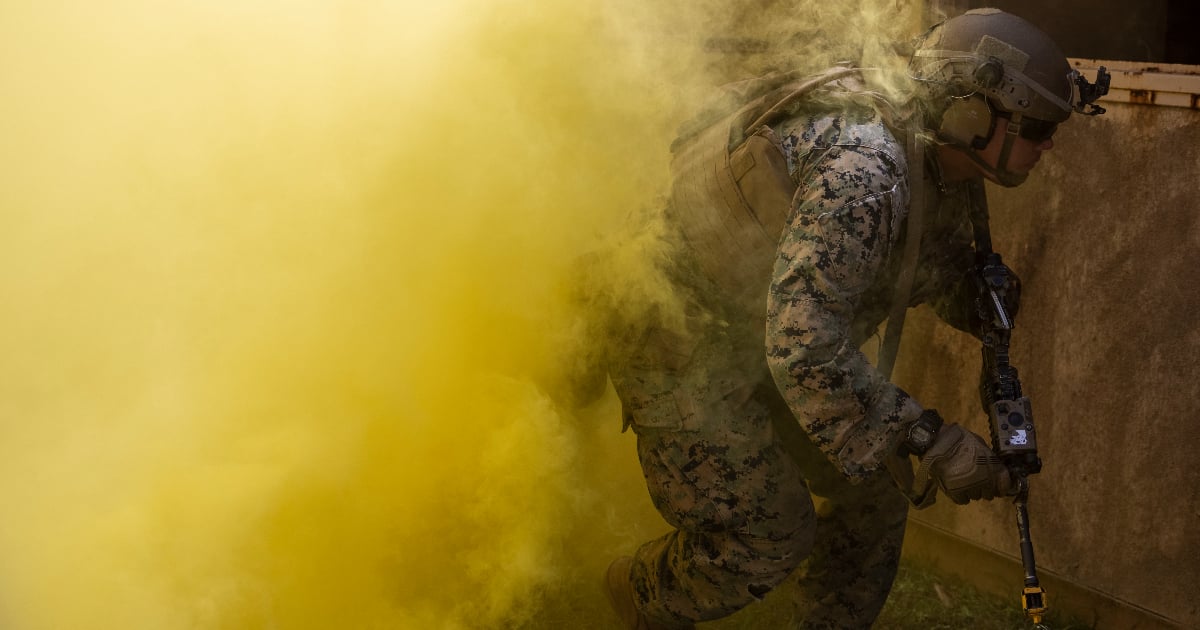
Under the leadership of President Donald Trump, the U.S. administration is exploring a bold military initiative aimed at deploying American forces to Mexico to directly target drug cartels.
According to NBC News, two current officials and two former high-ranking government figures have confirmed that the proposed operation would involve ground forces and drone strikes aimed at the production facilities, personnel, and leaders of major criminal organizations in Mexico.
Although discussions are well underway, officials have clarified that there is no imminent deployment planned, and the White House has yet to make a definitive decision on the matter.
This initiative would mark a significant departure from previous administrations, which primarily focused on providing support and intelligence to Mexican forces without engaging directly in combat operations.
The units involved, many from the Joint Special Operations Command, would operate under the U.S. intelligence community's authority, enabled by Title 50, which allows for covert operations involving the CIA.
A senior administration official stated, "The Trump administration is dedicated to utilizing all state resources to safeguard American citizens from the threats posed by the cartels," without divulging further details.
According to sources consulted by NBC News, the strategy includes the use of military drones controlled by ground operators, necessitating the physical presence of personnel in Mexico.
In February, the State Department had already designated six Mexican cartels—alongside MS-13 and Venezuela's Tren de Aragua—as foreign terrorist organizations, thereby expanding the legal scope for military and espionage actions.
The U.S. plan has sparked concern in Mexico City. President Claudia Sheinbaum has rejected any possibility of direct intervention, stating, "Mexico coordinates and collaborates but does not subordinate," during a press conference.
Nevertheless, her government has allowed increased CIA surveillance flights and enhanced anti-narcotics collaboration with Washington by deploying 10,000 soldiers at the border and extraditing more than 50 criminal leaders.
This move is part of Trump's escalating military campaign against drug trafficking in the Western Hemisphere, following attacks on suspicious vessels in the Caribbean and Pacific regions.
The president has consistently emphasized that cartels pose a direct threat to national security and warned that "anyone attempting to bring drugs into the United States will face lethal consequences."
If implemented, this mission would open a new chapter in U.S. foreign policy and could strain Washington-Mexico relations at a crucial time for bilateral cooperation.
Key Questions on U.S. Military Plans in Mexico
What is the proposed mission's primary objective?
The primary goal is to deploy U.S. troops to Mexico to directly target and dismantle drug cartels through ground operations and drone strikes.
How does this plan differ from previous U.S. administrations' approaches?
This plan represents a significant shift by involving direct combat operations, whereas past administrations focused on support and intelligence-sharing with Mexican forces.
What legal framework allows for these operations?
Operations would be conducted under Title 50, which facilitates covert actions by the U.S. intelligence community, including the CIA.
What has been Mexico's response to this plan?
Mexico's President Claudia Sheinbaum has rejected the idea of direct intervention but has increased collaboration with the U.S. in other areas like surveillance and extraditions.