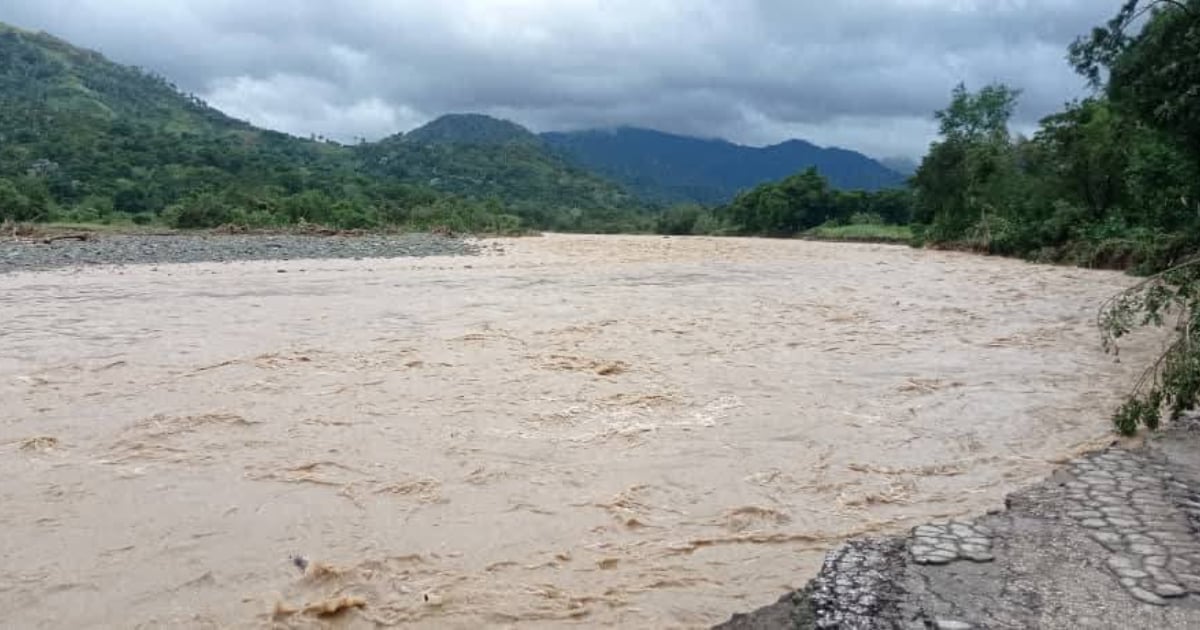
The mountainous region of San Pablo de Yao, located in Buey Arriba municipality within Granma province, remains isolated following the severe impact of Hurricane Melissa, which caused significant destruction in eastern Cuba.
Reports from CNC TV Granma highlight that "the powerful winds and intense rainfall not only severed the sole entry route but also disrupted telephone lines and electricity services." Additionally, the media outlet noted the destruction of the main access bridge to the village by the raging waters of the Yao and Brazo de Buey rivers, leaving the residents stranded.
Televisión Serrana provided further insights, stating, "As of today, the town is in recovery but remains cut off. The bridge leading to this community was shattered and buried under the sheer force of the waters from the Yao and Brazo de Buey rivers." The station shared visuals and cautioned about the ongoing lack of communication and power in the area.
Local authorities have reported that recovery efforts are progressing slowly due to challenging terrain conditions and persistent rainfall. There has been no official update on when ground access might be restored.
Granma province was among the hardest hit by the hurricane, experiencing widespread flooding, river surges, and power outages across several municipalities, particularly in the mountainous regions.
Eastern Cuban Communities Facing Isolation
In neighboring Santiago de Cuba province, areas such as Los Reynaldos and Brazo Escondido also remain isolated after bridges collapsed and rivers overflowed. Transportation Minister Eduardo Rodríguez Dávila announced on social media that "the bridge damage preventing access to the Los Reynaldos community in Songo la Maya municipality has left them isolated, except for rail access."
Activist Lara Crofts described the situation in Brazo Escondido as dire: "total isolation, roads are cut off, and there's no access. Aerial rescue is impossible due to the lack of flat terrain for helicopters to land. There's a humanitarian risk as families potentially lack food and medicine."
Communities like Los Reynaldos and Brazo Escondido join El Uvero, La Plata, Ocujal, and Palmamocha in Guamá municipality, which remain disconnected after Hurricane Melissa's passage. Beatriz Johnson Urrutia, president of the Provincial Defense Council, mentioned that Communist Party and government coordinators are stationed in the most affected areas, with amateur radio operators assisting communications.
Social media platforms have seen numerous citizens voicing frustration over the delays and lack of information, criticizing the slow institutional response. "How long will people in the East remain without communication, unable to even make phone calls?" questioned a Santiago resident.
Hurricane Melissa, striking Cuba as a Category 3 on the Saffir-Simpson scale, caused damage to over 16,000 homes and resulted in 1,318 total collapses, according to preliminary official data. The situation in San Pablo de Yao and other eastern localities remains one of isolation and vulnerability, as teams work to restore access and essential services.
Frequently Asked Questions about the Impact of Hurricane Melissa on Eastern Cuba
What caused San Pablo de Yao to become isolated?
San Pablo de Yao became isolated due to the destruction of its main access bridge by the powerful waters of the Yao and Brazo de Buey rivers, along with severed telephone and electricity services.
How are local authorities responding to the isolation of these communities?
Local authorities report slow progress in recovery efforts due to difficult terrain and ongoing rainfall. Efforts to restore access and services are underway, with no official timeline for completion.
What other communities in eastern Cuba are affected by Hurricane Melissa?
Besides San Pablo de Yao, communities such as Los Reynaldos, Brazo Escondido, El Uvero, La Plata, Ocujal, and Palmamocha are also isolated due to bridge collapses and flooding from the hurricane.
What has been the public's reaction to the government's response?
The public has expressed frustration and discontent on social media regarding the slow response and lack of communication from the government in addressing the isolation of affected communities.