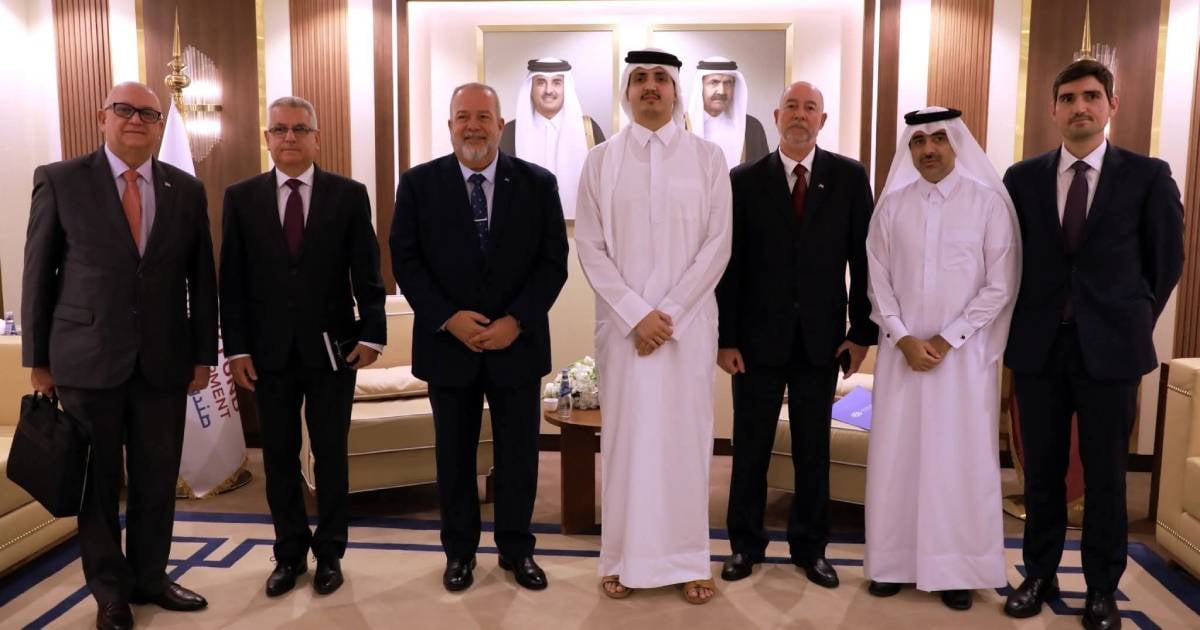
While eastern Cuba is grappling with the severe aftermath of Hurricane Melissa, Prime Minister Manuel Marrero Cruz continues his tour of the Middle East, having arrived in Qatar this Saturday after spending several days in Saudi Arabia. The regime is presenting this as an "intensive bilateral agenda."
The stark contrast is evident. As thousands of Cuban families have lost nearly everything to the floodwaters, the head of government shares optimistic photos and messages about international meetings and alliances from afar.
Via his account on X, Marrero announced his trip to Qatar to attend the Second World Summit on Social Development. There, he claims he will engage in discussions to "elevate economic and commercial ties to the same level as political ones."
State-run media, such as Radio Rebelde, highlighted his arrival, emphasizing the "cordial" reception by Qatari authorities and their "esteem" for the Cuban people.
The state outlet also reported Marrero's participation in the inaugural meeting of leaders from the Global Alliance Against Hunger and Poverty, an initiative of the United Nations.
However, the image of a smiling prime minister among sheikhs and foreign ministers clashes with the stark reality back home. Cuba continues to deal with the aftermath of a natural disaster that has left communities isolated, homes destroyed, and significant material losses.
During his time in Saudi Arabia, marking the first visit by a Cuban head of government to the country, Marrero signed three agreements concerning investment, tourism, and aeronautics, which he described as "a milestone" in bilateral relations. This occurred as Hurricane Melissa grew stronger, prompting the evacuation of thousands in eastern Cuba.
Marrero's absence during the hurricane has sparked criticism and questions both domestically and internationally. Many Cubans see his travels as at odds with the role leaders should play during a national emergency.
On social media, the prime minister has attempted to show his presence "from a distance." Recently, he shared messages of support for the Ministry of the Revolutionary Armed Forces (MINFAR) and the Ministry of the Interior (MININT), praising their efforts in rescuing those affected.
"Their dedication, a customary practice, fills us with pride. I embrace you all," he wrote alongside photos of military personnel carrying children and teams working through the mud.
Marrero himself assured that he is "closely monitoring" the situation on the island and that "the Party and Government leadership are setting recovery priorities." Yet, the gap between rhetoric and reality seems to widen with each new post.
In a nation where leaders often commend the people's sacrifices from the comfort of official trips, the image of Cuba's prime minister touring Gulf palaces while his country is submerged encapsulates, for many, the true state of politics on the island—a leadership focused outward while its citizens are left drowning.
Key Questions About Manuel Marrero's Absence During Hurricane Melissa
Why is Manuel Marrero Cruz in the Middle East during Hurricane Melissa?
Manuel Marrero Cruz is on a Middle Eastern tour, which includes attending international meetings and signing agreements, as part of what the regime calls an "intensive bilateral agenda."
How has Marrero's absence been perceived in Cuba?
Marrero's absence has led to criticism and questions, as many feel his travels are contrary to the responsibilities leaders should uphold during national emergencies.
What agreements did Marrero sign in Saudi Arabia?
During his visit to Saudi Arabia, Marrero signed agreements on investment, tourism, and aeronautics, which he claimed to be significant milestones in bilateral relations.