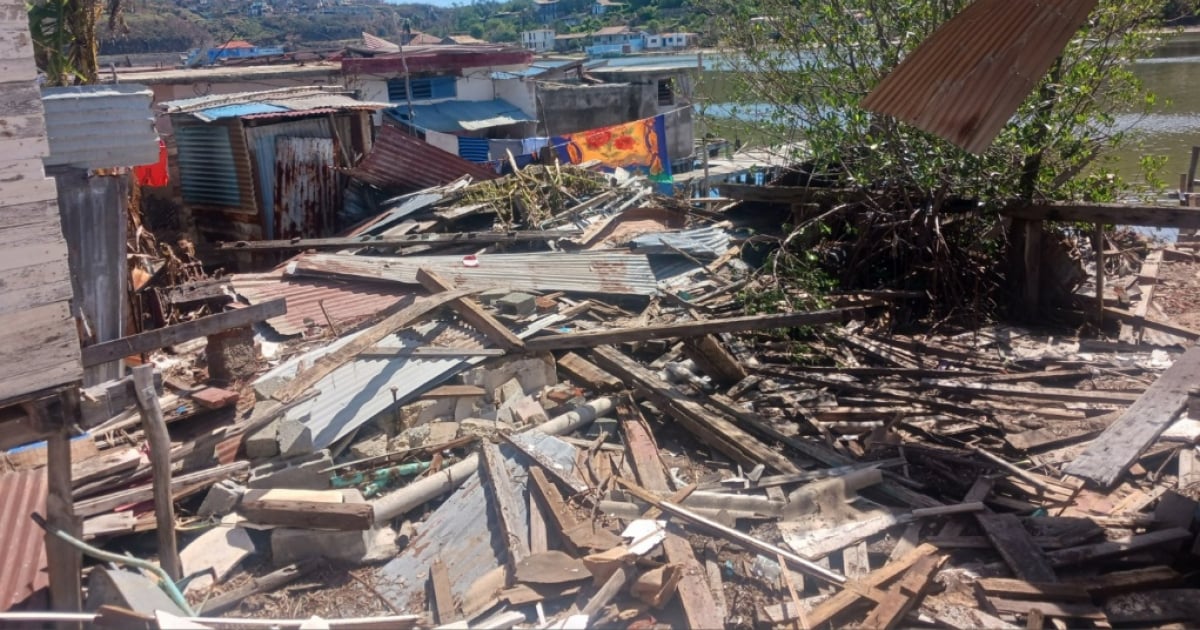
Religious activists have raised alarms over the Cuban regime's establishment of "checkpoints" aimed at preventing the delivery of humanitarian aid to Eastern Cuba following the impact of Hurricane Melissa.
The Cuban Human Rights Observatory (OCDH) reported on Friday that local authorities are obstructing efforts by churches and independent organizations to deliver aid to the regions hardest hit by the recent hurricane.
Checkpoints have been placed at the exits of Las Tunas province and the entrance to Granma, effectively barring Christian church members from the western and central parts of the island from bringing food and other supplies, the report highlights.
According to updates sent to the OCDH, many people remain stranded on the rooftops of their homes due to flooding, and certain areas have been without power and food for four days.
In Santiago de Cuba, entire neighborhoods are littered with fallen trees and power lines, with some communities reporting no official assistance whatsoever, further reports indicate.
The OCDH has demanded that the Cuban government allow civilian aid to proceed unhindered, emphasizing the importance of not stifling social initiatives.
"These obstacles only deepen the tragedy faced in the eastern region of the country," the group asserts.
U.S. Allocates $3 Million Through Catholic Church
This Sunday, the United States government announced the allocation of $3 million in humanitarian aid for Cubans affected by Hurricane Melissa, which ravaged several eastern provinces of the island.
The Western Hemisphere Affairs Bureau of the State Department (WHA) stated that this aid will be distributed in collaboration with the Catholic Church, ensuring it reaches the most affected communities directly, bypassing the Cuban government’s involvement.
"The United States is working with the Catholic Church to distribute three million dollars in humanitarian assistance directly to those in eastern Cuba most impacted by Hurricane Melissa’s devastation. Our prayers are with the courageous Cuban people," the WHA declared on its official X account.
This initiative underscores Washington's commitment to directly supporting the Cuban populace during times of crisis, just days after Secretary of State Marco Rubio announced a readiness to provide aid "without regime intermediaries."
Hurricane Melissa, which made landfall in Cuba on October 29, left tens of thousands displaced, causing severe damage to homes, crops, and electrical networks across the provinces of Guantánamo, Granma, Holguín, and Santiago de Cuba, where communities remain cut off.
The decision to route aid through the Catholic Church aims to ensure that resources are delivered efficiently and transparently to the most vulnerable areas, amid a backdrop of state-controlled official distribution channels.
Key Questions on Humanitarian Aid to Eastern Cuba
What are the barriers to delivering aid in Eastern Cuba?
The Cuban regime has set up checkpoints to prevent aid from reaching affected regions, specifically targeting deliveries organized by churches and independent groups.
How is the United States supporting Cuban hurricane victims?
The United States has allocated $3 million in humanitarian aid, distributed through the Catholic Church, to ensure resources reach the most impacted communities directly.
Why is the aid being routed through the Catholic Church?
Aid is channeled through the Catholic Church to bypass the Cuban government’s control, ensuring that the assistance is delivered efficiently and transparently to those in need.