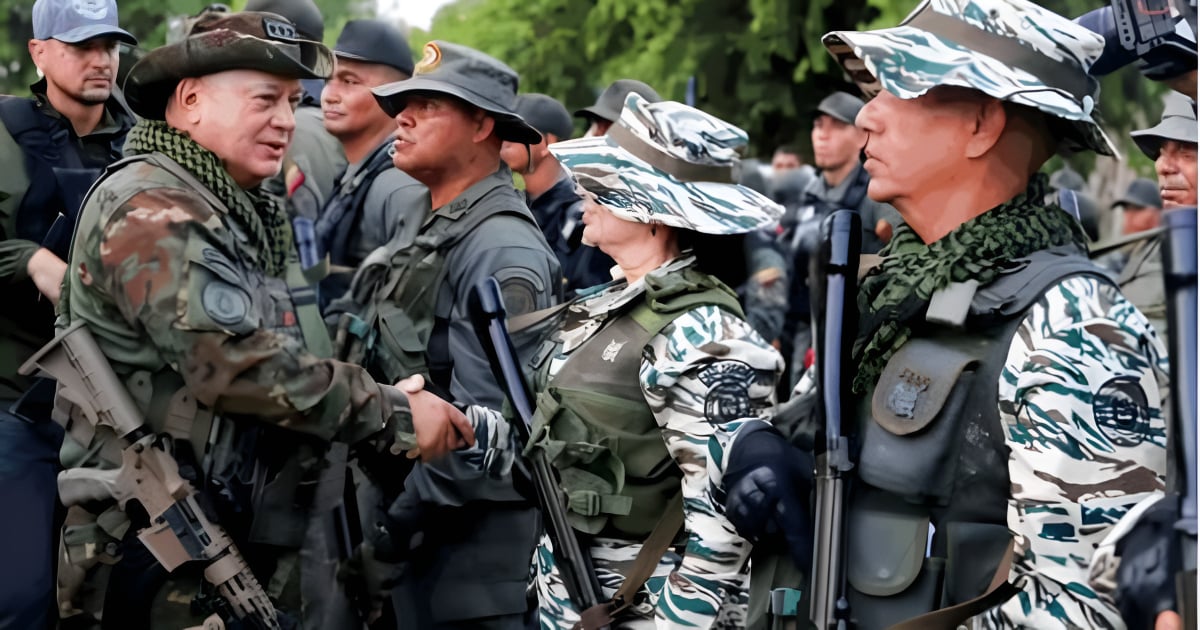
The Caribbean crisis has taken on a global dimension. Amid escalating military tensions between the United States and Venezuela, leaked documents from The Washington Post reveal that President Nicolás Maduro has urgently requested military aid from his key allies—Russia, China, and Iran—to bolster his defense against a potential U.S. attack.
According to the information, Maduro penned a letter to Vladimir Putin, seeking missiles, radars, and repairs for the Russian Sukhoi Su-30 fighter jets, which are central to Venezuela's air force. The letter was delivered by his Transport Minister, Ramón Celestino Velásquez, during a visit to Moscow last month.
In the correspondence, the Venezuelan leader also proposed a "three-year financing plan" with the Russian state corporation Rostec and described the U.S. naval presence in the Caribbean as a "direct threat to Venezuelan sovereignty and to the interests of Russia and China."
Seeking Military Support from Global Allies
Similar letters were dispatched to Xi Jinping and Ebrahim Raisi, asking for detection radars, electronic warfare equipment, and drones capable of reaching up to 1,000 kilometers. The American newspaper reported that Velásquez also coordinated shipments of Iranian military hardware, including GPS jamming systems and long-range drones.
While the Kremlin hasn't publicly confirmed these requests, spokesperson Dmitri Peskov acknowledged that "Russia maintains contact with its Venezuelan friends," emphasizing the contractual obligations between the two nations.
Russian Support: Diplomatic and Symbolic
The Russian Foreign Ministry was more explicit, stating, "We support Venezuela's leadership in defending its national sovereignty and are prepared to respond appropriately to our partners' requests against emerging threats," before deleting a map that omitted the Essequibo, a territory disputed with Guyana.
Just hours later, Caracas's Foreign Ministry expressed gratitude for Moscow's "unwavering support" and celebrated the "consolidation of a strategic alliance" between both countries.
Venezuela's Deteriorating Arsenal
The backing comes at a critical juncture for the Chavista regime. With over 10,000 U.S. troops, seven warships, a nuclear submarine, and the aircraft carrier USS Gerald Ford heading to the Caribbean, Washington has stepped up military pressure. Meanwhile, former U.S. ambassador James Story stated this past week that "Maduro's days are numbered."
Defense experts cited by El Mundo noted that only four or five of Venezuela's 25 Sukhoi jets are operational due to a lack of maintenance and Russian technical staff.
The Tension Between War and Propaganda
Maduro, visibly gaunt in his latest public appearance, called on his supporters to "stay calm and united" amid rumors of an imminent attack. "Whatever the threat, we must maintain revolutionary unity," he declared from the Palacio de Miraflores, accusing Washington of "imperial malice."
Meanwhile, tensions also rise in the eastern Caribbean. In Trinidad and Tobago, a U.S. ally, authorities have mobilized their troops following the arrival of the destroyer USS Gravely, just 11 kilometers from the Venezuelan coast.
The Russian Gamble and Maduro's Last Stand
With the region militarized and time running out for Maduro, the Kremlin seems to have at least diplomatically entered the Caribbean crisis. However, experts remain skeptical: Russia, entangled in the Ukraine war and facing sanctions, lacks the resources to rescue Maduro if Washington decides to act.
Maduro's reliance on Moscow is reminiscent of Bashar al-Assad's fate. Following over a decade of civil war in Syria, Assad fled to Moscow on December 8, 2024, when Islamist rebel forces took Damascus. Putin had promised "unconditional support" to the Syrian regime, but his 2015 military intervention left the nation devastated and Assad a Kremlin-protected leader without legitimacy or sovereignty.
Today, Maduro seeks the same protection, trusting in an ally that leverages crises as geopolitical bargaining chips. Yet, like in Syria, Russia remains entrenched in its Ukraine invasion and appears unwilling or unable to save a regime already on the brink.
The Trump Question
The pressing question now is how Donald Trump will respond to the renewed ties between Caracas and Moscow. Since his return to power, the U.S. president has balanced a hardline stance against Chavismo—and the drug cartels managed from Caracas—with an open admiration for Putin, whom he regards as a "strong man" and "effective negotiator."
Faced with evidence of Moscow using an authoritarian ally—this time in the Caribbean—as a geopolitical pawn, Trump confronts a dilemma: maintain his personal rapport with Putin or acknowledge that the Russian leader has once again laid a strategic trap.
Reacting cautiously might mean missing the chance to restore Washington's traditional influence in the region, including ousting a narco-dictatorship allied with Havana and Managua, and facilitating a transition aligned with U.S. interests.
Conversely, opting for direct confrontation could heighten the risk of a hemispheric military crisis. In either scenario, Putin has achieved one thing: forcing the United States to split its focus between Europe and Latin America, precisely when it needs to concentrate its efforts on Ukraine.
As Maduro clings to the Kremlin as his last lifeline, the White House faces its own reflection: a president torn between impulsivity and fascination for a man who, time and again, has shown that loyalty is not part of his political lexicon.
Key Questions About the Caribbean Crisis
What military support has Maduro requested from Russia?
Maduro has requested missiles, radars, and repairs for the Sukhoi Su-30 fighter jets from Russia.
How has the U.S. military presence in the Caribbean affected Venezuela?
The U.S. military presence, including over 10,000 troops and several warships, has increased pressure on Venezuela's regime, prompting Maduro to seek external military aid.
What is the significance of the Russian support for Venezuela?
Russian support symbolizes a diplomatic backing for Venezuela's sovereignty claims, although experts doubt Russia's capacity to offer substantial military assistance amid its own challenges.